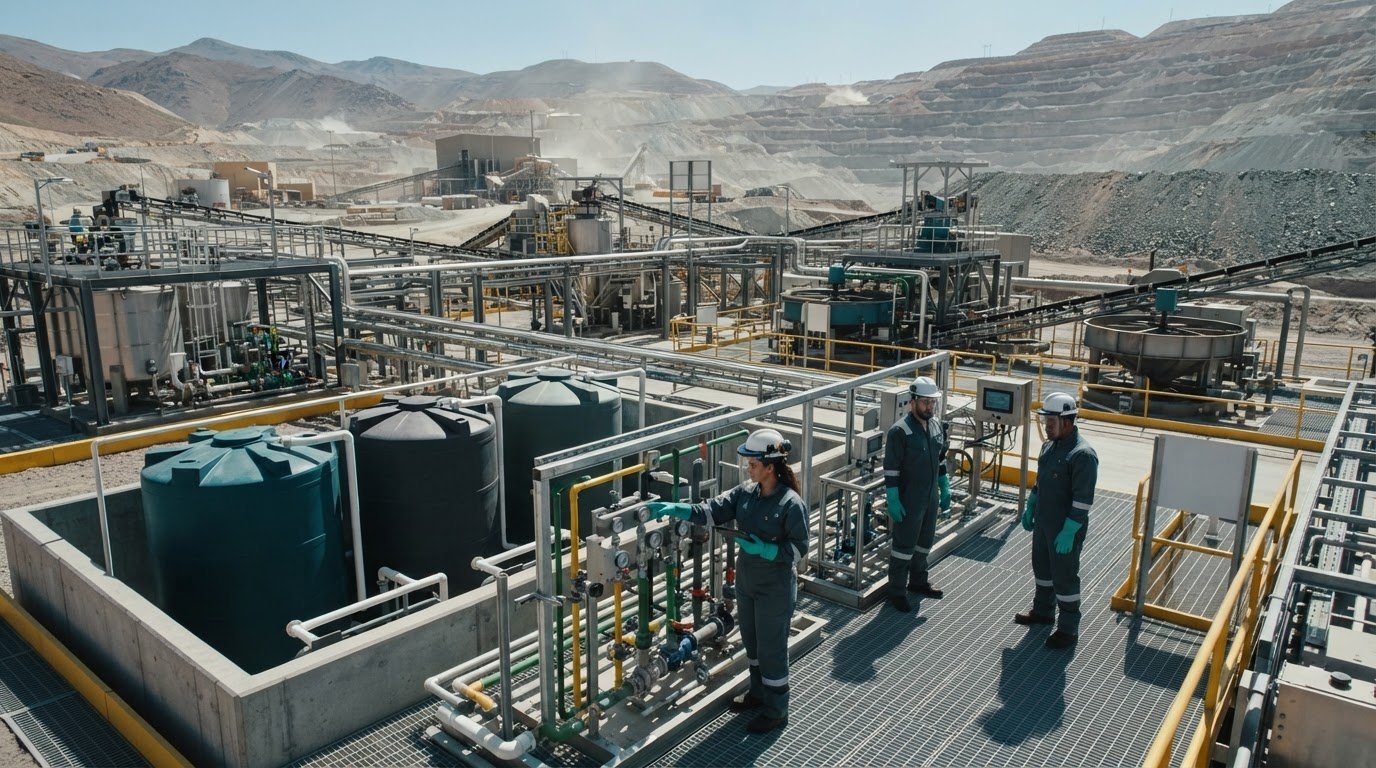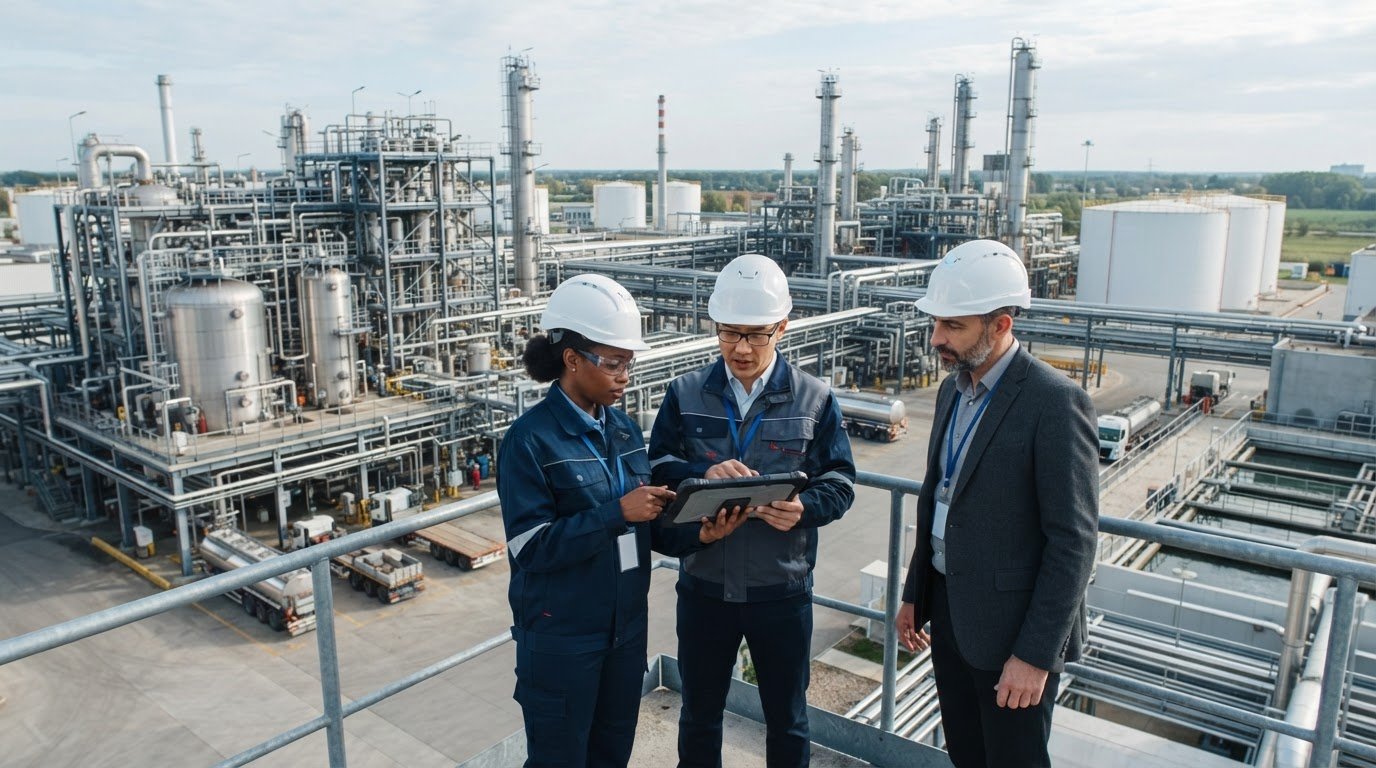

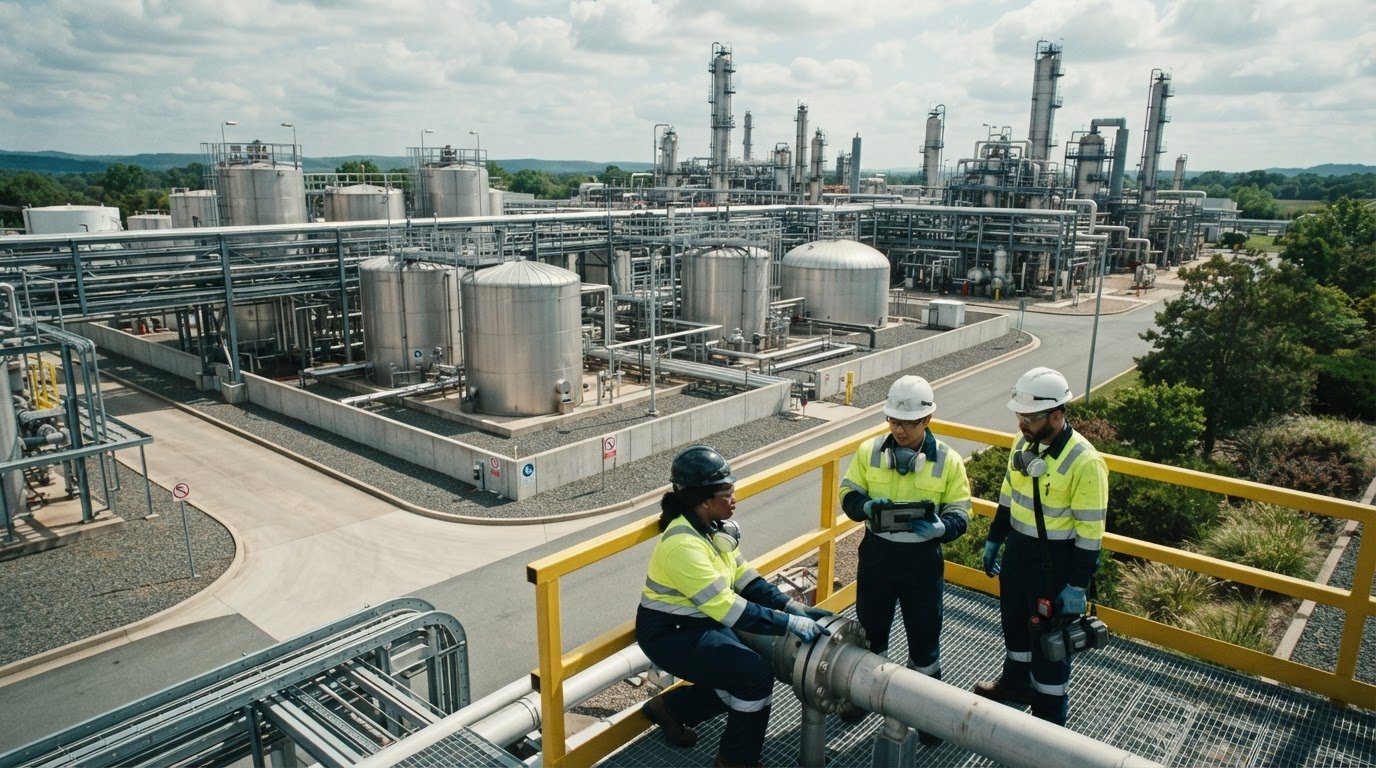
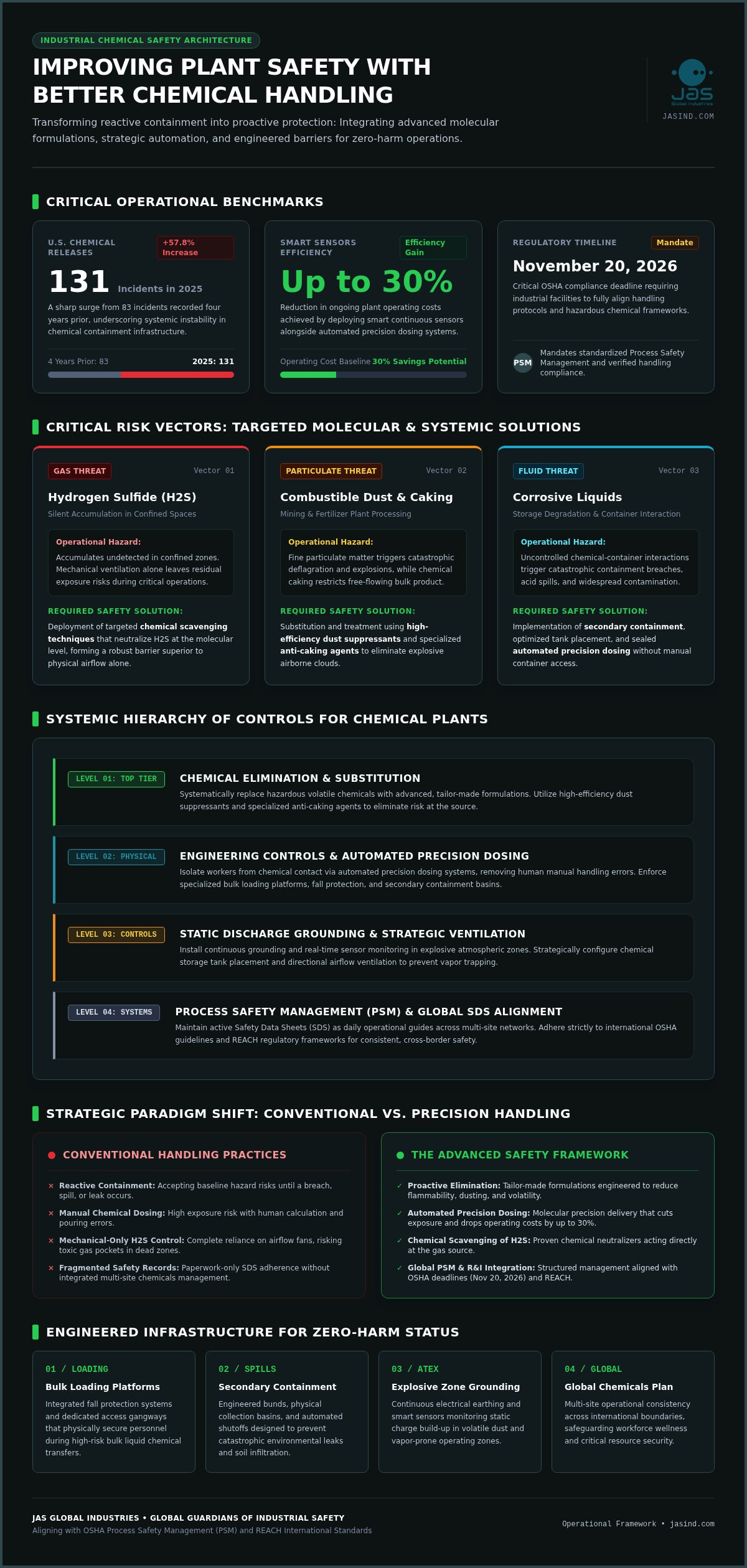
In 2025, industrial chemical accidents resulting in releases in the U.S. surged to 131 incidents, a sharp increase from 83 just four years prior. This trend highlights a growing instability in the critical infrastructure that supports our global resources. You likely feel the pressure of maintaining a zero-harm operational status while facing the constant risks of toxic H2S exposure and dangerous dust accumulation. Improving plant safety with better chemical handling is no longer just a regulatory checkbox; it's a fundamental pillar of ethical industrial leadership and resource security.
We agree that protecting your workforce and your bottom line requires more than just reactive measures. This guide promises to show you how to transform your safety protocols by integrating advanced chemical formulations with strategic, automated handling processes. We'll explore the shift toward precision dosing that reduces manual errors and the role of smart sensors in cutting operating costs by up to 30 percent. You'll learn how to align with the November 20, 2026, OSHA compliance deadlines and implement a protective framework that ensures both human safety and long-term sustainability.
Key Takeaways
- Understand how to transform industrial protocols by integrating advanced formulations and automated dosing, effectively improving plant safety with better chemical handling.
- Learn to apply the Hierarchy of Controls to mitigate risks by substituting hazardous substances with high-efficiency dust suppressants and specialized anti-caking agents.
- Master the management of hydrogen sulfide (H2S) through chemical scavenging techniques that provide a more reliable safety barrier than mechanical ventilation alone.
- Identify strategic design requirements for storage tank placement and ventilation to create a secure industrial ecosystem that protects both personnel and critical resources.
- Discover how leveraging global R&I expertise and tailor-made formulations helps operations achieve zero-harm status while ensuring strict international regulatory compliance.
Defining Modern Chemical Handling Safety in Industrial Plants
Modern industrial safety is not a static list of rules. It is a dynamic ecosystem where hardware, software, and chemistry converge to protect human life and global resources. Industrial chemical handling safety is the strategic integration of protective infrastructure and optimized chemical formulations. When plants rely solely on reactive containment, they accept a baseline of risk that often leads to catastrophic failure. True leadership in this sector demands a shift toward proactive risk elimination. Improving plant safety with better chemical handling begins by acknowledging that the chemistry itself can be a tool for security, not just a hazard to be managed.
The cost of negligence is immense. Beyond the immediate danger to personnel, chemical mismanagement results in severe environmental impact and prolonged operational downtime. A single leak or explosion can halt production for months, eroding trust and stability in the global supply chain. Protecting these assets requires a deep understanding of chemical behavior under pressure.
Identifying Critical Risk Vectors: Gases, Dust, and Liquids
Effective safety starts with identifying invisible threats. Hydrogen Sulfide (H2S) remains a primary concern. It is a silent killer that accumulates in confined spaces, often undetected until it's too late. In mining and fertilizer operations, dust is not just a nuisance; it is a combustible hazard. Fine particles can trigger massive explosions if not managed with specialized anti-dusting agents. Corrosive liquids present a different challenge. Catastrophic storage failure can occur if the interaction between the chemical and the container is not perfectly controlled. Improving plant safety with better chemical handling involves treating these vectors as precision challenges that require targeted, molecular-level solutions.
The Role of Global Regulatory Standards
Compliance is the foundation of a reliable operation. Aligning with OSHA and REACH standards ensures that a facility meets international expectations for safety and environmental stewardship. A central component of this is the Process Safety Management (PSM) framework, which provides the necessary structure for handling highly hazardous substances.
Safety Data Sheets (SDS) are not just paperwork. They are vital operational guides for daily tasks. For multi-site organizations, establishing a global chemicals management plan is essential. This ensures consistency across different regions, providing a stable environment for workers regardless of geography. By integrating these standards into daily workflows, companies move from simple logistics to a mission-oriented focus on community well-being and resource protection.
A Framework for Better Chemical Handling and Risk Mitigation
A robust safety framework functions as a protective shield for both personnel and global resources. It is not enough to simply identify hazards; we must systematically reduce them through a structured Hierarchy of Controls. This begins with the elimination of unnecessary risks and the substitution of hazardous materials with safer alternatives. When these top-tier options are exhausted, engineering and administrative controls provide the remaining layers of security. By adhering to established OSHA chemical hazard guidelines, industrial leaders can build a foundation of trust and reliability. Improving plant safety with better chemical handling requires moving away from manual, high-risk tasks toward precision-engineered systems that minimize human exposure.
Engineering Controls and Physical Infrastructure
Physical infrastructure acts as the first line of defense against operational failure. Specialized bulk loading platforms and fall protection systems ensure that personnel remain secure during high-risk transfers. We prioritize secondary containment and spill prevention systems to prevent catastrophic environmental contamination. In explosive zones, grounding and continuous monitoring are essential to prevent static discharge. Implementing these engineering layers is a proven strategy for improving plant safety with better chemical handling. Automated dosing systems further enhance this protection by removing human error from the dosing process, ensuring that chemicals are applied with absolute precision.
Administrative Controls and Personnel Training
Training transforms plant staff into global guardians of industrial stability. It's not just about following rules; it's about understanding the broader impact of their actions on community well-being. Standard Operating Procedures (SOPs) for high-risk chemical transfers must be clear and strictly enforced. Regular technical audits identify process vulnerabilities before they become incidents. Effective emergency response planning for leaks ensures that when failures occur, the impact is localized and managed. These administrative layers create a culture of vigilance and responsibility.
Technical audits can reveal hidden risks in your current dosing lines and storage configurations. You can consult with our specialists to optimize your infrastructure and ensure long-term operational security. By focusing on both the hardware and the humans operating it, you create a stable, mission-oriented environment that protects the fundamental needs of society.
Mitigating Risks with Advanced Chemical Formulations
Safety is not just a function of physical barriers. It is rooted in molecular behavior. Improving plant safety with better chemical handling involves formulating products to be inherently safer during storage, transport, and application. While hardware prevents falls, specialty chemicals prevent the very conditions that lead to explosions and mechanical failure. We treat these formulations as active guardians of industrial stability, ensuring that materials remain stable under diverse environmental pressures.
Chemical degradation creates secondary safety risks that hardware alone cannot address. When a product loses its integrity, it becomes a hazard. Formulating for stability is a mission-oriented approach to resource protection. It ensures that the critical chemicals powering our infrastructure don't become the source of its downfall.
Dust Suppression: Beyond Product Loss Prevention
Dust is a volatile threat. In fertilizer and mining operations, the accumulation of fine particles creates a high risk of combustible dust explosions. High-efficiency dust suppressants act at the source, binding particles to prevent them from becoming airborne. This significantly improves visibility and air quality within mineral processing plants. Consulting the NIOSH Pocket Guide to Chemical Hazards provides essential data on respiratory exposure limits; however, advanced suppressants proactively eliminate the need for heavy PPE by maintaining a clean atmosphere. Selecting the right suppressant requires a technical understanding of specific mineral types, ensuring the formulation provides long-lasting protection during handling and storage.
Anti-Caking Agents: Ensuring Safe Storage and Transport
Mechanical failures often stem from poor material flow. When bulk solids cake, they form structures known as bridging or rat-holing within storage silos. These obstructions are dangerous. They lead to uneven pressure on silo walls and often force workers to engage in hazardous manual silo cleaning. Improving plant safety with better chemical handling means preventing these formations at the molecular level.
The synergy between anti-caking agents and safe material handling ensures that products remain free-flowing, even during long-distance maritime transport. Tailor-made formulations account for humidity and temperature fluctuations, providing a stable environment for global resource distribution. By eliminating the root cause of caking, we protect the personnel responsible for moving these vital goods across the world.
Advanced Strategies for Gas and Water Safety Management
Industrial environments are defined by the fluids and gases they process. When these elements are left unmanaged, they threaten the stability of global resource infrastructure. Hydrogen Sulfide (H2S) is widely recognized as the silent killer in mining and natural gas sectors. It's invisible, lethal, and pervasive. While mechanical ventilation provides a basic level of airflow, it often fails to eliminate the hazard at the source. Optimizing H2S treatment through chemical scavenging offers a more reliable layer of security. Scavengers neutralize toxic molecules within the process stream, preventing them from escaping into the workspace or surrounding community. This proactive approach is essential for improving plant safety with better chemical handling.
We view gas and water management as a mission to protect both human life and the environment. By integrating smart sensors with advanced dosing, plants can reduce operational risks significantly. Data indicates that digitalization in the industrial water sector can reduce the total cost of operation by up to 30 percent through optimized dosing. This efficiency doesn't just save money; it creates a stable, predictable environment where accidents are prevented before they occur.
H2S and Odor Treatment in Mining and Natural Gas
Neutralizing toxic gases requires precise chemical dosing strategies. Our global R&I centers develop formulations that target H2S at the molecular level, ensuring rapid reaction times and complete neutralization. Beyond personnel safety, effective odor control is vital for maintaining positive community relations. Real-time monitoring combined with automated chemical response protocols allows plants to react to gas spikes instantly. This level of control transforms a hazardous site into a stable industrial pillar, ensuring that local ecosystems and populations remain protected.
Water Treatment: Preventing Corrosion and Scale
Water is the lifeblood of industrial plants, but it is also a primary driver of infrastructure decay. Scale and corrosion are not just efficiency issues; they lead to catastrophic equipment failure and pressurized leaks. Protecting infrastructure through industrial water treatment is a core component of our protective framework. We utilize strategic antiscalants in high-efficiency RO systems to maintain membrane integrity. In cooling towers, biocides prevent biological growth that can compromise heat exchange and worker health. Improving plant safety with better chemical handling includes the rigorous management of these aqueous systems to ensure long-term operational reliability.
Ensuring gas and water safety requires a sophisticated understanding of chemical kinetics and system design. You can explore our specialized gas and water treatment solutions to secure your plant’s future and protect your most valuable assets.
The JAS Approach: Global Guardians of Industrial Safety
Operating since 1998, JAS Global Industries has established itself as an indispensable pillar of modern infrastructure. We don't view ourselves as a mere supplier of specialty chemicals. We are global guardians of the resources that sustain society. Improving plant safety with better chemical handling requires a partner that understands the intersection of technical expertise and ethical responsibility. Our technical consulting services move beyond simple recommendations. We guide our partners from the initial audit to full-scale on-site implementation, ensuring that every safety protocol is grounded in reliable data and proven chemistry.
Our headquarters in Dubai and multiple global R&I centers allow us to maintain a steady, authoritative presence across the world's most critical industries. We provide the stability needed to protect global food and mineral resources. By integrating advanced mining solutions into a broader safety framework, we help operations achieve zero-harm status while maximizing efficiency. Reliability is our core value. Trust is our foundation.
Custom Formulations for Unique Operational Challenges
Off-the-shelf chemicals often fail to address the specific safety risks inherent in complex industrial environments. Every plant has unique variables; temperature, humidity, and raw material mineralogy all dictate chemical behavior. Generic solutions can lead to inadequate protection or process instability. The JAS process eliminates this uncertainty through rigorous laboratory testing followed by precise on-site implementation. We develop tailor-made formulations that address your specific challenges, such as manual dosing errors or inconsistent material flow. These innovations enhance reliability and significantly reduce the risk of catastrophic failure.
Long-Term Partnerships and Global Resource Security
Our commitment to our partners goes beyond the transaction. We build long-term relationships rooted in the shared goal of global resource security. When industrial processes are safe, the global supply of food and minerals remains stable. This is the broader human impact of our technical solutions. We act as a foundational industry presence, focusing on the fundamental needs of the communities we serve. Improving plant safety with better chemical handling is a continuous journey of optimization and vigilance.
Stability requires action. A comprehensive technical audit is the most effective way to identify vulnerabilities and improve your plant yields. We invite you to contact us for a consultation. Let us help you secure your operations and protect the vital resources that power our world.
Securing the Future of Industrial Operations
True industrial safety is an ongoing mission to protect critical resources and human life. We've explored how improving plant safety with better chemical handling requires a strategic blend of physical engineering and molecular-level intervention. By replacing manual risks with automated dosing and tailor-made formulations, plants achieve a state of zero-harm stability. These steps ensure that your facility isn't just compliant, but inherently resilient against the volatile nature of industrial processing.
JAS Global Industries has been a foundational industry presence since 1998. With R&I centers across three continents, we provide authoritative expertise in H2S treatment and fertilizer anti-caking. We don't just supply chemicals; we act as global guardians for your infrastructure. Our technical audits identify vulnerabilities before they manifest as failures, ensuring your operation remains a reliable pillar of modern society. Take the first step toward proactive protection today. Secure your operations with JAS Global Industries' technical consulting and transform your facility into a model of industrial security. We look forward to building a long-term partnership that safeguards your workforce and your yields.
Frequently Asked Questions
What are the most common safety hazards in industrial chemical handling?
Toxic gas exposure, combustible dust, and corrosive liquid leaks represent the most significant threats to industrial stability. Hydrogen sulfide (H2S) is a silent killer that accumulates in confined spaces, while fertilizer dust poses a constant explosion risk in mining and storage facilities. Manual handling errors during dosing also contribute to frequent accidental exposures. Identifying these vectors early is essential for protecting your workforce and maintaining global resource security.
How do anti-caking agents improve worker safety in fertilizer plants?
Anti-caking agents prevent the formation of unstable material bridges and rat-holes inside large storage silos. By maintaining consistent material flow, these formulations eliminate the need for workers to enter confined spaces for hazardous manual cleaning. This proactive intervention is a cornerstone of improving plant safety with better chemical handling. It ensures that bulk solids remain stable and free-flowing throughout the entire supply chain, from production to maritime transport.
Can chemical dust suppressants replace mechanical dust extraction systems?
Chemical dust suppressants don't always replace mechanical extraction, but they offer superior protection at the source by preventing particles from becoming airborne. While extraction systems only manage dust that has already escaped, suppressants bind fine particles together during processing. This reduces the load on filtration hardware and provides long-lasting protection in areas where mechanical extraction isn't feasible, such as during open-air transport or in expansive mineral processing zones.
What is the role of H2S scavengers in preventing industrial accidents?
H2S scavengers neutralize lethal hydrogen sulfide molecules within the process stream, converting them into non-toxic, stable compounds. This molecular-level treatment is far more reliable than mechanical ventilation because it eliminates the hazard before it can accumulate. Effective scavenging protects personnel in mining and natural gas sectors from sudden gas spikes. It acts as a vital guardian of both human life and the surrounding community's environmental well-being.
How often should a plant undergo a technical safety audit for chemical handling?
Industrial facilities should undergo a comprehensive technical safety audit at least once per year. More frequent reviews are necessary if you change production volumes or introduce new chemical formulations. JAS Global Industries has provided these specialized audits since 1998, helping partners optimize their dosing strategies. Regular audits ensure that your protective infrastructure remains capable of securing global resources while meeting the latest international safety and environmental regulations.
What is the hierarchy of controls in chemical safety management?
The hierarchy of controls is a structured framework that prioritizes the most effective safety measures. It begins with the elimination of hazards and the substitution of dangerous chemicals with safer alternatives. Engineering controls, such as secondary containment, follow as the next layer of defense. Administrative controls and personal protective equipment are considered the final, least effective options. A mission-oriented safety strategy always seeks to solve risks at the highest level possible.
How can automated dosing systems reduce the risk of chemical exposure?
Automated dosing systems remove the human element from the most dangerous stages of chemical processing. By using precision pumps and real-time sensors, these systems ensure that specialty chemicals are applied in exact volumes without manual intervention. This significantly reduces the likelihood of spills or inhalation incidents. Implementing automation is a primary strategy for improving plant safety with better chemical handling, as it creates a stable and predictable operational environment.