
The difference between a high-performing water system and a costly infrastructure failure often comes down to a few parts per million of a single chemical shield. You've likely experienced the operational strain of frequent clean-in-place cycles and the constant threat of mineral scaling that permanently damages your equipment. It's a difficult task to balance tight chemical budgets with the need for peak efficiency and reliable water output.
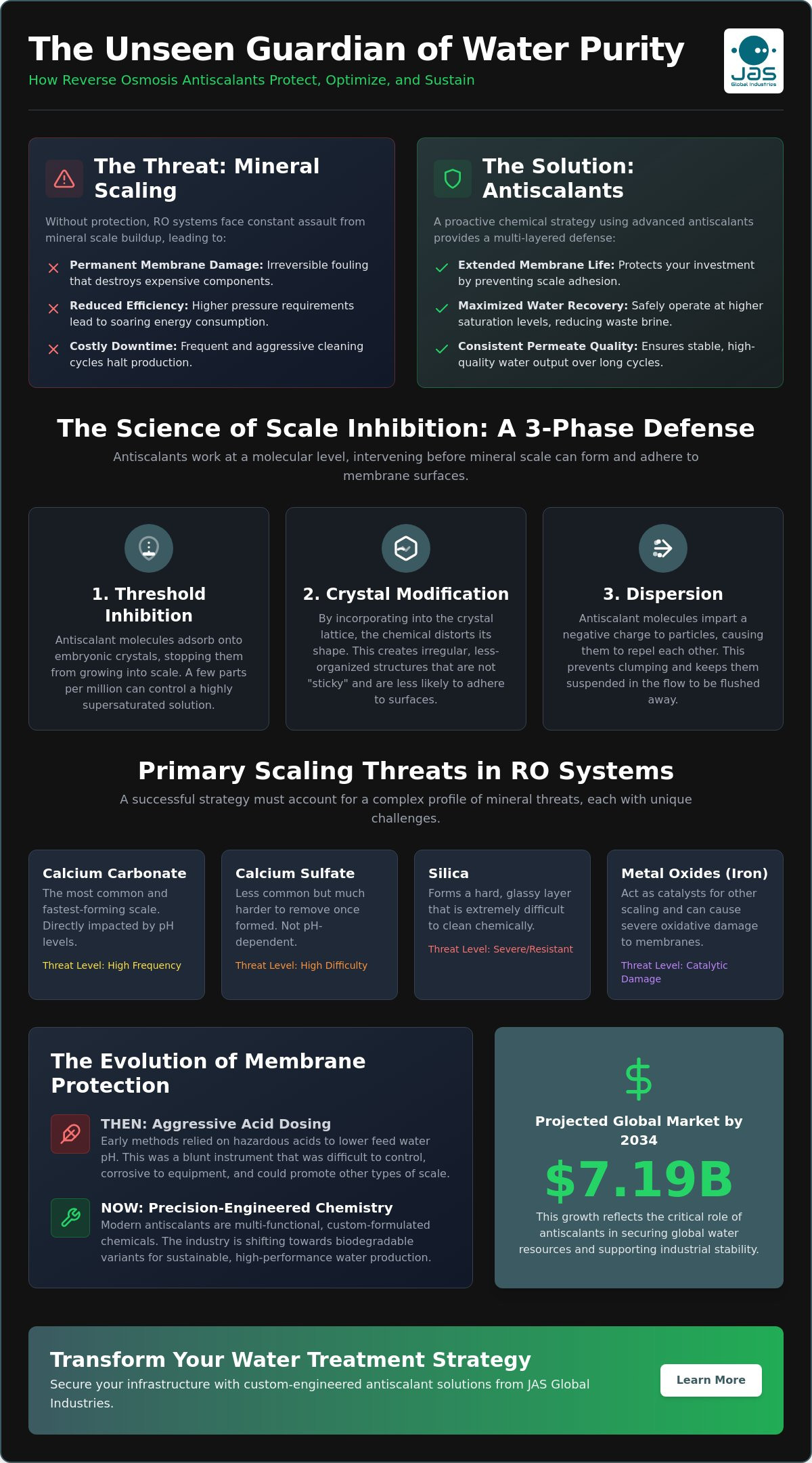
This technical guide demonstrates how the right antiscalant for reverse osmosis membranes acts as a vital guardian for your infrastructure, extending membrane life and ensuring consistent permeate quality. By optimizing your chemical strategy, you can reduce energy consumption through lower pressure requirements and secure the long term stability of your water resources. We'll examine the chemistry behind effective scale inhibition, the importance of NSF/ANSI 60 certification, and how these solutions contribute to global water security in a market projected to reach 7.19 billion USD by 2034.
Key Takeaways
- Understand how surface-active agents inhibit mineral scale formation, allowing systems to operate safely beyond the traditional limits of the Langelier Saturation Index.
- Explore the core science of threshold inhibition and crystal distortion to prevent mineral adhesion and protect your long-term membrane investment.
- Learn the technical criteria for choosing the right antiscalant for reverse osmosis membranes, balancing phosphonate and polymeric chemistries for complex mineral profiles.
- Discover how data-driven dosing strategies and comprehensive water analysis minimize chemical waste while maximizing permeate quality.
- See how custom-engineered chemical formulations transform industrial water treatment into a sustainable pillar of global resource stability.
What is an Antiscalant for Reverse Osmosis Membranes?
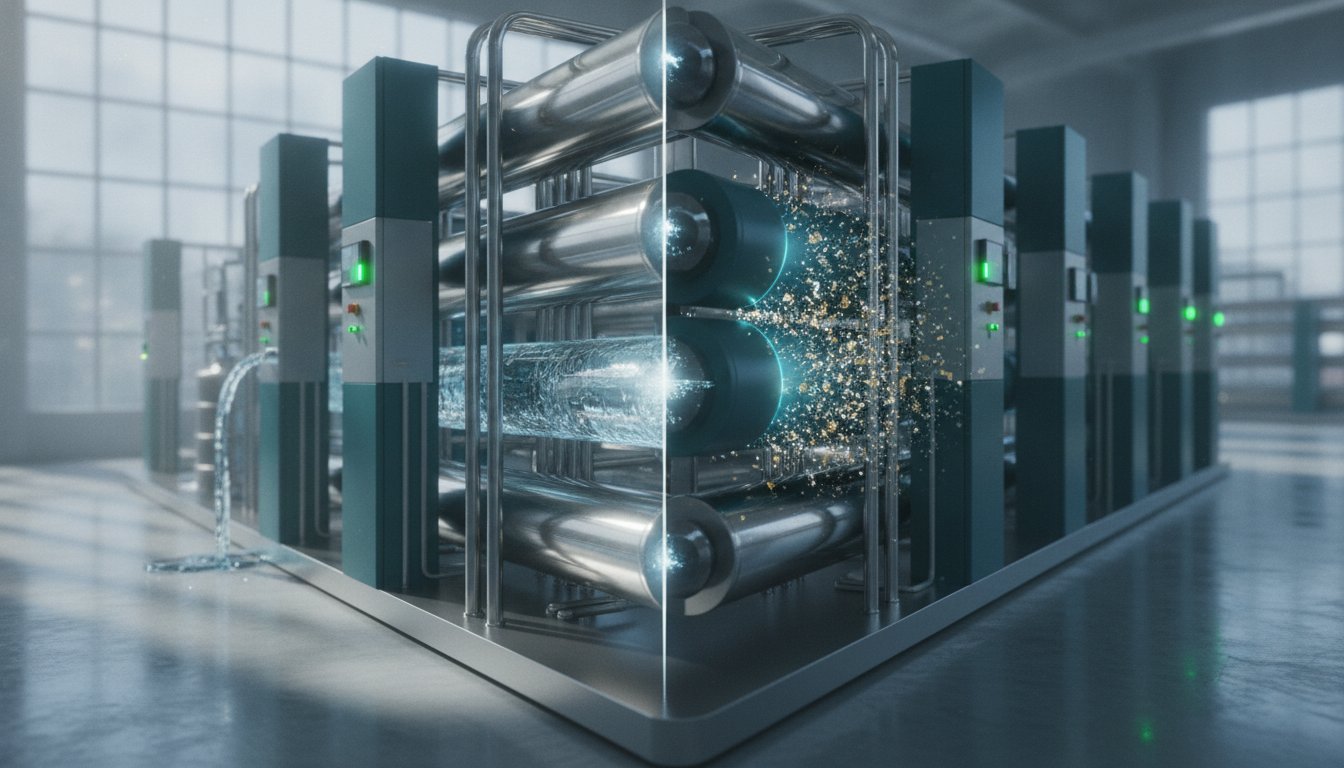
An antiscalant serves as a specialized surface-active agent. It inhibits the formation of mineral scales that threaten the productivity of water systems. In the context of global resource management, selecting an effective antiscalant for reverse osmosis membranes is a strategic necessity. These chemicals prevent the precipitation of supersaturated salts. They protect the delicate polyamide layers of the membrane from physical and chemical degradation. By maintaining clean surfaces, these agents ensure that water treatment remains a reliable pillar of modern infrastructure.
Engineers once viewed scaling as an unavoidable limit defined by the Langelier Saturation Index (LSI). Modern chemistry has changed that perspective. Advanced antiscalants allow systems to operate at saturation levels far exceeding traditional equilibrium points. This advancement enables higher recovery rates in both brackish water treatment and large-scale seawater desalination. It maximizes the yield from every drop of feed water. It reduces the volume of concentrated brine that requires disposal. This efficiency is vital for regions facing severe water scarcity.
Effective scaling control requires a dual-action approach. Scale inhibition focuses on the molecular level to prevent the birth of crystals. Dispersancy ensures that any particles already present remain suspended in the flow. This combination is vital for maintaining hydraulic efficiency. It prevents the "blinding" of membrane pores. It ensures that permeate quality remains consistent over long operational cycles. Without this protection, membrane systems would succumb to rapid fouling and irreversible damage.
The Evolution of Membrane Protection
The history of membrane protection is a story of technical maturity. Early operators used aggressive acid dosing to control pH levels. This method was often hazardous and promoted the growth of other scales like calcium sulfate. Modern industrial water treatment now relies on precision-engineered specialty chemicals. These formulations provide multi-scale protection in a single dose. We are now seeing a vital transition toward biodegradable variants. These green chemistries ensure that high-performance water production does not come at an environmental cost.
Primary Scaling Challenges in RO Systems
Several mineral species pose a constant threat to system stability. Calcium Carbonate is the most common, but Calcium Sulfate and Barium Sulfate are more difficult to remove once they form. Silica and metal oxides are particularly dangerous because they often form a hard, glassy layer that resists standard cleaning. Concentration polarization accelerates scale formation at the membrane surface by creating a stagnant boundary layer where mineral concentrations far exceed those in the bulk feed water. Understanding these challenges is the first step in building a resilient water treatment strategy.
The Science of Scale Inhibition: How Antiscalants Work
Protecting critical water infrastructure requires more than basic filtration. It demands a molecular intervention. Deploying a high-performance antiscalant for reverse osmosis membranes involves mastering three distinct chemical mechanisms: threshold inhibition, crystal modification, and dispersion. These processes don't just delay scaling; they fundamentally alter the physical behavior of minerals in the feed water. By managing these interactions, operators can ensure the stability of global water resources even under extreme mineral loads.
Effective scale control also relies on sequestration. This process involves the chemical "trapping" of metal ions such as Iron and Manganese. These ions often act as catalysts for more aggressive fouling and mineral deposition. By binding these metals into soluble complexes, antiscalants prevent them from precipitating on the membrane surface. This protective shield is essential for maintaining flux and reducing the frequency of aggressive chemical cleanings that shorten membrane lifespan.
Threshold Inhibition Explained
Threshold inhibition is a remarkably efficient process. It allows sub-stoichiometric amounts of chemical to inhibit massive volumes of potential scale. A few parts per million can stabilize a solution that is hundreds of times past its saturation point. The antiscalant molecules achieve this through high-affinity adsorption onto the active growth sites of embryonic crystals. This adsorption halts the growth process before a visible solid can form. While this mechanism is highly effective in RO systems, its performance varies across temperature ranges. In thermal desalination, specialized formulations are required to maintain this stability as heat increases the kinetic energy of mineral ions.
Crystal Modification and Dispersancy
When crystals do manage to form, the antiscalant initiates crystal distortion. It integrates into the mineral lattice, causing the structure to become irregular and fragile. You can visualize this as a transformation from a hard, interlocking crystalline sheet into a soft, non-adherent sludge. This sludge can't stick to the membrane and is easily swept away by the concentrate flow. This process works in tandem with dispersion. Dispersants impart a negative charge to particles, creating a natural repulsion that keeps them suspended in the water column.
The synergy between surfactant chemistry and scale control is a cornerstone of modern membrane protection. These combined forces manage both dissolved minerals and suspended colloidal matter. For facilities managing complex feed water, exploring advanced water treatment chemicals is a vital step toward operational security and long-term membrane health.
Selecting the Right Antiscalant Chemistry for Your Feed Water
Selecting the correct antiscalant for reverse osmosis membranes is a precise engineering decision rather than a simple commodity purchase. Your feed water profile dictates the chemical strategy. Seawater desalination requires chemistries that can handle extreme ionic strength and high calcium concentrations. Conversely, wastewater reclamation projects often face complex organic fouling alongside mineral scaling. Matching the chemistry to these specific stressors ensures system reliability and protects the massive capital investment of a modern RO facility.
Compatibility remains a critical factor for long-term membrane health. If your pretreatment involves chlorine, you must ensure your antiscalant doesn't degrade or react unfavorably. Many operators utilize non-oxidizing biocides to control biofouling. In these cases, the antiscalant must remain stable and effective in the presence of these secondary agents. A failure in chemical compatibility can lead to irreversible membrane "blinding" or reduced rejection rates, compromising the security of the water supply.
Phosphonates: The Heavy-Duty Scale Inhibitors
Phosphonate-based chemistries are the industry standard for managing high calcium carbonate and sulfate scaling potential. They offer exceptional sequestration properties, which are vital when dealing with feed waters containing trace metals. Phosphonates generally outperform traditional polymers in systems where the LSI ranges from +1.5 to +2.5. However, they face limitations in high-iron environments where they can form insoluble iron-phosphonate complexes. Additionally, facilities operating under strict phosphorus discharge limits must carefully weigh the use of these formulations against local environmental regulations.
Polymeric Antiscalants: The Versatile Solution
Polymeric solutions, including Polyacrylic Acid (PAA) and Polymaleic Acid (PMA), provide a versatile alternative for complex water profiles. These polymers excel in high-fouling environments and are particularly effective at managing silica scaling in industrial reuse and geothermal applications. They work by maintaining a strong negative charge on suspended particles, preventing the adhesion of colloidal matter to the membrane surface. It's a technical approach that mirrors how mining solutions utilize advanced polymer tech for mineral management in high-solids environments. Polymeric antiscalants are often the preferred choice when environmental permits require phosphorus-free discharge, offering a sustainable path for large-scale water production.
For specialized applications like high-silica geothermal water, hybrid formulations are often necessary. These blends combine the threshold inhibition of phosphonates with the dispersancy of polymers. This dual-action approach is essential for preventing the hard, glassy deposits that silica forms. By choosing a site-specific chemistry, you transform water treatment from a maintenance challenge into a stable, efficient process that supports both industrial growth and community well-being.
Optimizing Dosing Strategies and System Performance
Precision in chemical application is the bridge between advanced chemistry and operational longevity. A comprehensive water analysis serves as the essential foundation for any dosing strategy. This analysis must account for seasonal variations in feed water quality to ensure the antiscalant for reverse osmosis membranes remains effective year-round. By calculating the precise dosage based on recovery percentages and mineral saturation levels, operators can maintain peak performance without unnecessary chemical waste. This data-driven approach transforms water treatment into a predictable, high-efficiency process.
Monitoring system health requires a focus on normalized flux and salt passage. These indicators provide early warnings of scale formation before it becomes irreversible. Integrating dosing pumps with real-time SCADA systems allows for immediate adjustments to changing feed conditions. This level of automation provides a layer of industrial security. It ensures that the protective chemical shield is always proportional to the scaling risk. For facilities aiming to achieve this level of precision, partnering with specialized water treatment experts provides the technical support needed to refine these critical workflows.
One of the most overlooked risks in membrane management is over-dosing. When antiscalant concentrations exceed the required threshold, the chemical itself can become a foulant. High concentrations of certain polymers can lead to organic fouling or "blinding" of the membrane surface. This paradox highlights why "more" isn't always "better" in industrial chemistry. Precision is the only path to true operational stability.
The Dosing Calculation Process
The first step in calculation involves identifying the limiting salt in the concentrate stream. Whether it's calcium sulfate or silica, this mineral dictates the maximum safe recovery rate. Operators must also account for pH adjustments; lowering pH often increases the solubility of carbonate scales but can negatively impact the efficiency of certain antiscalant molecules. Calibrating your dosing pump requires a steady, proportional approach. It's a three-step process: verify the pump's stroke frequency, measure the actual volume delivered over a set time, and adjust the concentration to match the feed water flow rate.
Chemical Compatibility and Pretreatment Integration
A significant gap in many operational strategies is the failure to account for chemical interactions. Most antiscalants are anionic. If your pretreatment uses cationic coagulants or flocculants, the two can react to form a sticky, gummy residue on the membrane surface. This "gumming" is notoriously difficult to clean and can cause immediate pressure spikes. Managing these interactions requires careful sequencing and compatibility testing. In brackish systems, the role of h2s treatment is also vital. Preventing sulfide-based scaling ensures that mineral inhibitors aren't overwhelmed by unexpected metallic precipitates. This holistic view of pretreatment is what separates a world-class facility from one plagued by frequent downtime.
JAS Global: Tailor-Made Antiscalant Solutions for Industrial Security
JAS Global Industries operates as more than a chemical provider. We act as a strategic partner in the protection of global water resources. Generic, off-the-shelf products often fail to address the specific geochemical signatures of unique feed waters. Our methodology focuses on the development of a site-specific antiscalant for reverse osmosis membranes. By moving beyond standard chemistry into custom-engineered formulations, we provide the industrial security required for large-scale desalination and wastewater reuse projects. Protecting resources. Powering progress.
Our global R&I centers serve as the technical backbone of our operations. These facilities allow us to conduct comprehensive technical auditing and on-site laboratory testing. We don't guess; we analyze. This process optimization ensures that every dosing strategy is grounded in empirical data. It minimizes chemical consumption while maximizing membrane longevity. This commitment to precision is what defines the JAS Global advantage. We integrate high-performance water treatment with the broader goal of global resource stability. Our role is that of a vital guardian for the world's most critical infrastructure.
Custom Formulations for Global Challenges
We specialize in solving the industry's most complex scaling problems. Our case studies include successful interventions in high-silica and high-temperature RO applications where standard inhibitors proved insufficient. These environments require a unique blend of threshold inhibition and specialized dispersancy. From our headquarters in Dubai, we serve as a central hub for Middle Eastern and African desalination expertise. This geographic positioning allows us to respond rapidly to the needs of the world's most water-stressed regions. We maintain a firm commitment to sustainable and cost-effective chemical technologies that respect both the balance sheet and the environment.
Beyond Supply: Technical Partnership
Industrial security requires a long-term vision. We offer technical consulting and process optimization services designed to enhance plant-wide efficiency. These engagements often involve specialized fees for auditing and performance monitoring. Our bulk chemical supply contracts provide the operational reliability needed for continuous production. We ensure that your facility never faces a shortfall of critical protection agents. By choosing a technical partnership over a transactional relationship, you secure the future of your infrastructure. Optimize your RO system with a technical audit from JAS Global Industries to ensure your facility meets the highest standards of efficiency and reliability.
Securing the Future of Global Water Infrastructure
Effective water management is a cornerstone of industrial stability and community well-being. We have explored how the right antiscalant for reverse osmosis membranes transforms a maintenance-heavy process into a high-performance asset. By mastering the molecular mechanisms of threshold inhibition and crystal distortion, operators can protect their infrastructure from irreversible damage. Precision dosing and site-specific chemistry are no longer optional; they are essential for long-term operational security.
JAS Global Industries has served as a vital guardian of industrial resources since 1998. Our multiple Global R&I Centers develop tailor-made formulations for the world's most complex industrial ores and water profiles. We provide the technical expertise needed to navigate the challenges of scaling and fouling in an increasingly water-stressed world. It's time to move beyond generic solutions toward a strategy of total system protection and reliability.
Take the next step in optimizing your facility's efficiency. Request a Technical Consultation for Your RO System and partner with an industry leader dedicated to your success. Together, we can ensure the stability of your water resources for years to come.
Frequently Asked Questions
What is the difference between an antiscalant and a scale inhibitor?
Antiscalants are a specialized category of scale inhibitors engineered specifically for membrane applications. While the terms are often used interchangeably, antiscalants focus on preventing mineral precipitation under the high-pressure conditions found in RO systems. They utilize threshold inhibition and crystal distortion to maintain membrane flux and protect delicate polyamide surfaces from physical damage.
Can antiscalants replace the need for water softening in RO pretreatment?
Antiscalants can effectively replace ion-exchange softening in many RO pretreatment trains. By stabilizing hardness ions in the concentrate stream, these chemicals prevent precipitation without the need for salt-intensive regeneration. This approach reduces operational costs and minimizes the environmental footprint of the facility by lowering the volume of wastewater produced during the softening process.
How do I know if my RO membranes are scaling or fouling?
You can distinguish scaling from fouling by monitoring where the pressure drop occurs within the system. Scaling usually affects the last stage of the RO system where mineral concentrations are highest. Fouling often targets the lead elements of the first stage. Salt passage and normalized flux provide the technical data needed for a precise diagnosis of the issue.
Is it possible to over-dose RO antiscalant?
Over-dosing an antiscalant for reverse osmosis membranes is a common mistake that leads to chemical fouling. When concentrations exceed the saturation limit of the polymer itself, it can form a gummy residue on the membrane surface. This blinding layer restricts flow and often requires aggressive, costly cleaning to remove, which can shorten the overall lifespan of your equipment.
Are RO antiscalants safe for drinking water production?
Certified antiscalants are entirely safe for potable water production when used within specified dosage limits. Look for the NSF/ANSI 60 seal to ensure the product has undergone rigorous safety testing by independent bodies. This certification guarantees that the chemical won't compromise the safety or quality of the finished drinking water provided you follow the manufacturer's guidelines.
How often should I perform a water analysis for antiscalant calibration?
Conduct a full water analysis at least every three months to account for seasonal variations in feed quality. If you utilize surface water or varying well sources, more frequent testing may be necessary to maintain system security. Accurate data is the only way to calibrate your dosing software for maximum efficiency and to prevent unexpected scaling events.
What are the environmental impacts of antiscalant discharge in RO concentrate?
The environmental impact of antiscalant discharge depends largely on the chemical's phosphorus content and biodegradability. Phosphonates can contribute to nutrient loading in aquatic ecosystems if they aren't properly managed. Many modern facilities now opt for biodegradable, phosphorus-free polymers to comply with evolving environmental regulations and protect local biodiversity while maintaining high performance levels.
Can I use the same antiscalant for both brackish water and seawater RO?
It's generally not recommended to use the same formulation for both brackish and seawater systems. Seawater requires chemistries that remain stable in high-salinity environments, while brackish water often presents higher risks from silica and carbonate. Tailoring the antiscalant for reverse osmosis membranes to the specific water profile ensures the highest recovery rates and operational stability.