
The best flocculant isn’t simply the one that forms the biggest floc. Flocculants work when their properties match the particles and process conditions, helping suspended solids gather into aggregates that are easier to separate.
If solids settle slowly or remain difficult to remove, start by defining the separation problem rather than choosing a chemical by name. Coagulants and flocculants have related but distinct roles: coagulants help destabilize fine particles, while flocculants encourage particles to join into larger flocs. Feed characteristics, water chemistry, mixing, and downstream handling all affect performance.
This guide explains how flocculants work, where they’re used, and how to evaluate them for an industrial process. It also compares flocculants with coagulants and outlines practical ways to assess candidates. For mining operations, where mineral-processing streams and tailings vary by site, JAS Global Industries supplies mining flocculants and develops tailor-made formulations for industrial partners. A process-focused evaluation helps connect the chemical’s role to the separation task and operating conditions.
Key Takeaways
- Define the separation goal first, then document feed characteristics and downstream handling needs.
- Compare flocculants by how their chemistry fits the particles and operating conditions, not by category alone.
- Account for water chemistry, mixing, and process constraints when evaluating candidates.
- Use representative trials to compare aggregation, settling, clarification, and solids handling in the context of your process.
- JAS Global Industries supplies mining flocculants and develops tailor-made formulations for industrial partners.
What Are Flocculants, and What Problem Do They Solve?
Fine particles can stay suspended in water for long periods, even when a process relies on gravity to separate solids from liquid. Their small size and surface interactions can make them difficult to settle or capture. Flocculants are chemicals that help suspended particles aggregate into larger flocs, making the solids easier to separate from a liquid. These clusters can be better suited to settling, clarification, or another downstream separation step.
Flocculants are also known as clarifying agents. Their role is to help particles form separable clusters, not to perform every stage of treatment. Sedimentation uses gravity to settle solids from liquid. Filtration passes liquid through a medium that retains particles. Flocculation can support either approach by changing particle size and structure, but it doesn’t replace settling equipment, filters, or the wider process design.
How flocculants differ from coagulants
Coagulation and flocculation describe related but distinct actions. Coagulation destabilizes dispersed particles, reducing the forces that keep them apart. Flocculation promotes aggregation, allowing particles to gather into larger clusters. A treatment train may use a coagulant before a flocculant, but the sequence depends on the application and feed. Some processes use one stage or the other; neither chemical is necessary in every case.
This distinction helps clarify what a treatment chemical needs to do. If fine particles remain stable in suspension, destabilization may be relevant. If particles have been destabilized but still form clusters too slowly or remain too small for the next separation step, aggregation may be the focus. Define the process objective before deciding which action is needed.
Where industrial flocculants are used
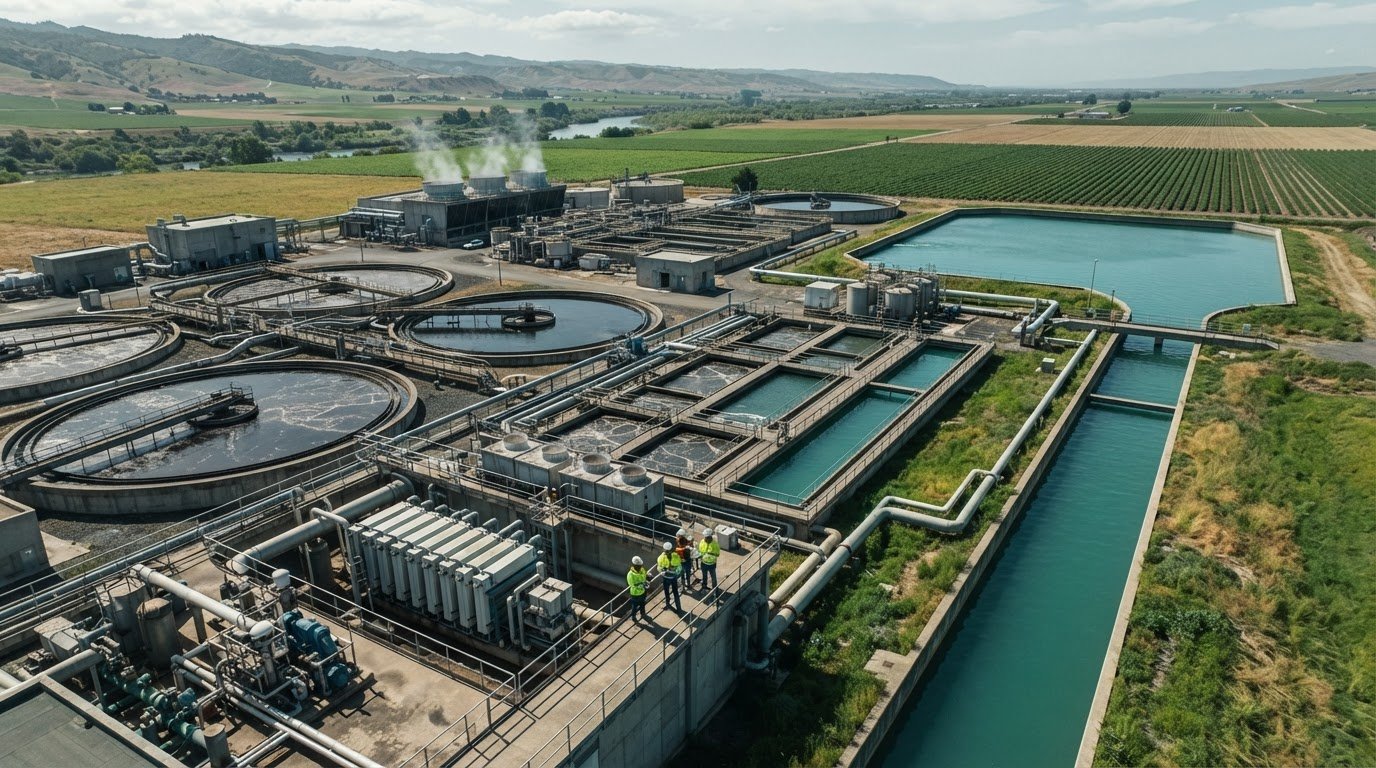
Industrial processes use flocculation wherever suspended solids need to be separated from liquid. In wastewater treatment, it can support clarification or sludge handling. In mining, it can assist solid-liquid separation in mineral processing and tailings treatment. Other settings, including pulp and paper production or industrial water treatment, may also use flocculation when particle separation is required.
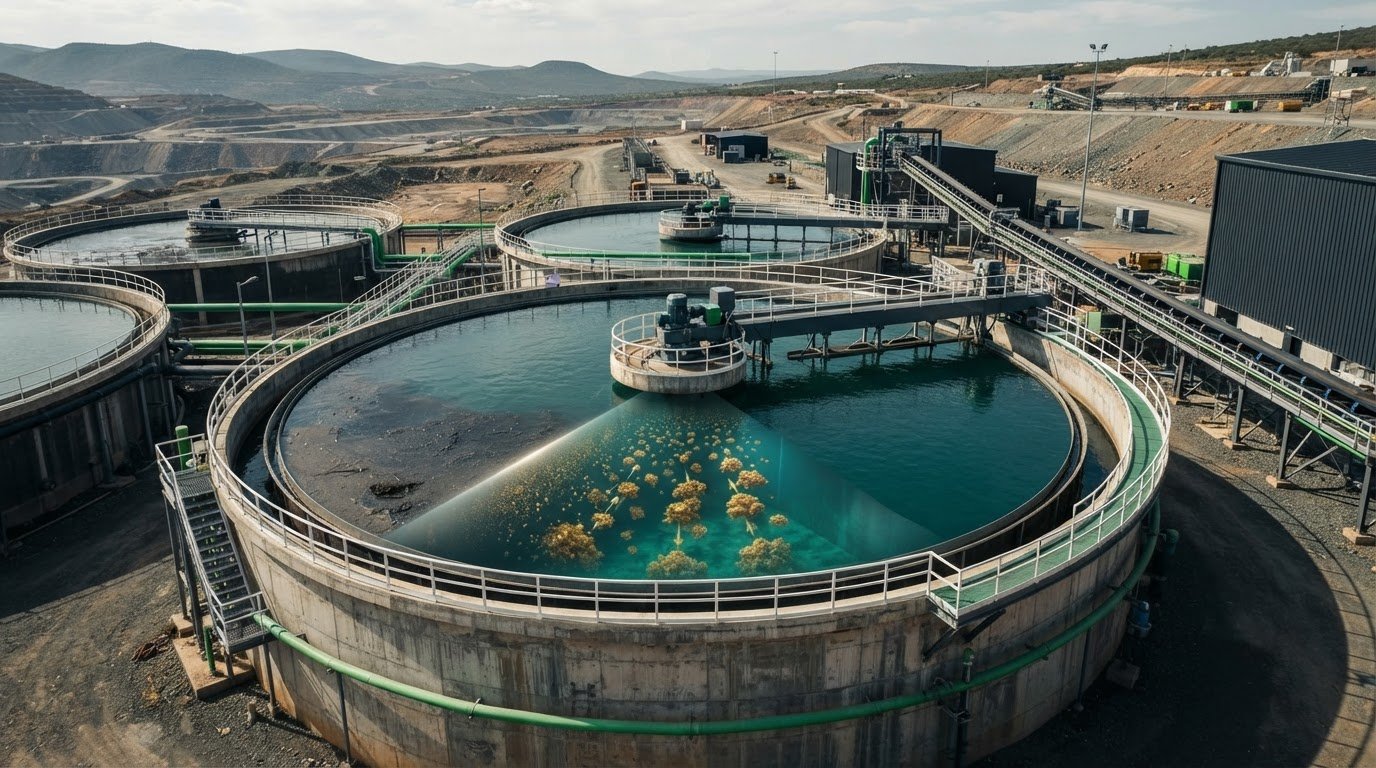
Mining illustrates why process context matters. Mineral slurries differ in solids, water chemistry, and operating conditions, so the separation objective should guide chemical evaluation. Flocculants are one part of broader mining chemistry, not a standalone answer to every solids-handling challenge. JAS Global Industries supplies mining flocculants and develops tailor-made formulations for industrial partners. Its wider mining chemistry portfolio provides context for considering how a formulation fits a site’s process requirements.
How Flocculants Work: From Particle Interaction to Separation
In a slurry or water stream, fine solids may stay dispersed rather than joining into particles that can be removed. Flocculation changes how those particles interact. Depending on the chemistry, a flocculant can bring particles together through polymer bridging, charge-related interactions, or a combination of mechanisms. The resulting aggregates are called flocs.
Floc formation is only part of the process. Aggregates must behave suitably for the next separation step, whether that involves settling, clarification, or solids handling. Flocculation is a crucial step in drinking water treatment. The CDC’s overview places particle aggregation within a broader treatment sequence, where floc formation supports subsequent separation rather than replacing it.
What happens when particles form flocs?
As particles move through a mixed liquid, collisions give them opportunities to interact. A polymer may attach to more than one particle, creating a bridge that draws them into a larger aggregate. In other chemistries, changes in particle charge interactions may help aggregation occur. The mechanism depends on the flocculant, suspended solids, and surrounding water chemistry.
Floc strength describes how well an aggregate holds together under the forces it encounters during mixing and transfer. A fragile floc may break apart before separation, while a more robust one may better withstand process handling. Settling behavior matters too. Larger aggregates may separate differently from the fine particles they formed from, but size alone doesn’t determine suitability. Floc size and strength matter because they influence how aggregates respond to settling, clarification, and downstream solids handling.
Which process conditions influence flocculation?
Performance depends on the conditions in which particles and chemistry meet. pH and other aspects of water chemistry can affect particle surfaces and polymer interactions. Suspended-solids properties also matter, including what the solids are made of and how they behave in the feed. Mixing affects how particles contact the chemical and one another, as well as the forces flocs experience as they form.
These variables work together. A change in feed material, water chemistry, or operating conditions can alter aggregation and separation, so results from one process shouldn’t be assumed to transfer unchanged to another. Evaluate site-specific conditions and the mechanism at work rather than relying on universal thresholds. During trials, observe whether flocs form consistently, remain intact through handling, and suit the intended separation stage.
For mining operations, evaluating these interactions helps match chemistry to site conditions. Explore JAS Global Industries’ mining flocculant solutions as part of a process-focused evaluation.
Flocculant Types and Applications: Match Chemistry to the Process
Flocculant categories are a starting point, not a product ranking. Synthetic polymers, natural materials, and inorganic coagulant chemicals have different chemistries and roles. The relevant question is how a candidate fits the solids, liquid, and separation objective in a specific process. Polyacrylamide, for example, is available in anionic, cationic, and nonionic forms. The appropriate charge depends on the particles and process conditions.
| Category | Process need and material context | Evaluation considerations |
|---|---|---|
| Synthetic organic polymers, including polyacrylamide | Used in industrial solid-liquid separation, including mining and some water-treatment applications. | Consider particle characteristics, polymer charge, water chemistry, mixing, and downstream solids handling. |
| Natural materials, such as starch, chitosan, and guar gum | May be considered where a naturally derived flocculant suits the application and process objectives. | Assess interaction with the feed, process compatibility, and the separation outcome required. |
| Inorganic salts, such as aluminum- or iron-based chemicals | Commonly used in water treatment for particle destabilization and treatment support. | Clarify whether the process needs coagulation, flocculation, or a sequence, and evaluate water chemistry and residuals. |
These categories aren’t interchangeable. Inorganic salts are often used as coagulants, while synthetic polymers and natural materials can promote aggregation. A chemical’s role depends on treatment conditions and process design. For environmental applications, the Michigan Department of Environment, Great Lakes, and Energy provides technical guidance on polyacrylamide use in erosion and sediment control.
Flocculants in mining and mineral processing
In mining, flocculants support separation of solids from process water and management of mineral-processing streams, including tailings. Feed composition and process objectives shape the evaluation: a formulation suited to one slurry may behave differently in another. Assess how the chemistry fits site conditions and downstream handling needs, without assuming a particular recovery or water-reuse result.
Flocculants in water and wastewater treatment
Water and wastewater processes use flocculation to help suspended solids aggregate as part of treatment. Their feeds and objectives differ from mining. Operators may focus on clarification or sludge handling, while mining processes address mineral solids and process streams. In either setting, flocculation supports a treatment train; it doesn’t replace other required treatment or separation stages. The distinct considerations in industrial water treatment reflect those process-specific goals.
For mining operations, A process-focused approach keeps evaluation grounded in site requirements rather than broad category labels alone.
How to Evaluate Flocculants for an Industrial Process
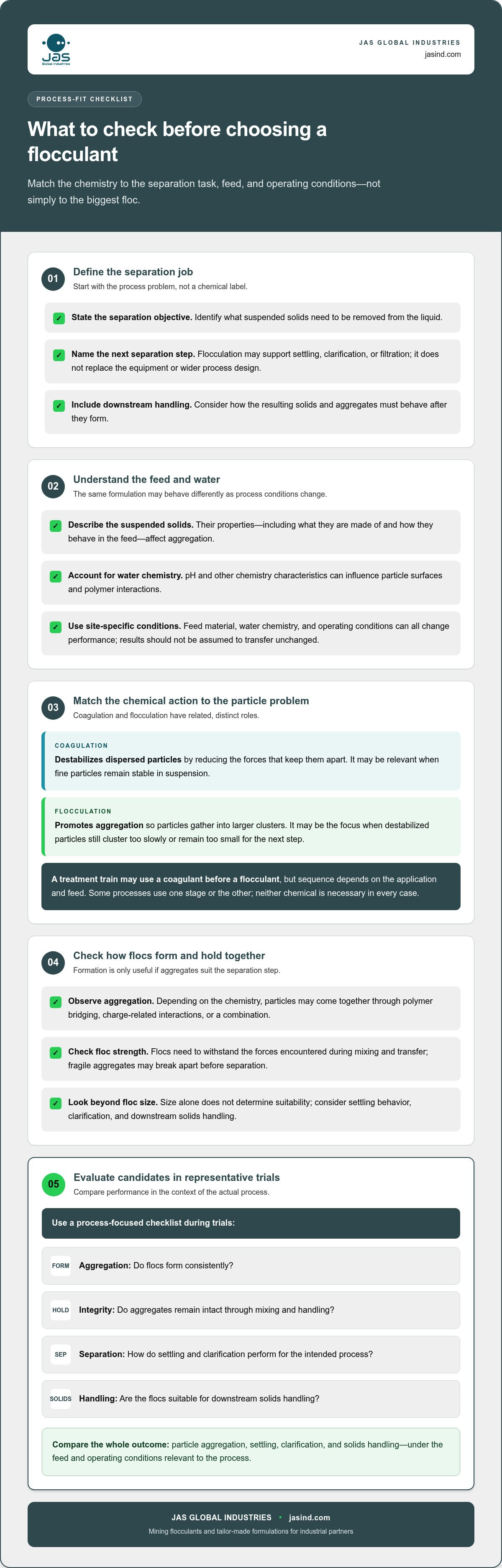
Selection starts with the process, not a product label. Document the feed characteristics, target separation, water conditions, process constraints, and downstream handling requirements before comparing candidates. This creates a practical basis for judging whether a formulation fits the operation and separates measurable goals from assumptions about chemical performance.
Use a staged evaluation, keeping the same process objective in view from baseline data through controlled trials and operating review.
- Define the separation objective. Specify whether the priority is clarification, settling, solids concentration, or another separation need. Describe what a useful result means to the operation, such as meeting a defined solids-handling requirement or supporting a downstream step. Set observable criteria rather than assuming what a chemical will deliver.
- Document the feed and baseline. Record relevant suspended-solids characteristics, feed variability, water conditions, and existing treatment or separation steps. Include operating conditions that could affect results. A representative baseline makes comparisons more meaningful than a single observation under atypical conditions.
- Map process constraints and downstream needs. Consider available mixing and separation equipment, chemical handling practices, and what happens to separated solids. A candidate that forms aggregates in a test still needs to fit transfer, settling, clarification, or solids handling in the full process.
- Compare candidate behavior through testing. Laboratory or site trials can assess formulations under conditions that reflect the feed and process. Keep comparisons controlled and observe aggregate formation, settling behavior, and resulting solids characteristics. Use test methods that reflect site requirements rather than a generic pass-or-fail standard.
- Review implementation and operating control. Consider how dosing will be controlled, how chemicals will be handled, and which process observations will be monitored. Review consistency over time, not just the initial response. Reassess when feed characteristics or operating conditions change, since either can alter observed performance.
Define goals before comparing chemistry
A clear objective gives each trial a purpose. Separate required outcomes from preferences, and note what the existing process already achieves. If the feed varies, capture that range in the baseline rather than treating one sample as representative of every operating condition. This helps distinguish a difference in candidate chemistry from a change in the process itself.
Use representative tests and observations
Testing can narrow options, but results are meaningful only in relation to the intended operation. Record test conditions and compare candidates against the same criteria. A laboratory observation can guide evaluation, while site conditions determine whether that behavior carries through to the installed process. Avoid transferring a dosage or setpoint from another operation without relevant process data.
Plan for consistent operation
Selection continues after a candidate is chosen. Dosing control, safe chemical handling, monitoring, and consistent operating practice all affect implementation. Define what should trigger a review, such as a changed feed or separation result, so adjustments follow process evidence rather than guesswork.
JAS Global Industries develops tailor-made formulations for industrial partners, with evaluation grounded in operational requirements. Discuss your mining flocculant requirements as part of a process-focused review.
JAS Global Industries and Mining Flocculant Solutions
Choosing a mining flocculant is a process decision. Consider the chemistry alongside the feed, separation objective, operating conditions, and downstream solids handling. JAS Global Industries supplies mining flocculants as part of its specialty chemical portfolio and develops tailor-made formulations for industrial partners. This approach starts with the operation’s requirements rather than assuming one formulation fits every process.
JAS Global Industries has served industrial sectors since 1998. Its global operations include research and innovation centers, manufacturing plants, and an international sales and service presence. The company develops formulations and provides technical consulting and process optimization, with work focused on the operating requirements a solution needs to address.
A process-focused approach to mining chemistry
Formulation development can account for site-specific process conditions and operational requirements. For mining applications, consider the nature of the feed, the intended solids separation, process constraints, and how separated material will be handled. These factors provide a practical basis for evaluating a formulation. They don’t guarantee a result or remove the need to assess performance under relevant conditions.
Research and innovation centers are part of the company’s operations and contribute to formulation development. Mining flocculants also sit within a wider mining chemistry portfolio, rather than operating in isolation from the rest of a process. A focused evaluation can consider the chemical’s intended role and the conditions surrounding its use, while keeping performance expectations tied to evidence from the application.
Taking the next step with a flocculant application
A useful project discussion begins with a clear account of the process. Bringing operating context and separation priorities together helps focus the technical conversation on what the site needs to evaluate, rather than unsupported assumptions about dosage or outcome.
- State the process objective, such as clarification, settling, or solids handling.
- Describe feed conditions and any variability that may affect separation.
- Outline process constraints, existing treatment steps, and downstream handling requirements.
This information gives technical collaboration a practical starting point. It helps frame formulation evaluation around the process and connect process optimization with operating needs. JAS Global Industries develops tailor-made formulations for industrial partners, with application context guiding the discussion.
For a project-specific conversation about your process requirements, discuss your mining flocculant application.
Make Process Learning Part of Your Next Step
A flocculant decision shouldn’t end when an initial candidate is selected. Treat evaluation as a foundation for ongoing process understanding: retain trial observations, note changes in feed or operation, and use that record to guide future reviews. This makes it easier to distinguish a change in chemical response from a shift in process conditions.
For mining operations, a useful next step is a technical discussion grounded in site conditions. Bring the separation objective and relevant operating context into the conversation, then consider how formulation development and process optimization can support a structured evaluation. The aim is to build a sound basis for decisions as operating needs evolve, not to assume an outcome.
Discuss your mining flocculant application with JAS Global Industries to start a process-focused evaluation. Clear objectives and relevant operating context give your team a practical basis for the discussion.
Frequently Asked Questions
What are flocculants made of?
Flocculants are commonly made from polymeric materials, but there isn’t one composition shared by every type. Industrial options may include synthetic organic polymers, while naturally derived materials such as starch or chitosan are used in some applications. Inorganic salts can also play roles in coagulation or flocculation treatment. Suitable chemistry depends on the solids being separated, the liquid they’re suspended in, and operating conditions such as pH and mixing.
Is a flocculant the same as a coagulant?
No. Coagulants and flocculants have related but distinct roles in particle separation. Coagulation generally destabilizes dispersed particles, while flocculation encourages particles to gather into larger aggregates. A treatment process may use both, but the order and chemistry depend on the feed and treatment objective. Identify whether destabilization, aggregation, or both are needed rather than assuming combined treatment is always required.
How much flocculant is used in an industrial process?
There’s no universal dose for an industrial process. The amount depends on feed characteristics, water chemistry, process design, and the selected chemistry. A dose that suits one stream may not suit another, even within the same facility if feed conditions vary. Laboratory or site evaluation can compare candidate behavior using representative process data and inform a process-specific dosing strategy. Avoid setting a dose from a general guide without relevant testing and operating information.
Can flocculants be used in mineral processing?
Yes. Flocculants are used in mining and mineral processing where solids need to be separated from liquid in process streams. Start by clarifying the purpose, such as supporting a particular solids-handling step, and documenting the stream’s characteristics. Results can vary with feed and operating conditions, so assess candidates using representative samples or site trials. This helps determine process suitability without assuming a specific recovery, settling rate, or water-reuse outcome.
What factors can affect flocculant performance?
Performance can be influenced by suspended-solids properties, water chemistry, pH, mixing conditions, and feed variability. These factors can interact: a change in feed composition may alter particle behavior, while a change in mixing can affect how aggregates form or hold together. There are no universal thresholds that apply to every operation. Record process conditions and evaluate representative samples or site data so observed behavior can be interpreted in the context of the plant.
Are flocculants used in wastewater treatment?
Yes. In some wastewater processes, flocculants help suspended solids gather as part of treatment, for example when supporting clarification or sludge handling. Their use depends on the wastewater composition and treatment objective. A flocculant is one component of a treatment approach, not a replacement for other required treatment stages or separation equipment. This differs from mining applications, where evaluation centers on mineral-processing streams and the operational needs of that process.
How can a plant assess whether a flocculant is suitable?
Start by defining the separation objective and recording feed and operating conditions. Then compare candidate chemistry through testing that reflects the plant’s process, noting settling behavior and the characteristics of the resulting solids. Include downstream handling in the assessment, since a result must fit the next process step as well as the initial separation goal. Set evaluation criteria around plant priorities, and don’t assume a test result guarantees the same outcome at full scale.