
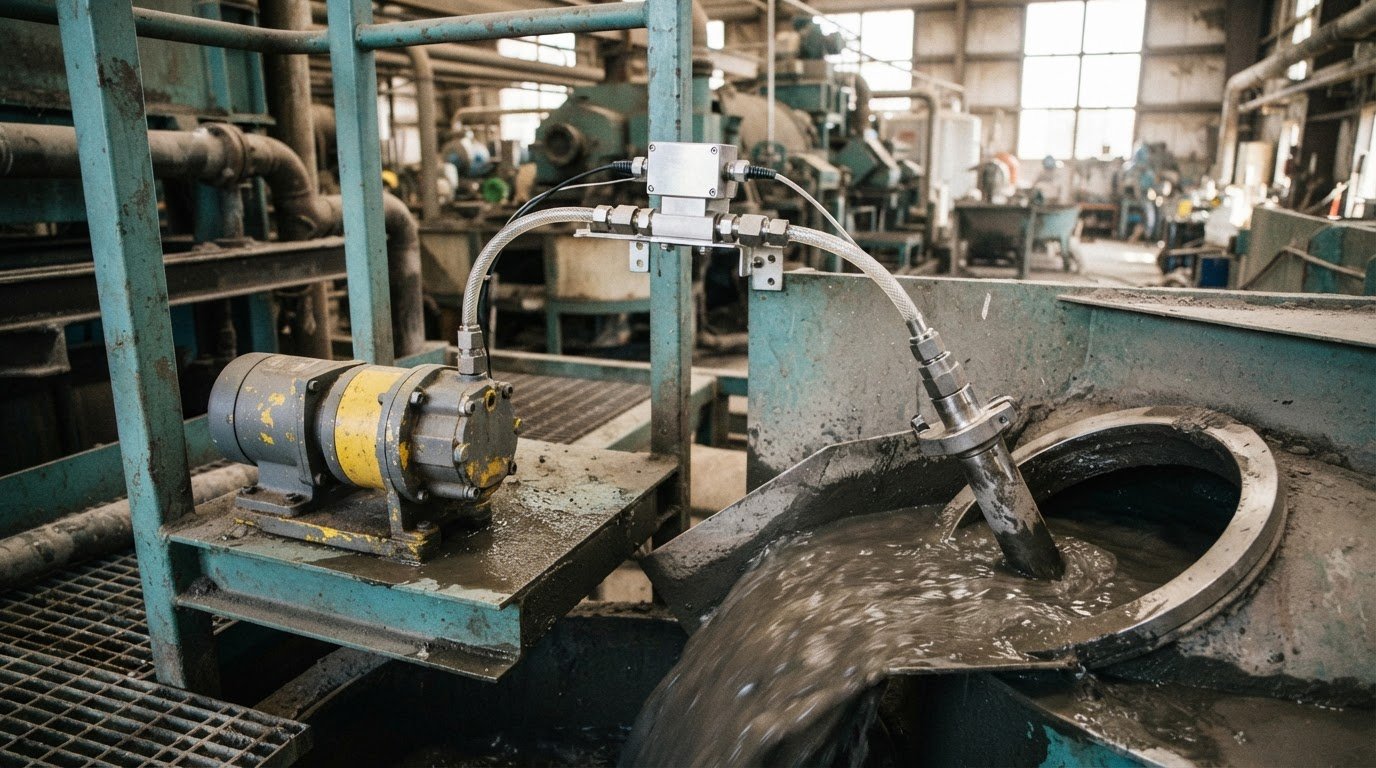
Reliable flotation reagent dosing optimization requires more than setting a fixed feed rate. It must account for changing ore conditions and interactions between reagents. Automated dosing uses process data and mass-flow measurements to adjust additions as conditions shift, helping balance valuable mineral recovery and concentrate grade. A constant dose can lead to over-dosing or under-dosing when the feed changes.
Balancing these goals is challenging because collectors, activators, inhibitors, dispersants, and frothers can affect one another and the mineral surfaces they act on. Effective control makes dosing more responsive and helps operators understand how reagent combinations influence flotation. This article explains the role of automation, how reagent interactions affect recovery and grade, and what to consider when selecting mass-flow measurement for a dosing system.
Why is automation of flotation reagent dosing important in modern mineral processing plants?
Automation helps match reagent feed to changing ore and slurry conditions instead of holding one fixed rate. Grade, mineralogy, particle size, and oxidation state can alter mineral response; pH and water chemistry also influence reagent action. Plant trials can limit disruption by adjusting dosage in controlled stages and tracking recovery, concentrate grade, and tailings.
Online Detection and Dosage Control
Online detection measures changes in feed or flotation conditions and uses those readings to adjust reagent dosage automatically. X-ray fluorescence analyzers can monitor mineral content, while Raman spectroscopy and froth imaging track other feed or froth characteristics. These technologies help operators respond to process variation rather than rely solely on fixed settings. Timely adjustments can help minimize under-dosing and excess reagent consumption.
Model-Based Process Control
A mathematical model represents how reagent concentration and operating conditions affect mineral flotation. Built from laboratory and industrial tests, it can help estimate doses that promote valuable mineral recovery while depressing gangue. Kinetic models can also predict responses as concentrations change. This gives an automatic controller a process-based reference for adjusting pump rates, rather than relying on one dose under changing conditions.
Sensors and Closed-Loop Operation
Closed-loop control uses sensors to compare operating measurements with target conditions, then adjusts dosing equipment in response. Online monitoring can track pH, pulp density, bubble size, and froth height; flow and density readings can inform pump-rate changes. Reliable device data matters: closed-loop control can reduce reagent consumption by up to 20%. Calibration routines and manual-sample cross-checks help detect measurement drift.
Control Under Feed Variability
Feed-responsive control changes dosage as ore properties shift between geological zones. Changes in mineral grade or particle size can alter reagent demand, while mineralogy affects which surfaces reagents interact with. Keeping the same concentration through these changes may cause over-dosing or under-dosing. Operators can evaluate staged adjustments against recovery, concentrate grade, and tailings, while monitoring production indicators throughout each trial.
Valuable mineral recovery and concentrate grade
There is no single reagent rate or cost per tonne that applies to every flotation plant. Dosage depends on the ore, reagent type, and process conditions. Operators measure the effects by comparing feed, concentrate, and tailings assays, then assessing recovery, grade, and selectivity across dosage trials.
Balancing Recovery, Grade, and Cost
Balancing these goals means recovering valuable minerals while producing a saleable concentrate without unnecessary reagent use. More reagent can improve the flotation response, but excessive dosage may also float unwanted material and lower concentrate grade. Operators weigh recovery rate against concentrate quality and reagent consumption, because maximizing one measure alone can undermine beneficiation performance. For example, a recovery gain matters less if impurity levels make the concentrate unsuitable.
Reagent Concentration in Slurry
Reagent concentration describes how much active chemical is present in the slurry during flotation. Its effect depends on the mineral surface, pulp composition, flotation time, and operating conditions. At a suitable concentration, adsorption can help valuable particles attach to bubbles; excessive addition can reduce separation selectivity. Staged additions let operators observe how each dose affects the froth and concentrate instead of applying the full amount at once.
Improving Valuable Mineral Recovery
Improving recovery means helping valuable mineral particles enter the concentrate while limiting losses to tailings. Operators can adjust reagent additions in stages and align the dosage with ore properties and flotation time. A reported xanthate example using mass-flow feedback reduced reagent use per tonne milled by 17%. That result illustrates how controlled dosing can support recovery and consumption goals together, rather than treating higher chemical use as the only route to better performance.
Measuring Dosage Effects
Measure dosage effects by comparing feed, concentrate, and tailings composition under defined operating conditions. Assays show how much valuable mineral reached the concentrate, while concentrate grade indicates enrichment and tailings analysis reveals losses. Comparing these measures across dosage trials helps identify changes in selectivity. Operators also track reagent consumption per tonne milled, allowing them to weigh recovery improvements against the chemical used to achieve them.
Selecting Mass Flow Devices for Flotation Reagent Dosing
A reliable mass-flow device measures the amount of reagent delivered, giving dosing control a direct flow signal. Coriolis mass flow meters can approach 0.05% measurement error under correct installation and calibration practices. Selection should also account for the reagent’s chemical compatibility, the operating flow range, and how the measurement connects to the plant’s control system.
Collectors, modifiers, and frothers have different roles, so target dosage depends on the ore and flotation conditions. Collectors promote valuable mineral flotation, frothers support bubble formation, and modifiers can change mineral selectivity. A practical approach is to consider plant conditions and experience from similar operations, then test reagent prescriptions against recovery, concentrate grade, and reagent consumption. Addition sequence and location also affect performance.
Environmental requirements are part of reagent selection. The EU’s REACH directive is one framework that limits the types and quantities of flotation reagents used in mineral processing. Reagent selection can also take toxicity, degradation, and recycling characteristics into account alongside metallurgical performance. Together, these factors shape an operating target that balances effective separation with responsible chemical use.
Over-dosing can increase reagent consumption and production costs, and reduce concentrate grade; under-dosing can send valuable minerals to the tailings. Excess reagent may also increase wastewater residues. Worker-safety impacts depend on the reagent and handling conditions, so accurate metering and controlled addition help avoid unnecessary chemical use and handling. Device calibration matters: drift can make the displayed rate differ from actual delivery, obscuring the effects of dosage changes. Coriolis measurement accuracy depends on installation and calibration, while regular checks against manual samples can help detect drift and maintain reliable dosing data.
Interactions between collectors, activators, inhibitors, dispersants, and frothers
In a flotation circuit, reagents interact with mineral surfaces and with one another. A combined reagent uses two or more reagents in specified proportions and may improve collection when their adsorption patterns complement each other. The same combination can weaken selectivity if one reagent interferes with another. Understanding these effects helps explain why a dose that works for one ore-characteristics profile may not suit another.
Each reagent has a distinct role. Collectors increase mineral-surface hydrophobicity, supporting attachment to bubbles. Activators can make selected mineral surfaces more receptive to collector adsorption. Inhibitors suppress the flotation of minerals that should remain in the pulp, while dispersants influence particle dispersion. Frothers help establish and maintain a suitable froth. In copper flotation, reagent molecular structure, adsorption groups, and surface charge affect how chemicals interact with mineral surfaces.
Reagent interactions may be synergistic, antagonistic, or inhibitory. Synergy occurs when different reagents adsorb selectively on separate parts of a mineral surface, increasing reagent coverage and hydrophobicity. Antagonism occurs when one reagent reduces another’s effectiveness, while inhibition deliberately limits the flotation of selected minerals. For example, adding a collector without accounting for an inhibitor’s effect can change which particles respond, shifting both recovery and concentrate grade.
Assess the full reagent system, not each chemical in isolation. Compare reagent combinations and proportions through batch flotation tests, tracking mineral response, froth behavior, recovery, and concentrate quality. Then consider addition order, location, preparation, and action time, since these factors shape contact between reagents and particles. The practical approach is to match the strategy to mineral surface characteristics and ore composition, then evaluate the combined response under representative process conditions.
JAS Global Industries: Mining Flotation Collectors
JAS Global Industries supplies mining flotation collectors for mineral processing operations refining reagent selection and dosing strategies. Collectors influence mineral-surface hydrophobicity, so their fit with ore characteristics and other reagents matters to recovery and concentrate grade.
When a plant reviews collector performance or adjusts its flotation reagent system, JAS Global Industries can support the work with specialty chemical solutions and tailor-made formulations. Process conditions, target minerals, and interactions with frothers or inhibitors all inform formulation requirements. This is particularly relevant when feed variability or changing separation goals call for a closer evaluation of collector choice.
For a discussion about mining flotation collectors and your process needs, contact JAS Global Industries.
Build the Next Improvement into Your Flotation Strategy
Make each improvement measurable. Treat changes in ore blend, reagent combination, or control settings as opportunities to refine circuit performance. Reviewing operating records can show whether a dosing strategy remains suitable as feed conditions change and where further testing could improve process stability. The goal is a repeatable approach that supports informed decisions across shifts, not a fixed recipe detached from the ore.
For teams advancing flotation reagent dosing optimization, align process goals, measurement confidence, and reagent selection before revising operating targets. Clear communication among metallurgy, operations, and process control teams helps give each adjustment a defined purpose and makes its effects easier to assess consistently.
JAS Global Industries can discuss mining flotation collectors in relation to your process requirements. Contact JAS Global Industries to begin a focused conversation about your flotation needs.
Frequently Asked Questions
What strategies help achieve reagent cost reduction without sacrificing higher metal recovery rates?
Reduce unnecessary reagent use by evaluating consumption alongside recovery and concentrate quality, not in isolation. Track reagent use per tonne milled and compare it with metal recovered and concentrate specifications across comparable operating periods. For example, if a lower collector dose cuts consumption but increases valuable minerals in the tailings, it may not be an effective adjustment. Flow measurement and controlled trials help distinguish genuine savings from shifted losses.
What is flotation reagent dosing optimization in mineral processing?
Flotation reagent dosing optimization means matching reagent delivery to ore properties and flotation objectives, then refining doses using measured plant or test results. Rather than treating a setpoint as permanent, this approach considers how feed changes affect each reagent’s role. A practical operating plan records the selected dose, addition point, and observed response, so process teams can assess whether an adjustment remains suitable as ore characteristics shift.
How are collector, frother, and depressant dosages determined for different ores?
Establish dosages through ore-specific testing that considers mineral composition, liberation, slurry conditions, and the desired separation. Evaluate collectors for their effect on valuable mineral recovery, frothers for froth behavior, and depressants for limiting unwanted mineral flotation. For mixed-mineral ore, assess a collector change alongside depressant response, since their combined effect can alter selectivity and concentrate quality.
What operating data and tests are needed to optimize flotation reagent dosage?
Useful evaluation combines feed, concentrate, and tailings assays with records of reagent delivery and flotation conditions. Record the ore source or blend, reagent preparation and addition point, and relevant variables such as pH and pulp density. Batch tests help compare reagent responses under controlled conditions; plant data then shows whether the same pattern holds during normal operation. Consistent sampling makes comparisons between operating periods more meaningful.
How can laboratory flotation tests establish reagent dosage curves and an optimum?
Laboratory tests establish a dosage curve by applying a range of reagent additions to the same ore sample and plotting each dose against outcomes such as recovery and concentrate grade. The useful operating point is the range where improved recovery still supports acceptable grade and reagent use. Testing combinations and addition sequences can reveal interactions that a single-reagent curve misses, helping translate bench results into a plant-trial plan.
What sensors and control strategies enable real-time flotation reagent dosing optimization?
Online flow measurement can track reagent delivery, while process sensors monitor variables such as pH, pulp density, and froth conditions. A controller can use these signals to adjust dosing equipment as operating conditions change. For example, a measured change in slurry conditions can prompt a review of the dosing setpoint rather than an assumption that the previous rate still fits. Calibration and sample cross-checks help keep control decisions grounded in reliable measurements.