
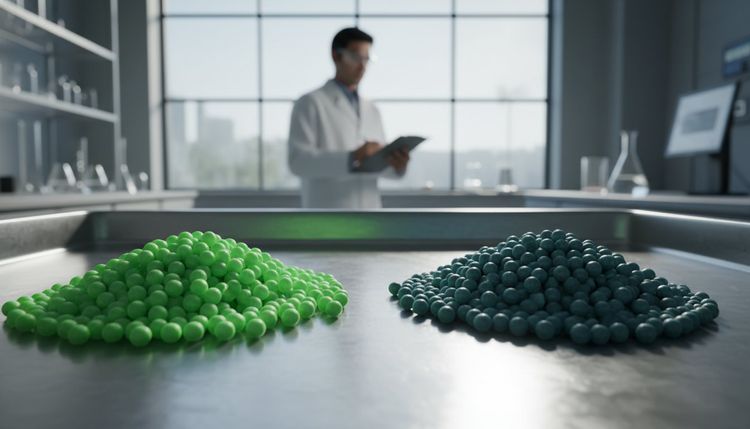
A vibrant product hue serves as more than just a marketing tool; it functions as a vital guardian of brand integrity and a primary defense against product misuse. In an era where global supply chains face constant volatility, your product's visual consistency signals reliability and established trust. Understanding how to choose a fertilizer coloring agent requires a deep dive into the intersection of aesthetics and chemical stability. You likely know that a premium appearance commands market authority, yet you've likely faced the frustration of pigments that fade during storage or interfere with essential anti-caking coatings.
We promise to equip you with the technical criteria needed to master this selection process. You will learn to secure uniform, vibrant product color while ensuring your additives don't compromise flowability or safety. Our guide explores the critical balance between pigment binding and chemical compatibility; we also address the implications of recent regulatory shifts, such as the May 2026 European Commission Fertilizer Action Plan. From preventing dusting issues to managing new FDA enforcement discretion on labeling, this technical overview ensures your brand remains a stable pillar of modern agriculture.
Key Takeaways
- Recognize that colorants are essential tools for product security and brand recognition; they prevent field application errors while establishing market authority.
- Learn how to choose a fertilizer coloring agent by prioritizing UV stability and pH resistance to maintain visual consistency across diverse storage environments.
- Explore the critical integration of colorants with anti-caking coatings to ensure vibrant aesthetics don't compromise the efficacy of your moisture barriers.
- Adopt a systematic selection framework that identifies the ideal agent based on your specific chemical substrate and expected environmental exposure levels.
- Gain insight into the value of bespoke formulations and custom stability testing for developing high-performance, compliant fertilizer products.
The Strategic Role of Coloring Agents in Fertilizer Production
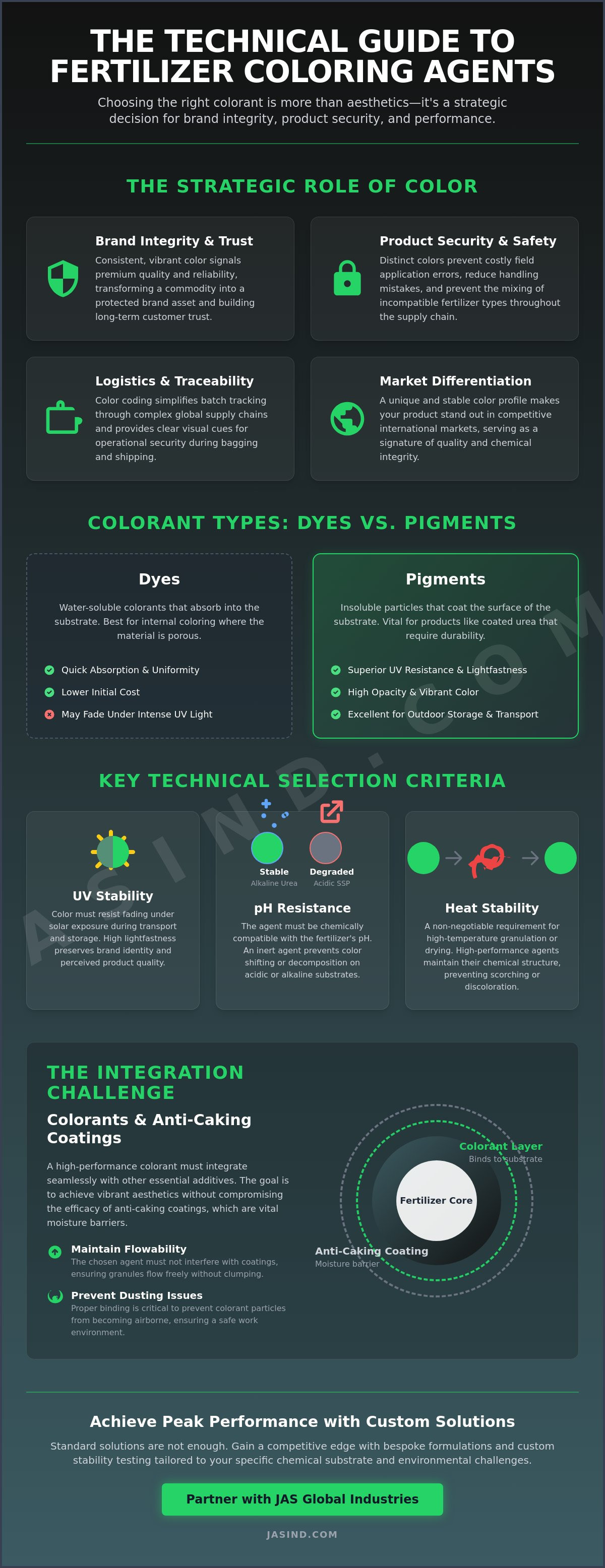
Fertilizer coloring agents are specialized chemical additives. They provide uniform identification and professional branding for granular fertilizers. These agents are not merely cosmetic. They serve as essential industrial tools. When producers evaluate how to choose a fertilizer coloring agent, they must consider how color prevents application errors in the field. A distinct hue ensures that farmers apply the correct nutrient profile to their crops. This prevents costly mistakes and promotes agricultural stability.
The strategic importance of color is most evident in high-value specialty blends and NPK formulations. In these complex products, color acts as a signature of quality and chemical integrity. It transforms a raw resource into a protected brand asset. Reliability in appearance builds long-term trust with global partners. This visual consistency is a hallmark of corporate maturity and industrial excellence.
Dyes vs. Pigments: Choosing the Right Base
The technical foundation of a colorant depends on its chemical base. Liquid dyes are often water-soluble. They offer quick absorption and lower initial costs. These are effective for internal coloring where the substrate is porous. However, they may fade under intense light. Organic pigments offer a different solution. They provide high opacity and superior UV resistance. These pigments are vital for Coated urea fertilizers. They ensure the product maintains its hue during outdoor transport or extended storage. Choosing between liquid dispersions and powder formats depends on your specific plant architecture and metering capabilities.
Functional Benefits of Color Standardization
Standardizing color across a product line enhances safety and logistics. It prevents the mixing of incompatible fertilizer types. This reduces the risk of chemical interference or nutrient runoff. Accurate color coding serves as a guardian of product security throughout the distribution network.
- Global Traceability: Color coding facilitates the tracking of specific batches through complex supply chains.
- Market Differentiation: Unique color profiles help products stand out in competitive international markets.
- Operational Security: Visual cues reduce the likelihood of handling errors during bagging and shipping.
Learning how to choose a fertilizer coloring agent is about more than just picking a shade. It is about selecting a chemical system that supports the entire lifecycle of the product. This selection process protects both the manufacturer's reputation and the farmer's yield. By prioritizing technical stability over simple aesthetics, you ensure your product remains a reliable pillar of global food security.
Technical Selection Criteria: Beyond Aesthetics
Selecting a colorant for industrial use involves rigorous technical evaluation. It isn't merely about the visual shade. When you determine how to choose a fertilizer coloring agent, you're selecting a chemical system that must survive extreme environmental stress. UV stability serves as the primary pillar of this selection. Fertilizers often endure long-term storage in bulk warehouses or open transport systems. Without high lightfastness, your brand's visual identity degrades under solar exposure. This leads to a perceived loss of quality and trust in the eyes of the end-user.
Chemical compatibility is equally vital. The pH of the fertilizer substrate varies significantly between product types. A coloring agent that remains stable on alkaline Urea might chemically decompose when applied to acidic Single Superphosphate (SSP). These reactions can cause color shifting or complete loss of pigment integrity. Organizations like The Fertilizer Institute (TFI) emphasize that every component in a blend must contribute to the overall stability and safety of the final product. Choosing an inert agent prevents these negative chemical interactions.
Heat stability is a non-negotiable requirement for producers using high-temperature granulation or drying processes. If a colorant has a low thermal degradation threshold, it will scorch or discolor during the manufacturing cycle. High-performance fertilizer coloring agents are engineered to maintain their chemical structure even when exposed to intense industrial heat. This resilience ensures that the product leaving the plant matches the intended brand standard perfectly.
Environmental and Chemical Stability Metrics
Technical datasheets provide the roadmap for selection. Look for lightfastness ratings based on the Blue Wool Scale or similar industrial standards. These metrics quantify how long a color will persist under UV stress. Chemical inertness is another critical metric; the agent shouldn't react with the nitrogen, phosphorus, or potassium components of the fertilizer. Verify the thermal degradation thresholds to ensure they exceed your plant's maximum processing temperatures.
Application and Dosing Efficiency
Operational efficiency depends on the physical properties of the colorant. Viscosity is a key factor for automated dosing systems. If the agent is too thick, it can clog pumps; if it's too thin, it may not provide adequate coverage. Particle size distribution for pigments must be strictly controlled to ensure an even coating across every granule. Achieving high opacity with minimal dosage rates is the most effective way to optimize your ROI. This balance reduces the total cost per ton while maintaining a premium appearance.
- Lightfastness: High resistance to fading during outdoor exposure.
- pH Versatility: Stability across both acidic and alkaline substrates.
- Thermal Resilience: Integrity during drying and granulation stages.
- Dosing Precision: Consistent viscosity for automated plant systems.
Compatibility and Performance: Integrating Color with Anti-Caking Agents
Industrial fertilizer production requires a holistic approach to additive application. Colorants rarely exist in isolation; they must function within a complex chemical environment. The most effective systems utilize a synergy between Fertilizer Coloring Agents and Fertilizer Anti-caking Agents. This "all-in-one" treatment ensures that the granule remains protected from moisture while maintaining its brand-specified hue. When evaluating how to choose a fertilizer coloring agent, you must ensure the pigment does not compromise the integrity of the moisture barrier. Poorly formulated colorants can cause "oiling out," where the anti-caking coating fails to adhere, leading to product clumping and lost value.
Avoiding chemical interference is a primary goal for technical teams. If a colorant is incompatible with the surface coating, it can create weak points in the hydrophobic shield. This leads to uneven coating and "spotting," where the color appears blotchy rather than uniform. Such visual defects often signal deeper structural issues with the anti-caking treatment. A high-performance agent integrates seamlessly, enhancing the overall finish without reducing the efficacy of the moisture barrier. This reliability is essential for maintaining the stability of global agricultural resources.
Formulating for Synergy
JAS Global Industries designs coloring solutions specifically to complement anti-caking and dust-suppression technologies. Our formulations utilize advanced surfactants to achieve uniform distribution on hydrophobic surfaces. This ensures that the color spreads evenly across the granule without beads or gaps. We employ rigorous testing protocols to evaluate coating integrity after the addition of color. These tests confirm that the combined treatment provides both the desired aesthetic and the necessary physical protection. This dual-purpose performance is a cornerstone of industrial efficiency.
Managing Dust and Flowability
Correct binding is vital for both safety and cleanliness. When pigments are fully bound to the granule, they assist in Fertilizer Dust Suppressants efforts by sealing the surface. The choice of carrier—whether oil-based or water-based—significantly impacts the final product's flowability. Oil-based carriers often provide better compatibility with traditional anti-caking coatings, while water-based options may be preferred for specific environmental profiles. Proper molecular binding ensures pigments remain anchored to the substrate, preventing color transfer during high-volume bulk handling and transport. This technical precision eliminates secondary dusting issues and maintains a clean operational environment.
- Binding Integrity: Prevents pigment migration and "rub-off" during shipping.
- Surface Uniformity: Eliminates spotting and ensures a premium, professional finish.
- Coating Stability: Maintains the moisture-resistant properties of anti-caking agents.
- Flow Optimization: Ensures that additives don't increase friction between granules.
Mastering how to choose a fertilizer coloring agent involves looking past the surface. It requires an understanding of how these chemicals interact with the entire additive package. By prioritizing synergy over simple appearance, producers secure both the visual identity and the physical stability of their products. This integrated approach reflects a commitment to long-term value and global resource protection.
Selection Framework: Choosing the Right Agent for Your Formulation
Establishing a rigorous procurement process ensures long-term product stability. When determining how to choose a fertilizer coloring agent, manufacturers must move beyond visual preference to technical validation. A structured framework reduces the risk of batch failure and protects your brand's reputation in the global market. This process requires a logical progression from chemical identification to laboratory verification.
The first step involves identifying the chemical substrate. A phosphorus-based blend requires a different molecular approach than a high-nitrogen urea prill, primarily due to the inherent acidity of the phosphate components. Once the substrate is clear, you must define the environmental exposure. Consider the total storage time and the humidity levels of the target region. UV exposure during maritime transport can be intense; your colorant must be resilient enough to survive these conditions without fading.
Determine the application point in your production line. Applying colorant pre-granulation provides deep internal color, while post-coating application focuses on surface aesthetics. You must then evaluate compatibility with existing Fertilizer Anti-caking Agents and Fertilizer Dust Suppressants. If the colorant interferes with these treatments, the physical integrity of the granule is at risk. Finally, conduct laboratory pilot testing. Small-scale trials reveal how the colorant behaves under your specific plant conditions, ensuring uniform coverage before full-scale production begins.
Matching Colorants to Fertilizer Types
Different fertilizers present unique coloring challenges. Nitrogen-based products like urea often require high-clarity dyes, while phosphorus-based fertilizers like DAP benefit from high-opacity pigments. Slow-release and polymer-coated fertilizers are particularly sensitive. The colorant shouldn't degrade the specialized polymer shell or affect the nutrient release profile. For organic-certified products, selecting environmentally safe or food-grade colorants is essential to maintain regulatory compliance. Explore our range of Fertilizer Coloring Agents to find a formulation that fits your specific industrial substrate.
Testing and Validation Protocols
Validation is the final guardian of product quality. Accelerated aging tests are indispensable. They simulate months of long-distance maritime transport in just a few days, exposing the product to heat and moisture. Abrasion testing is another critical step. It ensures the pigment remains firmly bound to the granule during the mechanical stress of bulk handling. For water-soluble applications, solubility and wash-off tests are mandatory. These protocols confirm that the colorant doesn't leave residues or clog fertigation equipment. Reliable testing builds the trust necessary for successful global partnerships.
- Substrate Analysis: Matching chemistry to NPK or Urea bases.
- Exposure Profiling: Planning for UV, heat, and humidity.
- Application Strategy: Choosing between internal or surface coating.
- Compatibility Check: Ensuring synergy with anti-caking coatings.
- Pilot Validation: Verifying performance through industrial simulation.
Custom Formulated Solutions from JAS Global Industries
JAS Global Industries understands that industrial requirements are rarely standard. We provide bespoke fertilizer coloring formulations tailored to specific plant architectures and substrate chemistries. Our dedicated Research and Innovation (R&I) centers allow us to conduct custom color matching and stability testing. This ensures that when you evaluate how to choose a fertilizer coloring agent, you receive a solution validated for your exact environmental stressors. We don't just supply chemicals; we act as a vital guardian of product quality for the world's most critical agricultural hubs.
Our global presence across the Middle East, Asia, and Europe ensures a reliable supply and dedicated technical support. This scale allows us to maintain a stable atmosphere for our partners, even during periods of supply chain volatility. We remain committed to sustainable and cost-effective chemical technologies. By focusing on high-impact solutions, we help manufacturers protect their brand value while adhering to the highest standards of global responsibility. Reliability and established trust are the foundations of every partnership we build.
The JAS Advantage: Technical Audits and Process Optimization
Our consultative approach begins with on-site laboratory testing to optimize your dosing strategy. We believe that true efficiency comes from integrated solutions. By combining Fertilizer Coloring Agents with Fertilizer Anti-caking Agents and Fertilizer Dust Suppressants, we create a unified chemical package. This prevents interference between additives and ensures the physical integrity of every granule. Our technical teams work directly with your plant engineers to refine application points and reduce chemical waste.
In a recent collaboration with a major global potash producer, our R&I team successfully enhanced product value by resolving chronic color migration issues. By developing a bespoke binder system, we achieved a uniform hue that remained stable throughout transcontinental shipping. This project demonstrated our ability to solve complex chemical challenges that competitors often overlook. We prioritize long-term value over simple logistics, ensuring your product remains a reliable pillar of modern infrastructure.
Global Logistics and Reliable Supply
Reliability is rooted in our physical infrastructure. Strategically located manufacturing plants ensure fast delivery and supply chain security across all major markets. We maintain strict compliance with international safety and environmental regulations, including REACH standards. This focus on protection and security distinguishes our offerings in the global marketplace. Our goal is to provide the stability necessary for your business to thrive in a competitive landscape.
- Bespoke Chemistry: Formulations designed for your specific NPK or Urea substrate.
- Regional Expertise: Technical support teams stationed in the Middle East, Asia, and Europe.
- Regulatory Assurance: Full compliance with REACH and international safety protocols.
- Process Synergy: Integrated packages that combine coloring with anti-caking and dust control.
Optimize your fertilizer production with JAS Global Industries and secure the technical stability your brand deserves.
Securing Your Brand Through Chemical Excellence
Protecting your brand's visual identity requires more than just a vibrant palette; it demands a deep commitment to chemical stability and process synergy. You've seen that the most effective coloring agents function as vital guardians of product integrity, ensuring that aesthetics don't compromise moisture protection or flowability. Understanding how to choose a fertilizer coloring agent involves a rigorous evaluation of UV resistance, pH stability, and compatibility with your existing additive package. By prioritizing these technical metrics, you protect both your operational efficiency and your reputation in the global marketplace.
JAS Global Industries has served critical industrial sectors since 1998, providing the reliability and expertise needed to manage complex chemical formulations. Our global R&I centers specialize in high-stability industrial coatings and bespoke colorants designed for the most demanding environments. We invite you to Partner with JAS Global Industries for Custom Fertilizer Solutions to ensure your products remain a stable pillar of global agriculture. Let's build a more secure and vibrant future together.
Frequently Asked Questions
What is the difference between fertilizer dyes and pigments?
Dyes are soluble and penetrate the fertilizer substrate; pigments are insoluble and coat the surface. Dyes offer high transparency and low cost but lower UV stability. Pigments provide superior opacity and lightfastness; they're the preferred choice for long-term outdoor storage or high-value coated products. This distinction is a fundamental technical pillar for manufacturers seeking reliable, long-term visual security for their resources.
Will coloring agents affect the nutrient analysis of my fertilizer?
No, high-quality coloring agents don't alter the NPK ratio or chemical analysis of your fertilizer. They are applied at extremely low dosage rates, typically representing a negligible fraction of the total product mass. This ensures your formulation stays compliant with guaranteed analysis standards while gaining the benefits of brand identification. Maintaining chemical integrity is a core priority for industrial stability.
How do I prevent my fertilizer color from fading in the sun?
Selecting pigments with high lightfastness ratings is the primary method for preventing UV-induced fading. When you determine how to choose a fertilizer coloring agent, you should prioritize organic pigments over dyes for products exposed to sunlight. These specialized particles act as a visual guardian, maintaining hue integrity during maritime transport and open-air warehouse storage. Reliability in appearance builds long-term trust.
Can I mix coloring agents directly with my anti-caking oil?
Yes, many industrial formulations are designed for direct integration with anti-caking oils to create an all-in-one treatment. This synergy simplifies the application process and ensures uniform distribution across the granules. It's vital to verify chemical compatibility to prevent "oiling out" or the separation of the pigment from the carrier oil during dosing. Proper integration protects the moisture barrier's efficacy.
Are fertilizer coloring agents safe for the environment?
Modern coloring agents are engineered to meet strict international safety and environmental regulations, such as REACH. Leading suppliers focus on biodegradable or inert chemistries that don't harm soil health or aquatic life. This commitment to sustainability ensures that your industrial solutions contribute to global agricultural stability without creating long-term environmental liabilities. Safety and responsibility are essential components of modern chemical infrastructure.
How much coloring agent is typically required per ton of fertilizer?
Dosage rates usually range from 0.5 to 2.0 kilograms per ton, depending on the desired color intensity and substrate porosity. When evaluating how to choose a fertilizer coloring agent for cost-efficiency, high-opacity pigments often require lower concentrations than transparent dyes. Optimizing this ratio is essential for maintaining a stable production cycle while ensuring a premium, professional finish for your global brand.
Do coloring agents cause clogging in application equipment?
Clogging is generally avoided by using agents with a controlled particle size and stable viscosity. If a colorant is poorly formulated, it can settle or agglomerate in pumps and nozzles. Professional-grade dispersions stay in suspension, ensuring that your automated dosing systems remain operational and efficient throughout the manufacturing process. Consistent flowability is a hallmark of high-performance industrial additives.
What is the shelf life of a liquid fertilizer colorant?
Most liquid colorants have a shelf life of 12 to 24 months when stored in original, sealed containers. It's important to keep these additives in a cool, dry environment away from direct sunlight to prevent premature degradation. Regular agitation may be required for specific pigment dispersions to maintain a consistent concentration and ensure optimal performance during application. Proper storage preserves the agent's chemical integrity.