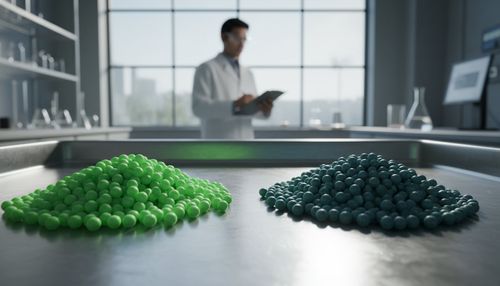

With urea prices reaching $858 per ton in April 2026, the margin for error in agricultural application has never been thinner. You understand the risk of product commoditization where your specialized blends lose their identity in bulk distribution channels. It's a constant challenge to maintain premium positioning when your technical innovation remains invisible to the end user. The impact of color on fertilizer marketability is no longer a matter of simple aesthetics. It is a critical strategy for brand protection and global resource security.
We agree that your products deserve to be recognized for their unique value and safety profiles. You will learn how strategic coloring agents transform a basic commodity into a high-performance brand that stands out in a competitive market. This article examines the latest requirements of ISO 10249:2026 for visual sample preparation and demonstrates how color serves as a functional tool to reduce liability. We explore how visual identification prevents costly application errors and provides the operational stability your business requires to lead the industry.
Key Takeaways
- Understand the impact of color on fertilizer marketability by evolving from a bulk commodity supplier to a premium brand defined by visual recognition.
- Learn how color coding serves as an essential safety layer to prevent cross-contamination in blending plants and ensure correct field application.
- Discover how visual tracers enhance precision agriculture by allowing drones and sensors to monitor coverage and reduce resource waste.
- Identify the technical strategies for combining coloring agents with anti-caking and dust suppressants to maintain product stability and prevent bleeding during storage.
- Explore the transition toward custom-formulated chemical solutions that align with your specific industrial processes and long-term brand goals.
Beyond Aesthetics: Why Fertilizer Color Drives Marketability in 2026
In a global economy where resource security is paramount, the visual identity of industrial inputs is vital. Many manufacturers suffer from "commodity blindness." When products look identical, competition quickly descends into aggressive price wars. Understanding what are fertilizers at a foundational level reveals they are complex chemical systems. Yet, to many buyers, they appear as simple gray or white granules. This lack of distinction erodes value and makes your hard-won technical innovations invisible to the end user. As stewards of global nutrition, we must ensure that every granule performs its duty and is recognized for its specific utility.
Marketability in the B2B sector is defined by trust, recognition, and the ability to command premium pricing. The impact of color on fertilizer marketability stems from its role as a silent salesperson. It communicates potency before the end-user ever tests the product in the field. A distinct hue signals that a formulation isn't generic runoff; it's a specialized tool designed for agricultural stability. This visual cue builds an immediate psychological link between the product and its intended high-yield results. It transforms a standard application into a professional, branded experience.
Breaking the Commodity Trap
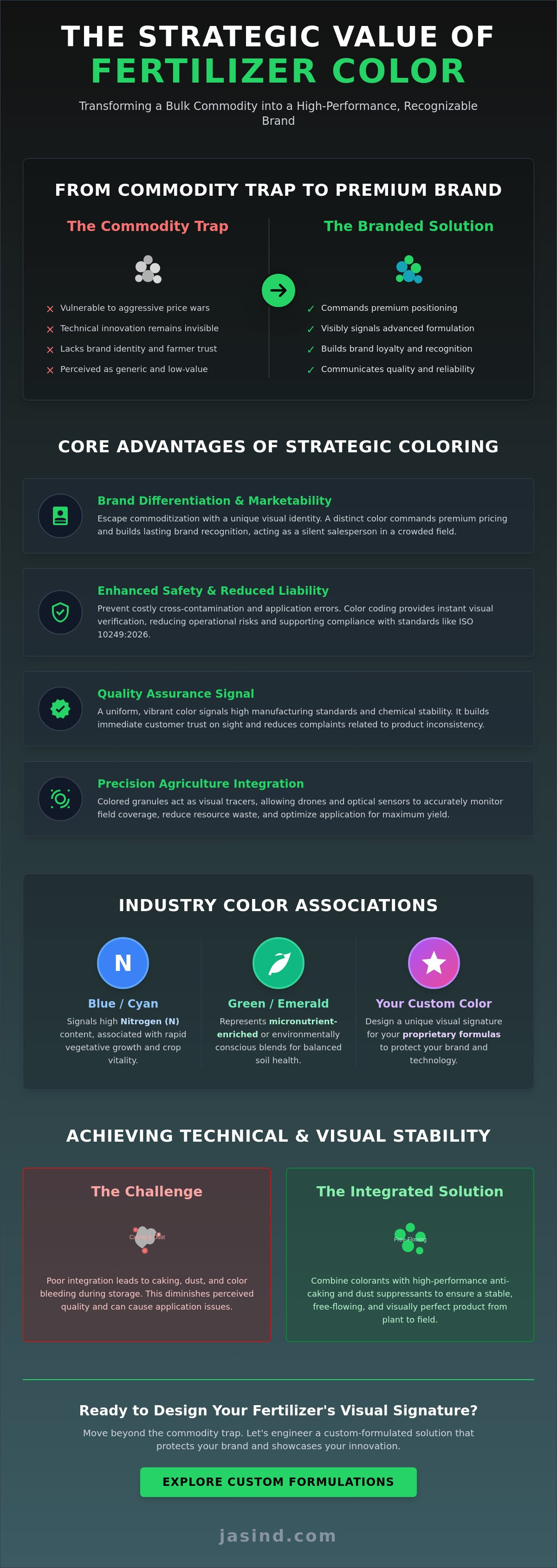
White or gray fertilizers are inherently vulnerable. Without a visual signature, your technical innovation remains hidden. Competitors with lower standards can easily undercut your price because the farmer sees no physical difference between batches. Using Fertilizer Coloring Agents changes this dynamic entirely. It allows you to signal proprietary technology or enhanced nutrient delivery. In many regions, blue and green fertilizers dominate the market because farmers associate these shades with nitrogen stability and crop vitality. By adopting a "branded" color, you move your product from a bulk pile to a premium category that commands loyalty.
Color as a Quality Assurance Signal
Visual consistency serves as a proxy for chemical stability. When a farmer sees a uniform, vibrant coating, they recognize high manufacturing standards. The impact of color on fertilizer marketability is most evident when it eliminates doubt. If a batch looks uneven or "dusty," the buyer questions the integrity of the entire shipment. Integrating high-quality colorants with high-performance Fertilizer Anti-caking Agents ensures the product remains free-flowing and visually perfect. This attention to detail reduces customer complaints and builds long-term brand equity. You aren't just selling a chemical granule. You're providing a reliable resource that farmers recognize and trust on sight.
Strategic Color Coding: Functional Meanings and Industry Standards
Operational security relies on instant recognition. In complex blending environments, the risk of cross-contamination is a constant threat to product integrity. Strategic color coding acts as a primary defensive layer. It allows plant operators to identify specific formulations before they enter the mixer. This visual confirmation reduces liability. It protects the end-user from crop damage caused by accidental nutrient spikes. The impact of color on fertilizer marketability is rooted in this functional reliability. When a distributor sees a consistent, vibrant hue, they recognize a product managed with industrial precision.
Color intensity also influences buyer perception. Deep, saturated pigments are often associated with high nutrient concentration. A pale or uneven finish suggests a diluted or poorly manufactured product. By standardizing your palette, you provide a visual guarantee of potency. This clarity extends to inventory management. Distributors can organize warehouses by sight, reducing shipping errors and improving logistical flow. If you are looking to enhance your operational safety, exploring specialized Fertilizer Coloring Agents can provide the necessary visual distinction.
Standard Industry Color Mappings
While no global law mandates specific colors, the industry has adopted informal standards that guide farmer expectations. Blue and cyan shades typically signal high nitrogen content. They represent rapid vegetative growth and vitality. Green and emerald tones often represent micronutrient-enriched or environmentally conscious blends. Conversely, red and pink are the traditional markers for phosphate-based or potassium-heavy products. Using colorants for fertilizer that align with these expectations ensures your product feels "correct" to the experienced grower.
Developing a Unique Brand Palette
Standing out requires a balance between tradition and innovation. You must choose a signature shade that is distinct enough to prevent counterfeiting but familiar enough to avoid confusion. Light-fastness is a non-negotiable technical requirement. Industrial fertilizers often sit in outdoor silos or transparent bulk bags. If the color fades, the brand's perceived value drops with it. High-quality pigments act as a barrier to the gray market. A custom, difficult-to-replicate shade ensures that your premium formulation cannot be easily swapped for a generic alternative during distribution. It secures your market position through visual protection.
Operational Marketability: Field Performance and Precision Agriculture
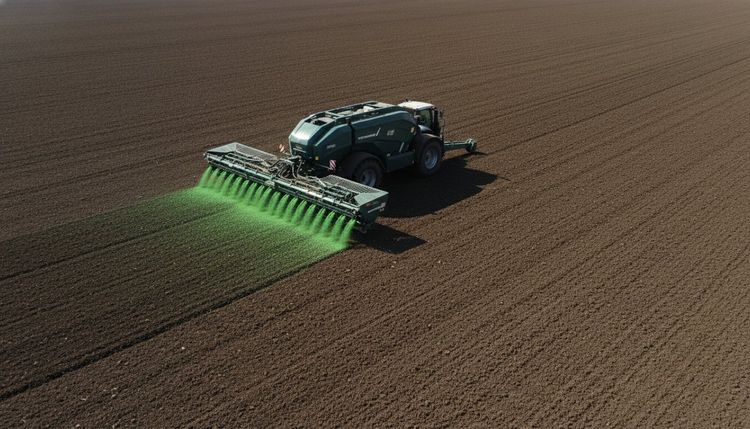
Field performance defines the long-term reputation of any agricultural brand. While previous sections discussed brand identity and plant safety, the true test occurs during application. Modern growers demand tools that provide immediate feedback. The impact of color on fertilizer marketability is increasingly tied to its role in precision agriculture. As farms adopt automated systems, visual tracers become essential data points for optical sensors and drones. These technologies require high-contrast signals to distinguish nutrient distribution from the underlying soil or crop canopy. Clear visibility ensures that every hectare receives the exact dosage required for optimal yield.
Precision equipment relies on clear visual inputs to adjust flow rates in real-time. By integrating specialized Fertilizer Coloring Agents, manufacturers enable these advanced systems to map application density with surgical accuracy. This isn't just about appearance. It's about operational security. If a drone can't detect the fertilizer, the data loop breaks. Industry analysis highlights color as a key factor in fertilizer marketability because it bridges the gap between chemical potency and digital monitoring. This integration provides a measurable return on investment for the modern farmer.
Safety and training are equally critical. Seasonal labor often lacks the technical expertise to distinguish between complex chemical blends by texture alone. Color coding simplifies instructions. It reduces the liability of applying a high-nitrogen blend to a nitrogen-sensitive crop. This visual safeguard protects the farmer's investment and the manufacturer's reputation. It's a simple, effective way to ensure stability across the entire supply chain.
Visual Feedback in the Field
Spray-pattern visibility is a primary selling point for liquid fertilizers. Farmers need to see where they've been to avoid costly overlaps or gaps. During night-time or low-visibility applications, a vibrant colorant provides the necessary contrast to ensure even coverage. This precision directly reduces environmental runoff. By keeping nutrients exactly where they're needed, colored formulations support global sustainability goals. It's a practical solution for a high-stakes environment where precision is the only path to profitability.
The Role of Color in Regulatory Traceability
Traceability is no longer optional. The 2026 regulatory environment, specifically the visual examination protocols in ISO 10249:2026, emphasizes the importance of representative samples. Color serves as a vital marker for distinguishing between Restricted Use and general-purpose products. It aids in the rapid identification of spills or leaks. This allows for immediate containment and remediation. Integrated coloring ensures your products meet the highest safety benchmarks while providing a clear audit trail from the factory to the furrow. This level of protection is essential for maintaining a leadership position in the global market.
Technical Stability: Integrating Colorants with Anti-Caking and Dust Suppressants
Technical integrity is the bedrock of market trust. Adding a pigment to a high-value granule introduces a layer of chemical complexity that many manufacturers overlook. If a colorant interferes with the performance of Fertilizer Anti-caking Agents, the product will inevitably clump during storage. This physical failure negates any marketing advantage gained from the visual appeal. The impact of color on fertilizer marketability is therefore inseparable from the technical stability of the entire coating system. A premium brand can't afford "bleeding" or uneven distribution that suggests a lack of manufacturing control.
Synergy between additives is the goal. When you combine Fertilizer Coloring Agents with Fertilizer Dust Suppressants, you create a dual-action shield. This combination keeps the pigment bonded to the granule while simultaneously preventing the release of fine particles. Poorly integrated systems lead to pigment rub-off, which stains equipment and creates unsightly "dust" in bulk bags. We focus on ensuring that the addition of color doesn't increase the hygroscopicity of the final product. If the pigment attracts moisture, the chemical stability of the fertilizer is compromised. This leads to premature degradation and lost value.
Success in the market requires a formulated solution that treats color as a functional component. You can secure your product's performance and appearance by choosing high-stability Fertilizer Coloring Agents designed for industrial-scale application.
Avoiding Chemical Interference
Nitrogen and phosphate compounds are chemically aggressive. Selecting pH-stable pigments is essential to prevent unwanted reactions that could alter the nutrient profile or the color itself. We ensure that our coloring formulations don't compromise flowability. The choice between oil-based and water-based carriers is a critical decision point. Oil-based carriers often provide better moisture protection and deeper color saturation, while water-based options are sometimes preferred for specific eco-friendly specialty blends. Technical compatibility ensures the visual signature remains stable through the entire lifecycle.
Optimizing the Coating Process
The method of application dictates the final marketability. While batch-mixing is common, continuous spray-on systems often yield the most uniform results with the lowest chemical load. Achieving 100% granule coverage is vital for brand protection. If even a small percentage of the granules remain uncolored, the batch looks speckled and unprofessional. Reducing pigment rub-off during maritime shipping or bulk transport is the final hurdle. A durable, well-bonded coating ensures that the vibrant visual signature you've designed arrives at the farm in perfect condition.
Custom Formulations: Designing Your Fertilizer's Visual Signature
Generic dyes provide color. Strategic formulations provide security. Many manufacturers rely on off-the-shelf solutions that fail to account for the specific mineralogy of their granules. This oversight leads to coating failures and brand erosion. Your visual signature should be as unique as your chemical formulation. The impact of color on fertilizer marketability is maximized when the pigment is engineered to survive the rigors of global logistics. Transitioning from basic dyes to tailor-made chemical solutions is a move toward corporate maturity and market leadership.
The JAS Global Industries approach begins with a comprehensive process audit. We don't simply recommend a product. We evaluate your dosing equipment, storage conditions, and substrate characteristics. This ensures that the chosen Fertilizer Coloring Agents integrate seamlessly with your existing Fertilizer Granulation Aids and Fertilizer Anti-caking Agents. Balancing the cost-per-ton is a mathematical necessity. However, the high-value gains of premium branding often far outweigh the incremental cost of a superior coating. A well-executed pilot program allows you to test these profiles in real-world production lines before a full-scale rollout.
Tailor-Made Solutions for Global Markets
Regional market preferences dictate visual standards. In Africa, farmers often prefer high-intensity, vibrant shades that signal strength and potency. In European markets, subtle tones that emphasize environmental responsibility and precision are often more effective. Our R&I centers test long-term stability and color retention under extreme environmental stress. We help you develop a single dosing strategy that combines anti-caking, anti-dusting, and coloring. This streamlined approach improves operational efficiency. It reduces chemical waste and ensures that your product maintains its integrity from the production line to the field. Integrated solutions protect resources and secure stability.
Protecting Your Market Position
A unique color signature creates a defensive moat around your brand. It makes your product immediately recognizable and difficult for generic competitors to replicate. Partnering with a global leader ensures consistent quality across multiple production plants. This reliability is the foundation of long-term market leadership and global trust. You can take the first step toward visual brand protection and operational excellence today. Contact JAS Global Industries for a technical audit of your fertilizer coloring process to discover how we can enhance your market position and secure your brand identity.
Securing Your Brand’s Future in the Global Market
The evolution of the global agricultural sector demands more than chemical purity; it requires visual intelligence. We've analyzed how integrated coatings protect your products against the commodity trap and how these solutions enhance field safety while supporting precision agriculture. The impact of color on fertilizer marketability represents a strategic shift toward total operational security. By aligning your visual signature with technical performance, you transform an industrial input into a vital resource that farmers recognize and trust instantly.
Stability is rooted in technical synergy. JAS Global Industries leverages global R&I centers specializing in fertilizer additives and over 25 years of industrial chemical expertise. We provide integrated solutions for anti-caking, dusting, and coloring. This approach ensures your specialized blends remain free-flowing and vibrant from the production plant to the furrow. You have the power to lead the market through precision and secure your brand through visual protection.
Optimize Your Fertilizer Marketability with JAS Global Industries' Tailor-Made Coloring Solutions. Your innovation deserves a visual identity that reflects its true value. Let's build a more stable and recognizable agricultural future together.
Frequently Asked Questions
Why is color added to fertilizer if it doesn't help plants grow?
Color serves as a vital tool for visual identification and operational safety rather than biological stimulation. It allows manufacturers to differentiate proprietary formulas and prevents the misapplication of specialized blends. By creating a distinct visual signature, producers can protect their market position and ensure that end-users recognize the specific utility of the product before it reaches the soil. This visual cue acts as a functional guarantee of quality.
Does coloring a fertilizer increase the cost of production significantly?
The addition of coloring agents represents a marginal increase in the overall cost per ton of finished product. However, this investment is often offset by the premium pricing achieved through brand differentiation and reduced liability from user error. Manufacturers find that the visual upgrade transforms a basic commodity into a high-value asset, providing a measurable return on investment through improved distributor loyalty and reduced inventory errors in bulk warehouses.
Can fertilizer coloring agents interfere with anti-caking treatments?
Poorly integrated pigments can compromise the efficacy of Fertilizer Anti-caking Agents by altering the surface tension or moisture absorption of the granule. To prevent clumping, coloring solutions must be chemically compatible with the existing coating system. Professional formulations ensure that the pigment remains stable without increasing the hygroscopicity of the product, maintaining free-flowing characteristics during long-term storage and maritime transport across different climate zones.
What are the most common colors used for nitrogen, phosphorus, and potassium?
While no formal global regulation mandates specific hues, the industry follows established visual conventions. Blue and cyan are traditionally linked to nitrogen-rich fertilizers for rapid vegetative growth. Red or pink shades often signify phosphorus or potassium-heavy formulas. Green is frequently used for specialty blends containing micronutrients or sulfur. These associations help farmers and distributors identify the primary nutrient profile at a glance, reducing the risk of accidental misapplication in complex blending plants.
How does color help in precision agriculture and drone monitoring?
High-contrast coloring agents provide the necessary visual signal for optical sensors and drone-mounted cameras to track application patterns. This visibility allows precision systems to identify gaps or overlaps in real-time, ensuring even nutrient distribution across the field. The impact of color on fertilizer marketability is increasingly tied to this digital compatibility, as modern growers seek inputs that integrate seamlessly with automated monitoring and data-driven farming technologies.
Is fertilizer dye environmentally safe and biodegradable?
Modern agricultural-grade colorants are engineered to be environmentally stable and non-reactive with soil chemistry. Most formulations utilize pigments that are safe for the ecosystem and don't leave harmful residues after the nutrients are absorbed by the crop. Manufacturers prioritize sustainable solutions that align with global environmental standards, ensuring that the visual tracers don't interfere with soil health, groundwater quality, or long-term agricultural stability.
How do I prevent my fertilizer color from fading in outdoor storage?
Preventing color degradation requires the selection of pigments with high light-fastness and UV stability. Industrial fertilizers are often exposed to sunlight in bulk bags or transparent silos, making resistance to photo-degradation essential. Using oil-based carriers can also help lock in the pigment and provide a moisture barrier. This technical durability ensures that the product's visual identity remains intact from the production plant until it's applied in the field by the end-user.
What is the difference between organic and inorganic pigments in fertilizers?
Organic pigments typically offer more vibrant, intense colors that enhance the impact of color on fertilizer marketability through superior visual appeal. Inorganic pigments, such as iron oxides, provide excellent chemical stability and light-fastness but usually result in more muted, earthy tones. Choosing between them depends on whether your priority is maximum brand recognition or long-term resistance to harsh storage environments and reactive chemical substrates found in certain specialty blends.