

A failing flocculant program is more than a technical hurdle; it is a silent drain on your operation's stability and environmental security. With polyacrylamide prices rising by 3.58% in the first quarter of 2026 and new EPA regulations tightening the grip on discharge quality, the margin for error has disappeared. We understand that when settling rates stall, your entire process faces a bottleneck that threatens both mineral recovery and your commitment to responsible resource management. Effective troubleshooting poor flocculant performance requires moving beyond simple dosage adjustments to examine the fundamental alignment of your chemical and mechanical systems.
This guide provides the technical framework needed to identify and resolve the root causes of flocculant failure. You'll learn how to restore hydraulic efficiency, reduce unnecessary chemical waste, and protect your water discharge against evolving standards like the 2026 PFAS monitoring requirements. We will analyze the critical intersections of charge density, mechanical shear, and water chemistry to ensure your clarifiers return to peak performance. Our focus is on restoring the stability and reliability your facility depends on for long-term success and global resource protection.
Key Takeaways
- Identify success metrics like settling rates and supernatant clarity to protect mineral recovery and reduce chemical waste.
- Evaluate the impact of pH shifts and salinity on polymer charge density to prevent process destabilization and resource loss.
- Safeguard long-chain molecules from shear degradation by optimizing mechanical dosing and hydraulic conditions within your clarifiers.
- Apply a rigorous protocol for troubleshooting poor flocculant performance to verify dosing accuracy and ore compatibility through standardized testing.
- Explore the benefits of tailor-made chemical formulations and on-site technical audits to eliminate hidden bottlenecks and ensure regulatory compliance.
Defining Flocculant Performance and the Cost of Failure
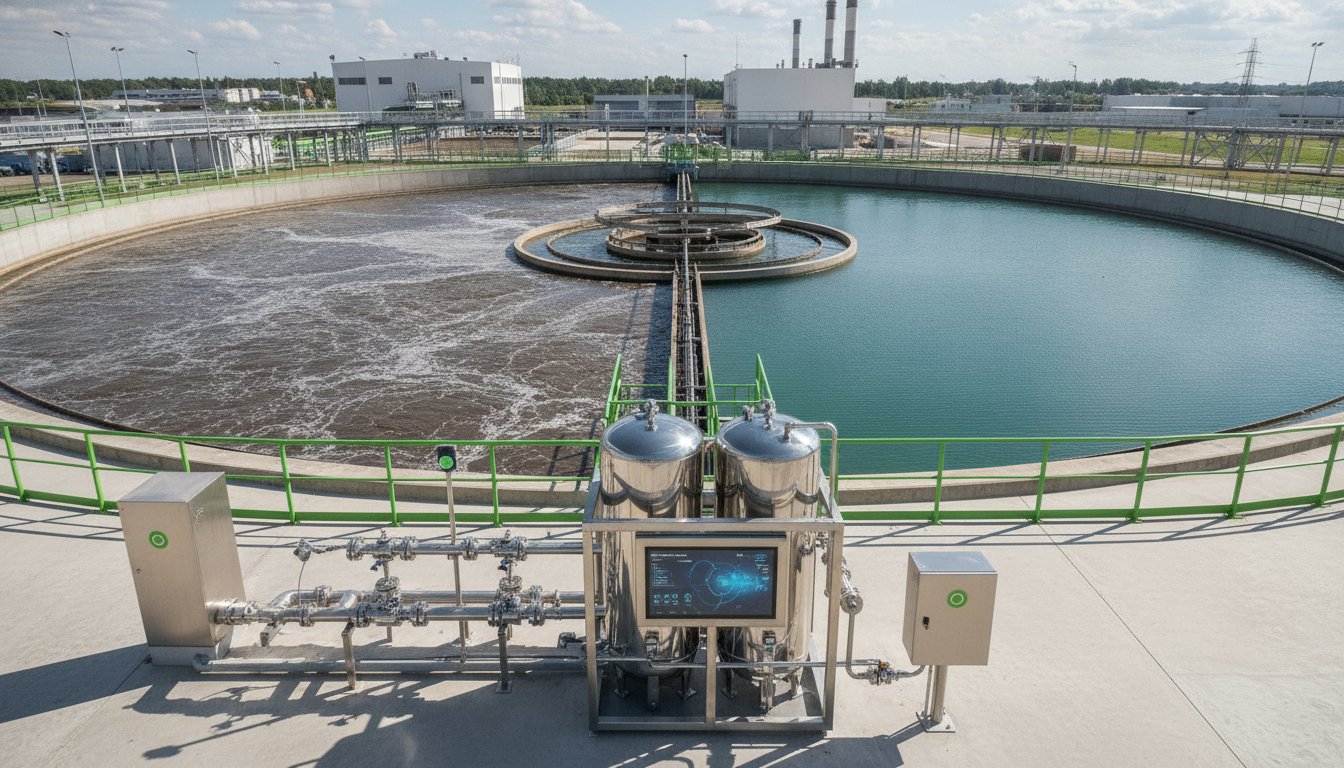
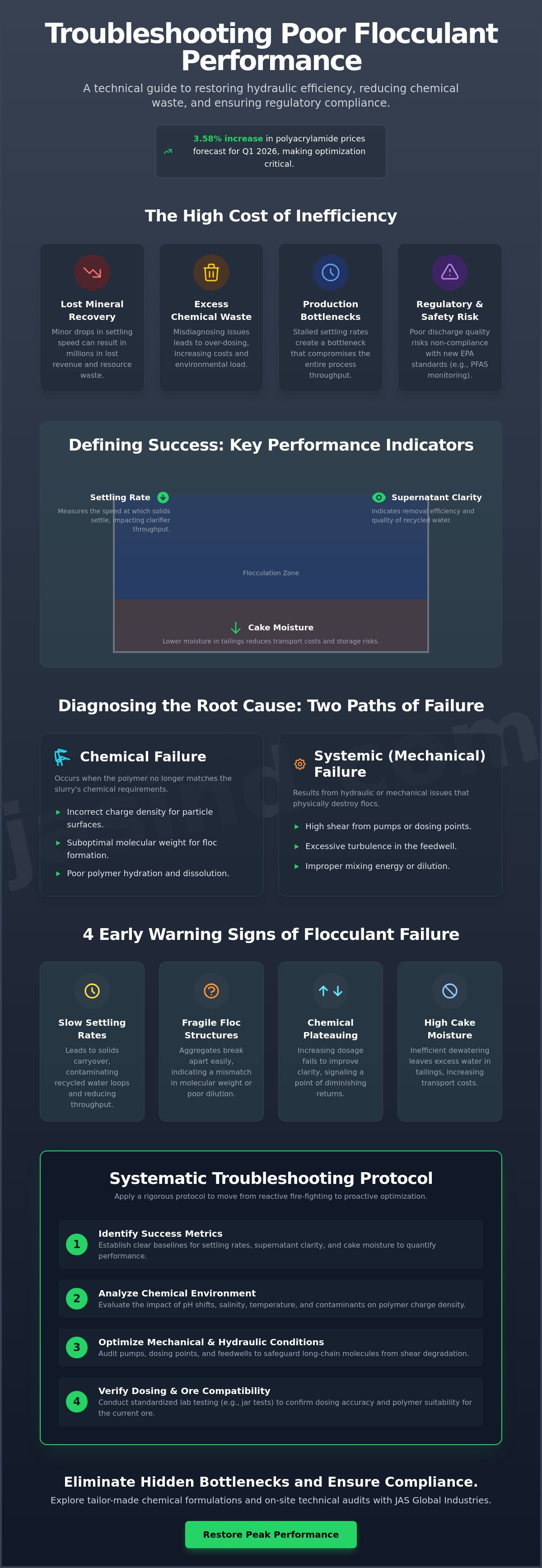
Flocculation is the essential destabilization of suspended particles through the application of high-molecular-weight polymers. This process acts as a bridge, bringing fine particles together into larger masses known as flocs. It's the critical final stage of a larger coagulation and flocculation process that dictates the efficiency of industrial water circuits. When this mechanism fails, the stability of the entire operation is compromised. We define success through three primary metrics: settling rate, supernatant clarity, and cake moisture. These indicators don't just measure chemical efficacy; they represent the health of your production line.
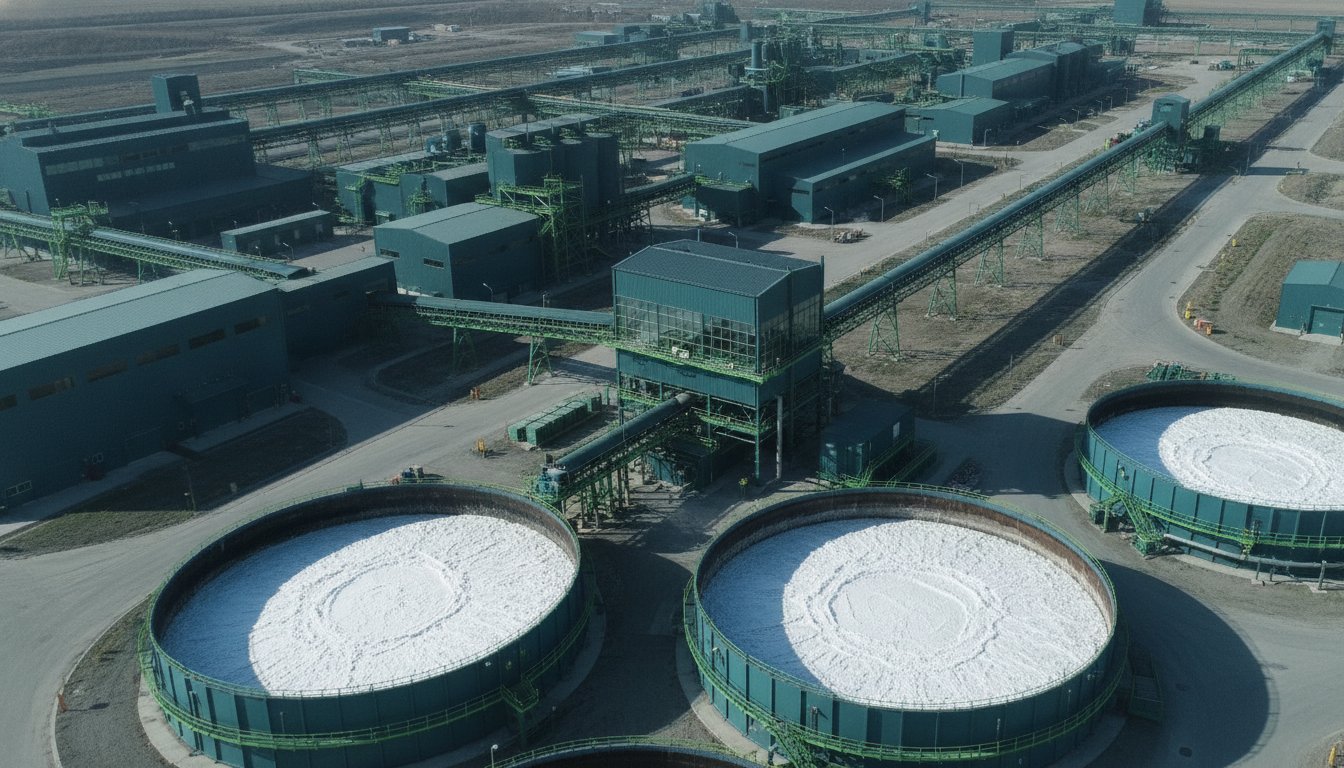
Effective troubleshooting poor flocculant performance starts with a clear distinction between chemical and systemic failure. A chemical failure occurs when the polymer's charge density or molecular weight no longer matches the slurry's requirements. A systemic failure is hydraulic, occurring when feedwell turbulence or pump shear destroys the floc before it can settle. Misdiagnosing these issues leads to chemical waste and throughput bottlenecks. In high-volume mining and industrial sectors, even a minor drop in settling speed can result in millions in lost mineral recovery or increased disposal costs.
The Impact on Global Resource Security
Industrial water treatment is a foundational pillar of global resource stability. When processes operate inefficiently, they consume excess energy and reagents, straining the supply chains that support modern infrastructure. We view process efficiency as a direct form of environmental protection. By maximizing mineral recovery and ensuring clean water discharge, operations contribute to the security of global metal supplies and the health of local ecosystems. Stability in the plant leads to stability in the market. Protecting resources. Powering progress.
Primary Indicators of Suboptimal Performance
Operators must remain vigilant for signs that the chemical balance has shifted. Suboptimal performance rarely stays hidden for long. It manifests as a series of technical failures that threaten the hydraulic capacity of the clarifier. Identifying these early is the first step in troubleshooting poor flocculant performance before it escalates into a regulatory or safety risk. Look for these specific warning signs:
- Slow settling rates: This leads to solids carryover in clarifier overflows, contaminating recycled water loops.
- Fragile floc structures: These aggregates break down under minimal agitation, indicating a mismatch in molecular weight or improper dilution.
- Chemical plateauing: This occurs when increasing the dosage fails to improve clarity, signaling that the system has reached a point of diminishing returns.
- High cake moisture: Inefficient flocculation leaves excess water in the tailings, increasing transportation costs and storage risks.
By monitoring these indicators, technical teams can move from reactive fire-fighting to proactive system optimization. Maintaining this balance isn't just about chemistry; it's about safeguarding the operational integrity of the entire facility.
Analyzing Chemical and Environmental Interference Factors
The effectiveness of a flocculant program depends entirely on the chemical environment of the slurry. Environmental factors are not merely variables; they are the constraints within which your chemistry must perform. When troubleshooting poor flocculant performance, we must look beyond the product itself to the water chemistry. Shifts in pH, fluctuations in salinity, and even seasonal temperature changes can fundamentally alter how a polymer interacts with suspended solids. Ignoring these shifts risks process instability and chemical waste.
Water temperature plays a silent but critical role in polymer hydration. In colder climates or during winter months, the dissolution rate of dry polymers slows significantly. If the maturation time isn't adjusted, undissolved particles enter the system. These represent wasted capital and can clog downstream equipment. Similarly, organic matter and competing metal ions act as inhibitors, consuming the polymer's active sites before they can bridge with target particles. This competition often creates a "chemical plateau" where adding more product yields no further benefit.
Ionic Strength and Salinity Challenges
High salinity is a common hurdle in modern operations that rely on brackish or recycled process water. Total Dissolved Solids (TDS) compress the electrical double layer of the polymer chain, leading to a "coiling" effect. Instead of extending into the slurry to capture particles, the long-chain polyacrylamides fold in on themselves. This loss of surface area directly reduces settling efficiency. Addressing these conditions requires mining solutions designed for high-ionic strength environments. Selecting salt-tolerant formulations ensures that your water circuit remains closed and secure.
pH Sensitivity and Charge Neutralization
The Zeta potential of a particle determines its stability in suspension. Most industrial slurries carry a negative charge, requiring anionic or cationic polymers for neutralization. However, pH shifts can alter the charge density of these polymers. For instance, anionic polyacrylamides may lose their effectiveness in highly acidic conditions. This sensitivity is particularly relevant as facilities prepare for stricter 2026 EPA monitoring of discharge quality. Operators must use industrial water treatment data to calibrate dosing in real-time. Over-dosing to compensate for pH-induced failure often leads to charge reversal. This re-stabilizes the particles, making troubleshooting poor flocculant performance even more complex as the solids refuse to settle regardless of concentration.
Maintaining this delicate balance is essential for global resource protection. If your current reagents aren't meeting these environmental challenges, it's time to evaluate specialized mining flocculants tailored to your specific mineralogy.
Optimizing Mechanical Dosing and Hydraulic Conditions
Even the most advanced polymer formulation will fail if the mechanical delivery system is poorly configured. When troubleshooting poor flocculant performance, operators often overlook the physical handling of the reagent. High-molecular-weight polymers are delicate long-chain molecules. Subjecting these chains to high-speed centrifugal pumps or excessive turbulence causes shear degradation. This physical "chopping" of the polymer backbone permanently reduces its bridging capability, leading to weak flocs and poor settling. We recommend using positive displacement pumps, such as diaphragm or peristaltic types, to safeguard the structural integrity of the molecules.
Optimizing the dilution ratio is equally vital for ensuring process stability. While a 0.1% concentration is a common industry standard, dropping to 0.05% often improves dispersion in high-solids slurries. Thinner solutions migrate through the slurry more effectively. This ensures that every particle has a chance to contact a polymer chain before the mixing energy dissipates. Dosing point locations must be strategically selected to provide enough mixing energy for contact without allowing the newly formed flocs to spend too much time in high-shear zones. Protecting the floc structure is essential for maximizing mineral recovery and protecting water quality.
Polymer Maturation and Dissolution
Effective hydration is the foundation of chemical performance. If dry polymers aren't wetted correctly during the initial phase, "fish-eyes" form in the system. These are gelatinous lumps with a dry, unreacted core. They represent a significant loss of active product and can cause mechanical failures in dosing pumps. Chains require specific residence times, often between 45 and 60 minutes, to fully uncoil and reach their maximum length. Using high-quality water for initial makeup is critical. Process water laden with salts can prematurely coil the chains, rendering them ineffective before they ever reach the feedwell. This is a common pitfall when troubleshooting poor flocculant performance in closed-loop water circuits.
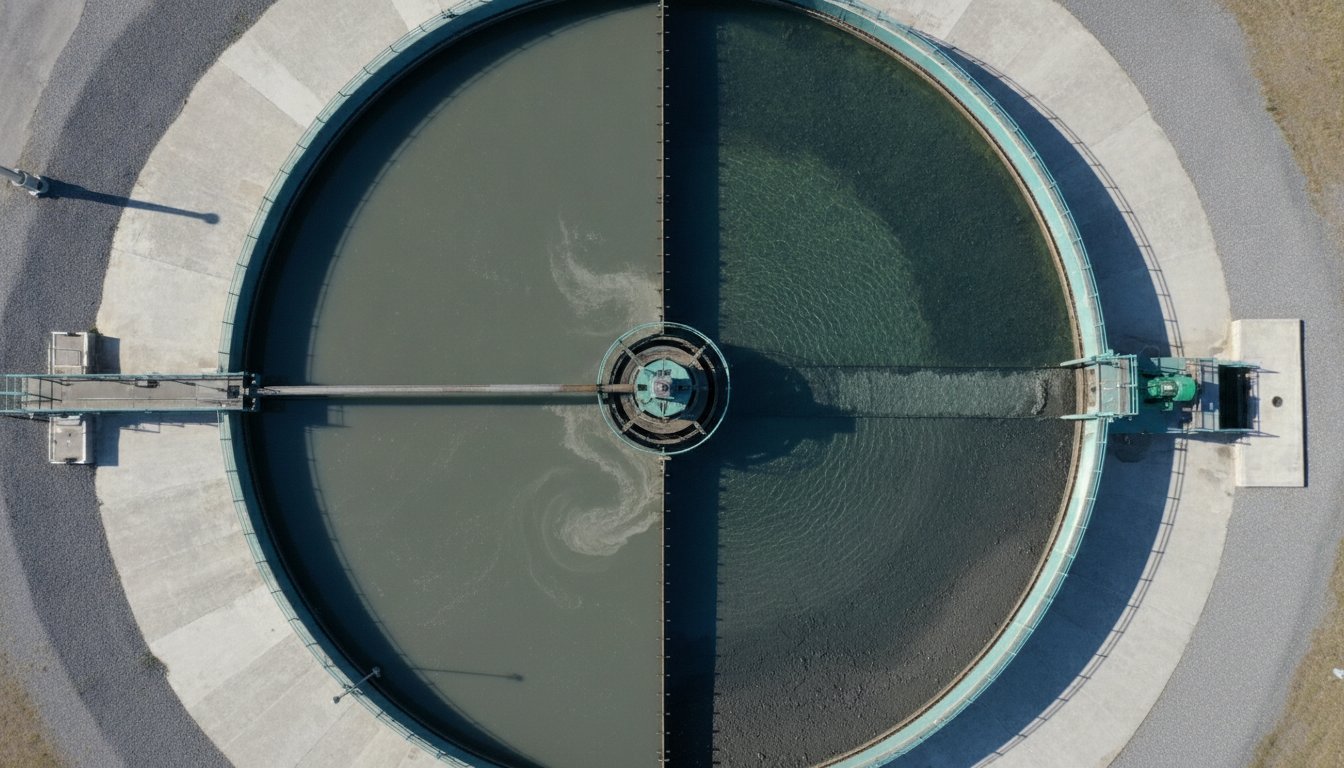
Managing Hydraulic Shear in the Feedwell
The feedwell design acts as the "engine room" of the flocculation process. It must balance conflicting requirements by providing enough energy to promote particle-polymer collisions but not so much that it breaks the delicate bonds. Modern feedwells are designed to manage this energy dissipation through controlled turbulence. As the shear rate increases, the maximum stable floc size decreases. Maintaining this balance ensures that flocs enter the clarifier body at their optimal size and density, promoting rapid settling and clear supernatant. This hydraulic precision is a hallmark of a mature, stable industrial operation. Protecting resources. Powering progress.
A Systematic Troubleshooting Protocol for Plant Operators
Effective troubleshooting poor flocculant performance requires a transition from reactive adjustments to a disciplined, five-step protocol. Guesswork in the control room leads to chemical instability and heightened operational risk. By implementing a systematic audit, technical teams can isolate mechanical failures from chemical misalignments. This process ensures that every gram of polymer contributes to process efficiency and environmental security. A stable circuit is not achieved by chance; it's the result of rigorous technical oversight.
- Step 1: Perform a mass balance check. Verify that the actual pump output matches the intended dosing rate calculated by the control system. Discrepancies here often point to pump wear or calibration drift.
- Step 2: Conduct standardized jar tests. Use fresh process water and current ore samples to ensure lab results reflect real-time plant conditions. This is the only way to confirm if the current reagent suite matches the ore mineralogy.
- Step 3: Audit the make-up system. Inspect mixing tanks for "dead zones" or undissolved polymer accumulation. Stagnant areas reduce the effective concentration of the batch and waste expensive reagents.
- Step 4: Analyze feed slurry characteristics. Monitor percent solids and particle size distribution. A sudden influx of fines can overwhelm a system designed for coarser material.
- Step 5: Compare current performance against historical baseline data. Contextualize today's settling rates against established benchmarks to identify long-term trends or seasonal shifts.
Jar Testing Best Practices
Reliable data depends on reproducibility. Operators must standardize the "swirl and settle" methodology, using consistent agitation speeds and durations for every test to ensure results are comparable. We recommend testing multiple product formulations in parallel to identify shift-specific needs as ore bodies change. Identifying the "over-dosing point" is equally critical. Beyond this specific concentration, performance begins to decline. This indicates that the system has reached a state of charge re-stabilization, where excess polymer actually hinders settling rather than helping it.
Slurry and Solids Loading Analysis
Slurry composition is rarely static. An increase in clay content or ultra-fine "slimes" significantly raises the total surface area requiring treatment. These fine particles consume polymer rapidly, often demanding different surfactant properties to manage surface tension and promote effective bridging. Adjusting dosage based on real-time solids flux calculations prevents carryover during peak loading periods. This level of precision protects the hydraulic capacity of the clarifier and ensures regulatory compliance. If your internal audits reveal persistent inefficiencies, our technical team can help you optimize your flocculant dosing strategy through on-site analysis and custom formulations.
Strategic Chemical Management: The JAS Global Approach
Generic, mass-produced reagents often fall short when faced with the unique geological complexities of a specific site. When troubleshooting poor flocculant performance, the root cause is frequently a misalignment between the chemical's molecular architecture and the mineral surface. We shift the focus from simple commodity supply to strategic chemical management. This involves a commitment to proactive chemical security and long-term operational reliability. By moving toward tailor-made formulations, industrial leaders can eliminate the systemic waste that compromises both profitability and sustainability.
Our Research and Innovation (R&I) centers provide the capability to simulate site-specific water chemistry with high fidelity. We analyze the intricate interactions between polymers and suspended solids under your specific process constraints. This preemptive analysis identifies hidden bottlenecks and ensures that the final chemical suite is optimized for your exact hydraulic conditions. Protecting resources. Powering industry.
Tailor-Made Formulations for Mining and Industry
Standard polymers rarely account for the subtle variations in ore bodies. JAS Global Industries develops custom molecular weights and charge densities specifically for unique mineralogies. In many circuits, the performance of the flocculant is heavily influenced by the upstream chemistry. For instance, the use of mining flotation collectors can pre-condition the slurry, ensuring the subsequent settling stage is both rapid and effective. In a high-clay potash operation, this specialized approach allowed for the successful bridging of ultra-fine slimes that had previously resisted all off-the-shelf treatments. This restoration of efficiency saved the facility significant disposal costs and restored process stability.
Technical Consulting and Global Support
Operational excellence requires more than just chemistry; it requires a partnership. We provide comprehensive plant audits that go beyond the reagent to examine the entire process flow. Our technical experts identify mechanical inefficiencies and chemical gaps that contribute to carryover and product loss. Based in our Dubai headquarters, our team coordinates global support to ensure every operation has access to advanced chemical technology. We invite you to contact us for a specialized technical evaluation to secure your facility's performance. Our goal is global resource stability through technical precision.
Securing Process Stability Through Technical Precision
Maintaining a high-performing water circuit is a continuous commitment to operational integrity. We've explored how balancing chemical charge, protecting polymer chains from mechanical shear, and implementing a rigorous mass balance protocol can transform your plant's efficiency. These steps aren't just technical adjustments; they're essential actions to safeguard global resources and ensure the long-term stability of your mineral recovery process. A stable circuit is the foundation of a responsible industrial presence.
Effective troubleshooting poor flocculant performance requires a partner that understands the intersection of chemistry and infrastructure. Since 1998, we've provided the expertise needed to navigate these complex industrial environments with confidence. With multiple global R&I centers, we specialize in custom tailor-made formulations that adapt to your unique ore body and specific water chemistry. It's time to move beyond standard reagents and secure your operation's future through advanced chemical technology.
Optimize your process with a JAS Technical Audit and restore the hydraulic efficiency your facility depends on. We're ready to help you achieve a more stable, sustainable, and profitable operation. Your success remains the primary focus of our global mission.
Frequently Asked Questions
Why does my flocculant work in the lab but fail in the plant?
Lab tests often fail to account for the dynamic hydraulic conditions and mechanical shear present in a full-scale industrial environment. While jar tests occur in controlled, stagnant conditions, plant clarifiers deal with feedwell turbulence and pump shear that can destroy delicate floc structures. Troubleshooting poor flocculant performance requires verifying that the mixing energy and residence time in the plant match the chemical's intended application. Stability in the lab doesn't always translate to stability in the field.
Can temperature changes affect the settling rate of my clarifier?
Temperature fluctuations directly influence the viscosity of the process water and the hydration rate of the polymer. Cold water increases fluid resistance, which slows the descent of formed flocs and can lead to solids carryover in the overflow. Additionally, colder water requires longer maturation times for dry polymers to fully uncoil. Failing to adjust for seasonal changes compromises process stability and resource recovery. Protecting your circuit requires constant monitoring of these environmental variables.
What is the difference between coagulants and flocculants in troubleshooting?
Coagulants neutralize the electrical charge of fine particles to form micro-flocs, while flocculants bridge these clusters into larger, heavier aggregates using high-molecular-weight chains. If your supernatant remains cloudy despite seeing large flocs, the issue is likely a coagulation failure. If you have clear water but no settling, the flocculant isn't effectively bridging the neutralized particles. Understanding this distinction is vital for maintaining operational security and clean water discharge.
How do I know if I am over-dosing my flocculant?
Over-dosing is typically indicated by a sudden plateau or decline in settling rates despite increasing the chemical concentration. This phenomenon occurs due to charge reversal, where excess polymer re-stabilizes the particles and prevents them from aggregating. You may also notice a significant increase in supernatant viscosity or "stringy" solids that refuse to compact. Maintaining a precise mass balance is essential to prevent this form of chemical waste and protect your process efficiency.
What are 'fish-eyes' and how do they impact chemical efficiency?
Fish-eyes are gelatinous clumps of undissolved polymer that form when dry powder isn't properly wetted during the initial make-up process. These clusters contain a dry core that remains inaccessible to the process water, effectively wasting a portion of your reagent. Beyond the loss of active product, these lumps can clog dosing lines and damage mechanical components. Proper initial dispersion is a prerequisite for chemical security and long-term operational reliability.
Is it possible for high salinity to 'kill' my polymer performance?
High salinity can severely inhibit performance by causing long polymer chains to coil tightly around themselves. This coiling reduces the effective length of the molecule, preventing it from bridging the gaps between suspended particles. When troubleshooting poor flocculant performance in brackish or recycled water circuits, it's necessary to select salt-tolerant formulations that maintain their chain extension. Protecting your water circuit from ionic interference is a foundational step in modern resource management.
How often should I re-evaluate my flocculant selection?
You should re-evaluate your reagent suite whenever there is a shift in ore mineralogy, water source, or discharge regulations. Even minor changes in clay content or pH can render a previously effective polymer obsolete. We recommend conducting standardized audits at least twice a year to ensure your chemistry remains aligned with your operational goals. Proactive evaluation is a cornerstone of long-term process stability and global resource protection. Stability requires constant vigilance.
What is the best way to prevent polymer shear degradation?
The most effective way to prevent shear degradation is to use low-shear dosing pumps and optimize the location of your injection points. High-speed centrifugal pumps physically chop the polymer chains, permanently destroying their bridging capability. Switching to diaphragm or peristaltic pumps protects the molecular integrity of the reagent. Ensuring the polymer enters the slurry in a zone of moderate turbulence promotes contact without breaking the newly formed flocs. Protecting the molecule protects the process.