
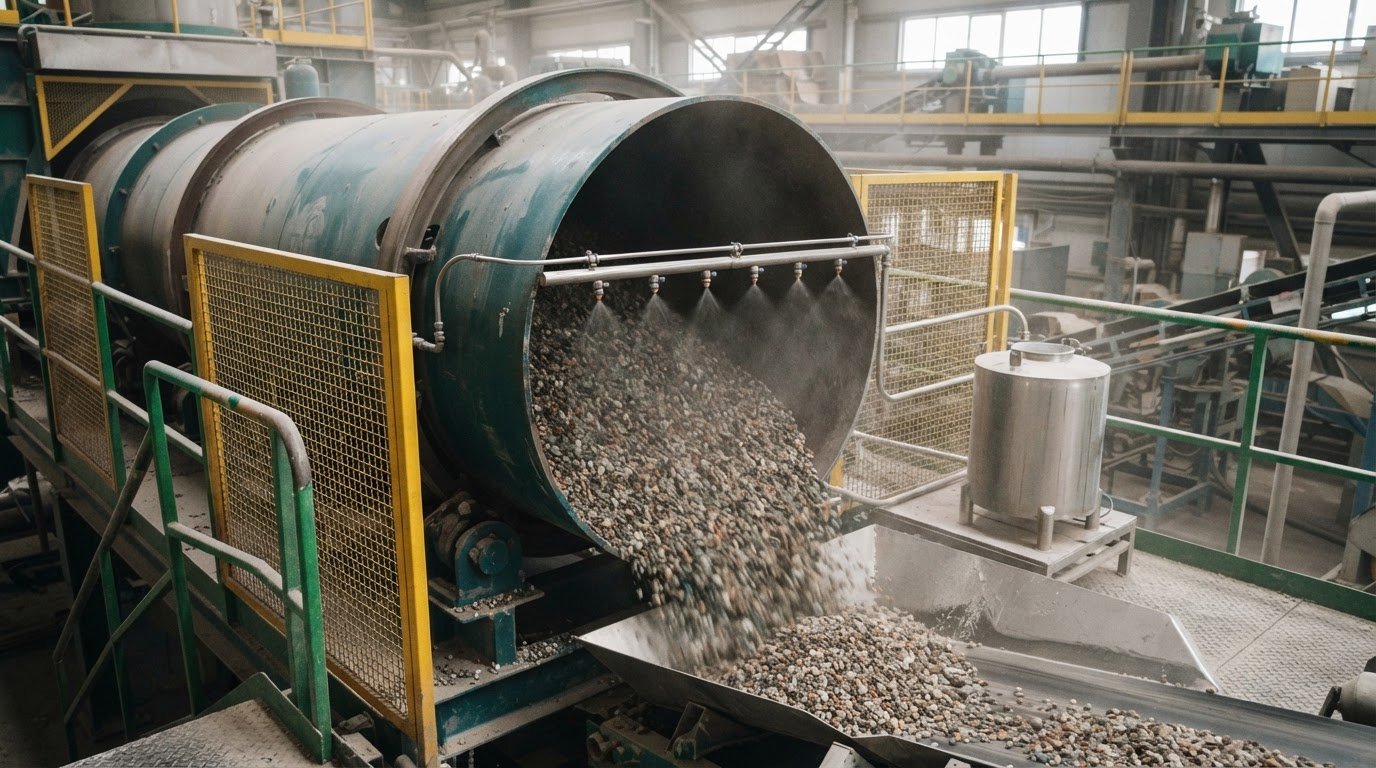
Fertilizer flowability often depends on the granule surface. Moisture absorption, storage pressure, hygroscopic ingredients, and temperature changes can all contribute to caking. Bio-based anti-caking agents for fertilizer coat granules to help limit sticking and maintain free-flowing product during handling and storage.
Clumping can disrupt storage, transport, and application, so the coating needs to suit the fertilizer. Bio-based and traditional formulations may behave differently across nitrogen, phosphate, and potash products. The right fit depends on the granules and the conditions they will encounter.
This article explains how anti-caking coatings work, how bio-based formulations differ from traditional options, and how fertilizer type and supply-chain conditions affect selection. It also covers practical criteria for choosing a formulation that supports reliable product flow without assuming one coating suits every application.
Preventing fertilizer caking - how do anti-caking coatings work?
Moisture absorption, storage pressure, hygroscopic ingredients, and temperature changes can make fertilizer granules stick together. An anti-caking coating forms a layer on the granule surface that helps limit contact and moisture-related sticking. Bio-based formulations may reduce reliance on petroleum-derived ingredients, but “bio-based” alone does not mean biodegradable. Environmental impacts depend on the feedstock and manufacturing process, and may include resource impacts from sourcing or uncertain breakdown under actual disposal conditions.
For practical selection, identify caking risks during production, storage, and transport. A coating needs to suit the fertilizer’s composition and expected conditions while maintaining granule flow and the intended nutrient release. For plant nutrition providers such as ROfert România, maintaining granule integrity directly supports consistent field application and nutrient delivery. For example, fertilizer stored in humid conditions may need different surface protection from product moving quickly through a dry supply chain.
EU regulatory considerations include the Fertilising Products Regulation, identified as EU 2019/1009 by the European Union. Proposed EU regulations concerning fertilizers and technological additives assume compliance with specific biodegradability criteria. EU standards will restrict petroleum-derived and low-degradability polymer coatings starting in 2026. These points make it essential to assess the formulation against the destination market, rather than treating a bio-based label as proof of compliance.
Safety documentation should inform the assessment. Review the formulation’s composition, handling guidance, and relevant safety data before production use. In the United States, the FDA’s Food Safety Modernization Act and EPA regulations are relevant frameworks, with applicability depending on the product and its use. Do not assume a fertilizer coating automatically meets every agricultural safety requirement.
Lower-carbon manufacturing involves more than changing one chemical input. Consider feedstock origin, processing energy, transport, coating performance, and end-of-life behavior together. A step-by-step review can compare these factors with the required caking control and supply route. As bio-based additives receive more attention, sound documentation and formulation evidence help support agricultural use and production decisions.
Bio-based and biodegradable caking inhibitors
“Bio-based” describes an ingredient’s origin, while “biodegradable” describes how it breaks down under particular conditions. The terms are not interchangeable. A coating made partly from renewable feedstock may persist after use, so environmental assessment should consider its composition and breakdown behavior. Formulators evaluating bio-based anti-caking agents for fertilizer look beyond feedstock claims to the finished coating.
For a fertilizer compound, assess the coating against moisture exposure, granule surface, storage conditions, and handling requirements. Test the finished fertilizer instead of inferring performance from the additive alone. Compare flow, lump formation, and coating integrity under conditions representative of the supply chain, especially humid storage. Claims about bio-based anti-caking agents for fertilizer are more useful when the test conditions are clear.
Under humid storage, useful performance observations include fertilizer type, moisture exposure, storage duration, and changes in flow or caking. A reported effectiveness protocol uses seven thermal cycles, each with one hour at 40 °C followed by one hour at 20 °C. That protocol assesses temperature cycling, so it should not be treated as a humid-storage result.
Biodegradable BIO anti-caking agents should be assessed as complete formulations. Feedstock origin, processing, coating behavior, and breakdown conditions all shape the environmental picture. Changing one ingredient does not establish that the finished coating will biodegrade in every environment. Compare test conditions with the likely disposal or release pathway, and distinguish measured results from broad sustainability claims.
Regulations depend on the destination market and product category. According to the European Union, the Fertilising Products Regulation is identified as EU 2019/1009. For products supplied into that market, align biodegradability evidence and technical documentation with applicable product requirements. Keep test methods, formulation records, and intended use together so a compliance review reflects the coating’s actual use.
In practice, compare a bio-based coating with the existing formulation on the same fertilizer batch and under the same storage conditions. Record moisture exposure, visible clumping, flow behavior, and coating consistency. These observations give production teams a practical basis for weighing handling performance against environmental objectives.
Choosing between traditional and BIO formulations
Select a formulation based on fertilizer type, climate, and supply-chain length. Granule composition and temperature exposure also shape the performance required.
Formulation Ingredients and Formats
Fatty acids and surfactants can affect coating behavior, but fit depends on the complete formulation. Compare powder, granule, and liquid formats with the production line’s dosing and mixing methods. For ammonium fertilizers, assess how the formulation interacts with the granule surface and moisture exposure. Mineral ingredients and bio-based feedstocks are different formulation choices, not automatic indicators of performance.
Compared with mineral oil, wax, and synthetic coatings, BIO formulations differ in ingredient origin and potential biodegradability. Effectiveness still depends on fertilizer composition, storage conditions, and application quality. A meaningful comparison uses the same fertilizer and caking test conditions, then considers handling performance alongside environmental requirements.
Application and Product Handling
A typical anti-caking agent dosage is 0.8 to 2 kg per ton of fertilizer. Application commonly involves distributing the agent over granules as a coating; the selected method must suit the product format and production equipment. Technical consulting can help align dosage, coverage, and formulation with fertilizer type and process demand.
For storage and handling, follow the formulation’s safety and technical documentation, including its stated storage conditions. Compatibility testing should use the intended fertilizer, coating method, and representative moisture and temperature conditions. Assess coating distribution, flow, and clumping together. A formulation review can help frame these process requirements before changing an established treatment.
Make the final choice against documented production needs: fertilizer chemistry, climate exposure, supply-chain length, and the required environmental profile. A BIO formulation is a practical fit when its application and compatibility results support the intended handling conditions. Record the test conditions and results so future batches can be assessed against the same criteria.
Anti-caking agents for nitrogen, phosphate, and potash fertilizers
Nitrogen, phosphate, and potash fertilizers differ in composition, granule properties, and storage behavior. A coating that suits one product may not protect another through production, transport, and application. Uncoated NPK fertilizers have a reported caking tendency of 30 to 38% by weight, making formulation fit a practical concern for compound products.
For nitrogen fertilizers, identify the specific material, such as urea or ammonium sulfate, then assess its moisture sensitivity and granule surface. The treatment should distribute evenly without interfering with subsequent blending or application. Temperature changes during storage and transport also matter because they can affect moisture movement and contact between granules.
Phosphate fertilizers need a formulation matched to the product’s composition and physical condition after production. For example, a coating for a dry, free-flowing phosphate product may need different handling characteristics from one used on a blend containing nitrogen. Assess coverage, flow, and caking on the actual fertilizer rather than relying on a generic category label.
Potash fertilizers also need testing in the form supplied, whether handled alone or as part of an NPK blend. Consider storage climate, transport duration, and application equipment together. A global supply chain may expose the same product to different conditions, so the coating decision should reflect its full route, not just the production site.
Use a structured comparison: record fertilizer type, coating method, storage conditions, and observed flow or lump formation. The typical anti-caking agent dosage is 0.8 to 2 kg per ton of fertilizer, but the appropriate application depends on the product and process. This range is a starting point for formulation assessment, not a universal setting for every nitrogen, phosphate, or potash product.
For a product-specific assessment, discuss fertilizer coating requirements in relation to its composition, handling route, and intended application.
JAS Global Industries: Water Treatment Antiscalants
JAS Global Industries offers Water Treatment Antiscalants for scale control in water treatment processes. This is a separate application from fertilizer granule coatings, so it is relevant when scale management in a water system is part of your operational needs.
For fertilizer production teams, formulation choice depends on fertilizer type, application conditions, and the supply chain. For water treatment teams, antiscalants address a distinct process need. A useful technical discussion starts with the system’s treatment requirements and operational challenge.
Contact JAS Global Industries to discuss Water Treatment Antiscalants for your process.
Turn formulation priorities into a practical next step
The next decision is how to align sustainability goals with production requirements. When assessing bio-based anti-caking agents for fertilizer, bring the intended fertilizer type, handling conditions, and environmental criteria into one formulation discussion. This provides a clear basis for evaluating options across procurement, production, and product stewardship.
JAS Global Industries offers Fertilizer Anti-caking Agents and Fertilizer Dust Suppressants for fertilizer production. Its Mining Flotation Collectors serve a distinct purpose in mining operations. Keeping each requirement tied to its process helps focus the technical discussion and supports a considered selection.
When describing your needs, share the fertilizer type, current caking challenge, and relevant production conditions. These details help focus the discussion on your operation’s formulation requirements, without assuming one treatment suits every product.
Contact JAS Global Industries to discuss your fertilizer process needs and potential formulation requirements. A clear brief is a constructive starting point for your next production decision.
Frequently Asked Questions
Why Do NPK Granules Cake?
NPK granules cake when moisture, pressure, and fertilizer composition encourage particles to adhere. Moisture can form bridges between granules, while storage pressure keeps their surfaces in close contact. Temperature changes during storage can also affect moisture movement. Blends may behave differently from single-nutrient products, so assess caking using the actual NPK formulation and its storage and transport conditions.
What bio-based anti-caking agents are used in fertilizers?
Bio-based anti-caking formulations can contain ingredients derived from renewable feedstocks; the term describes origin, not a single chemical. Fatty acids and surfactants are ingredient classes considered in fertilizer coatings. Their role depends on the complete formulation and its interaction with the fertilizer. A bio-based designation alone does not establish a product’s composition or biodegradability.
How do bio-based anti-caking agents prevent fertilizer caking?
These agents are applied to granule surfaces to help reduce adhesion and maintain free-flowing fertilizer. Application quality matters: uneven coverage can leave exposed areas where granules touch. In production, assess coating distribution alongside the finished fertilizer’s flow and caking behavior. Results depend on matching the formulation and coating method to the fertilizer’s physical properties.
Which bio-based anti-caking agents work best for urea, ammonium nitrate, and NPK fertilizers?
No single bio-based formulation is best for every urea, ammonium nitrate, or NPK product. Fertilizer composition, granule properties, climate, and supply-chain conditions all influence selection. Compare candidate formulations using the specific fertilizer and intended handling conditions. For an NPK blend, test the complete blend rather than assuming results from one ingredient or component will predict finished-product performance.
Do bio-based fertilizer anti-caking agents affect nutrient availability, crop safety, or fertilizer handling?
Effects depend on the formulation and its performance on the finished fertilizer. Assess whether the coating changes nutrient dissolution or release, and evaluate handling by observing flow, dust, and caking. Crop-safety assessment should consider the intended agricultural use and relevant product documentation. Bio-based origin alone does not establish nutrient compatibility or crop safety.
What regulations and labeling requirements apply to bio-based fertilizer anti-caking agents in the United States?
In the United States, the FDA’s Food Safety Modernization Act and EPA regulations are relevant regulatory frameworks, but their applicability depends on the product and intended use. Identify the additive’s composition, purpose, and use context when determining applicable requirements. Keep product and safety documentation aligned with those details, and do not treat “bio-based” as a substitute for regulatory or labeling assessment.