
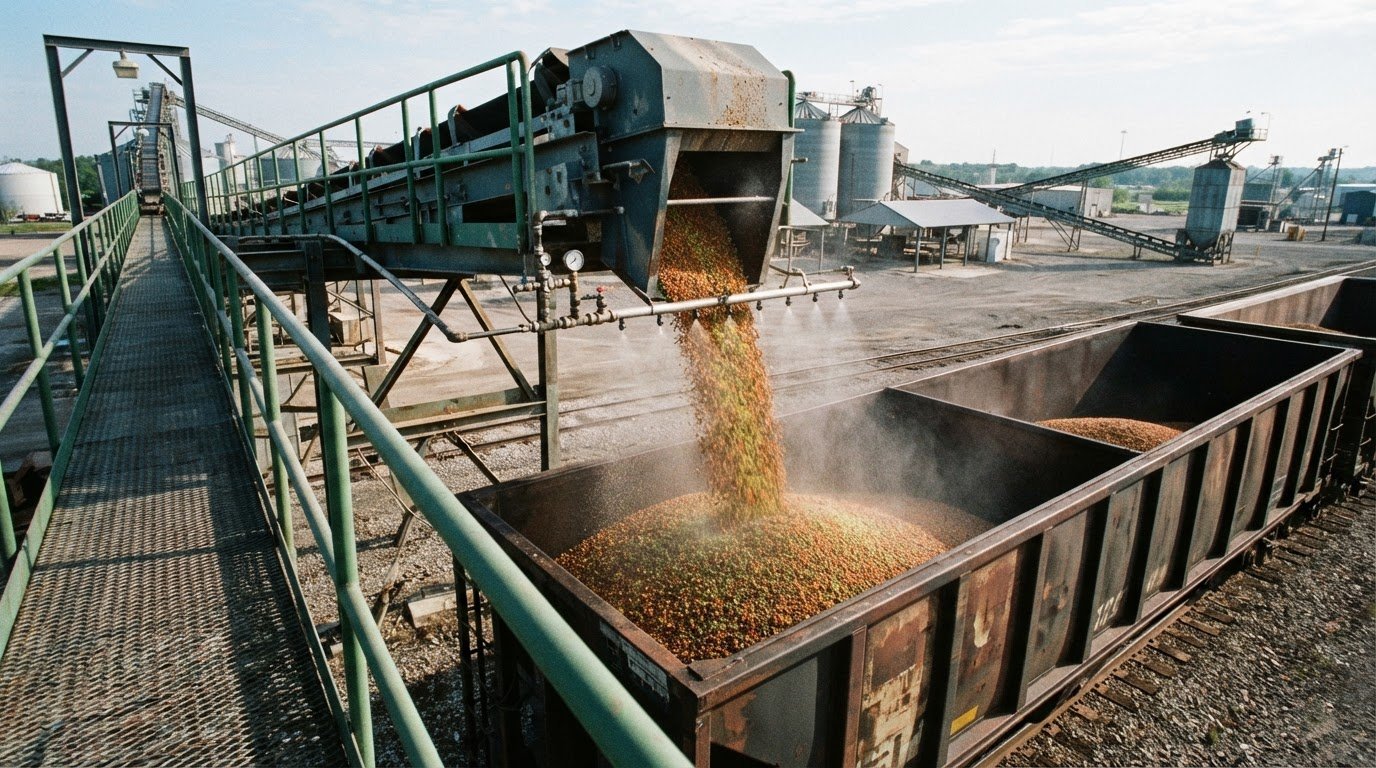
Dust control is a product-quality decision, not just a housekeeping task. Sustainable dust suppressants for fertilizers, including cellulose fiber agents, can bind loose fines and limit dust as fertilizer moves through production and bagging. Their role is to support cleaner handling while helping preserve the finished product.
Granules can shed dust through abrasion during movement, impacts at transfer points, and changes in humidity or temperature. The right approach depends on the fertilizer and where dust forms, so a suppressant must suit both the material and its handling conditions.
This article explains how dust develops, how suppressants such as cellulose fiber agents can help control it, and what to consider across manufacturing, storage, transport, and bagging. It also covers the links between dust control, flowability, and product quality, as well as how application choices can fit an existing process.
Dust control across manufacturing, storage, transport and bagging
Dust forms as fertilizer powder and granules move through production, storage, transport, and bagging. Effective control considers the full handling route, not only the final filling point.
Dust Control During Production
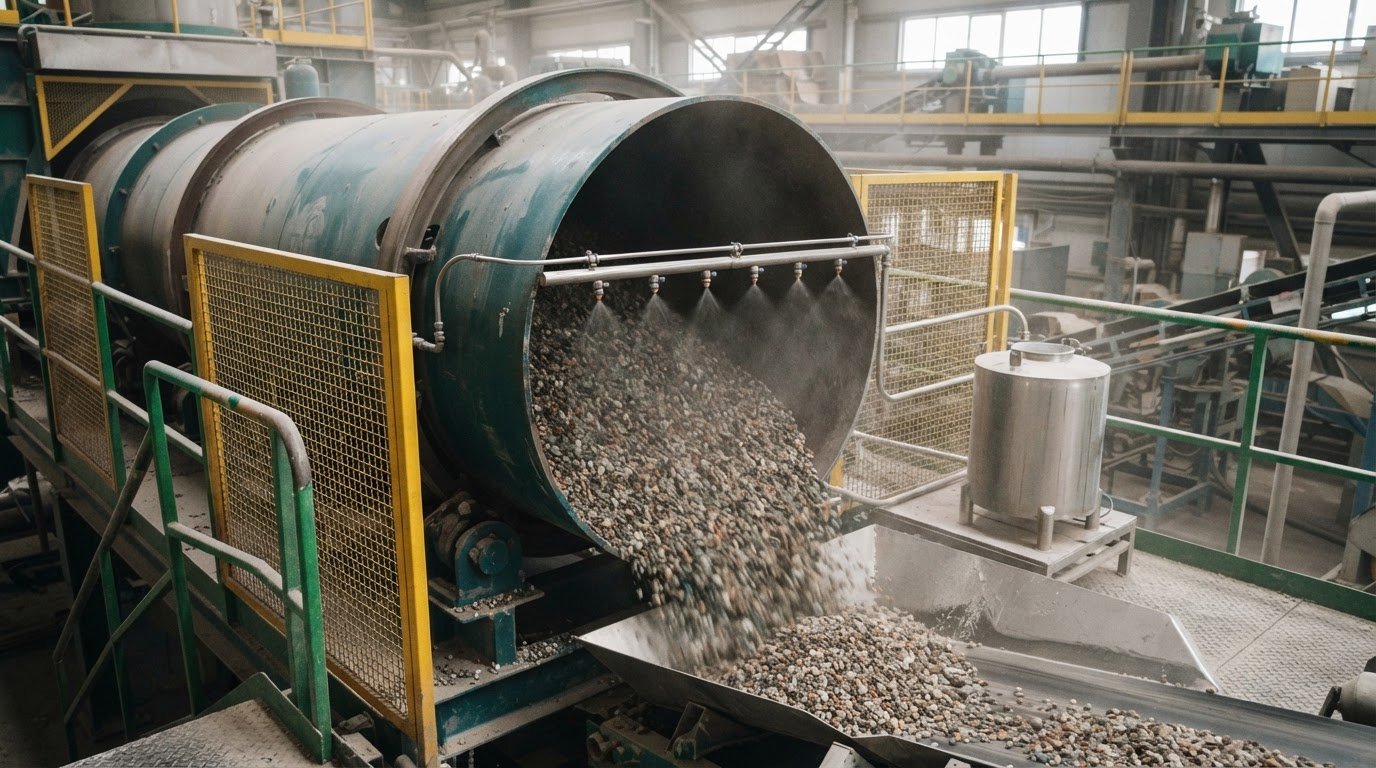
During manufacturing, abrasion, impacts, and unbound particles create dust around blending, granulation, and transfer points. A suppressant can bind fines to granules, while a coating drum’s spray system and tumbling bed help distribute treatment. Bio-based agents include cellulose fibers and lignosulfonates; mineral oils and synthetic polymers are other coating options. Their performance differs by formulation and fertilizer, so no single type is universally more effective. PM10 and PM2.5 reductions depend on the process, application, and particle measurement; no single reduction figure applies to every line. Dust coatings also don’t automatically provide controlled nutrient release, which requires a separate coating function.
Storage and Transport Dust Management
During storage and transport, repeated movement and impacts can break granules or dislodge surface fines. Apply treatment where particles are exposed to handling, then assess dust at transfer points and bagging equipment. Targeted spraying limits drift by directing application onto the moving fertilizer rather than into surrounding air. A uniform coating can help keep fines attached, while collection equipment captures airborne dust that escapes. Bio-based suppressants aren’t automatically biodegradable, non-toxic, or safe for soil and aquatic life; those properties depend on the specific formulation and its environmental data. For organic production, the U.S. Department of Agriculture says National Organic Program regulations at §205.203 (a), (b), and (c) describe soil fertility and crop nutrient management practices that help reduce dust emissions.
Lignosulfonate-Based Dust Control
Lignosulfonates bind particles as coating ingredients and are one option for fertilizer dust control. Sodium, magnesium, ammonium, and calcium lignosulfonates are used as dust suppressants, though organic-production requirements vary by material and use. Other options include oils, waxes, polymers, starches, and cellulose fiber agents. Assess possible effects on flow, caking, moisture response, and coating uniformity. These considerations also apply to vegetable oils, starches, and biodegradable polymers: a “bio-based” label alone does not establish handling performance or environmental safety. In the United States, lignosulfonates and these coating-agent categories are used for fertilizer dust suppression. Selection depends on fertilizer composition and process conditions.
Dust-related caking and product quality
Dust and caking can develop together, affecting fertilizer quality from storage to field application. Friable crystals on granule surfaces can break during handling, while humidity and temperature changes can weaken particles. Fine material may then collect between granules, restricting movement through conveyors, hoppers, and bagging equipment. Compacted fertilizer granules typically generate more dust than granulated products, while irregular, jagged particles are more prone to breakage than smooth, spherical granules.
Assess both dust formation and the finished product’s flow. A coating can bind loose dust, reduce moisture absorption from the air, and help prevent caking. These functions can support flowability, but results depend on the fertilizer’s surface characteristics, storage conditions, and handling route. Evaluate the product after treatment, not just the visible powder during application.
U.S. EPA, OSHA, and state requirements can depend on the activity, material, and potential for emissions or worker exposure. There is no single rule for every fertilizer suppressant. Applicable requirements may cover air emissions, workplace hazards, chemical handling, and state-specific provisions. Obligations depend on the facility and product use, so do not assume a bio-based coating is exempt.
Anti-caking protection works best as part of a coordinated control approach. A coating can form a barrier around each granule, limiting atmospheric moisture transfer while helping hold surface fines in place. That matters because dust control alone may leave caking or restricted flow unresolved. Review the granule condition, coating distribution, storage environment, and movement through equipment as connected factors. A focused fertilizer process protection approach can consider dust suppression alongside product flow and caking prevention.
Keep the control objective focused on fertilizer dust: prevent caking while preserving flowability. Evaluate these related aims together rather than treating dust control as a separate objective. Consider whether the approach supports both caking prevention and continued flow through the handling process.
Application, dilution, curing, and temperature conditions
Application quality depends on the fertilizer’s surface condition, spray distribution, and contact between the coating and granules. Many dust suppressants can pass through an existing spray system, while a coating drum combines spraying and tumbling to spread treatment across the material bed. Aim for even coverage, not simply a higher application rate. Poor distribution can leave untreated particles beside overcoated granules.
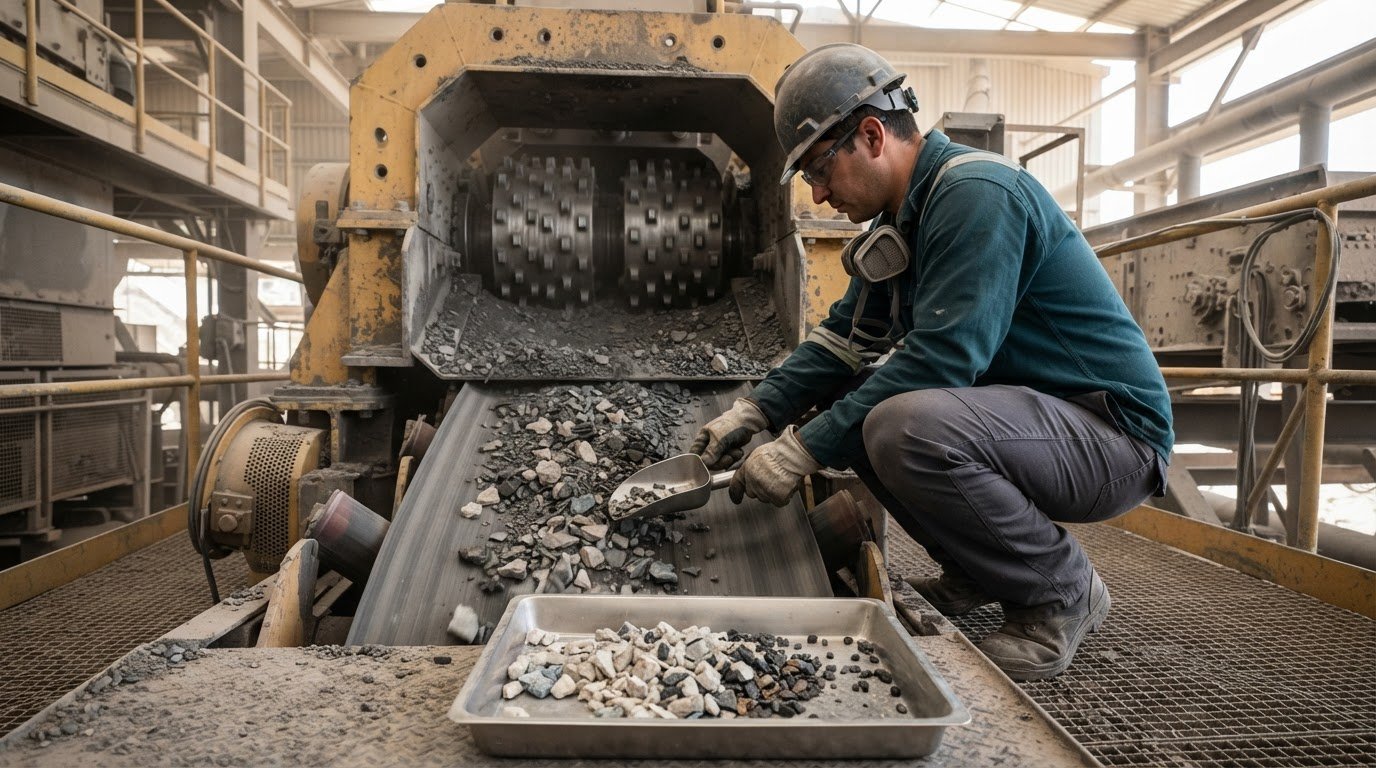
Testing should use the actual fertilizer and a process-representative application method. Compare treated and untreated samples after the same handling, then assess dust generation, flow, caking, and coating uniformity. Laboratory tests followed by production trials help identify a suitable suppressant. In one example, three solutions applied at 0.25% had dusting levels of 4.7, 4.9, and 3.5, showing that results can differ at the same application level.
Dilution and curing also affect handling. Sugar- and lignin-based technologies were diluted at a 1:2 ratio, using twice the volume of water as product. Their recommended or preferred curing time was 24 to 48 hours. That interval matters when scheduling bagging or shipment, because the treated fertilizer needs time to cure before downstream handling. The appropriate preparation depends on the suppressant type and the process setup.
Temperature can change application and storage behavior. In a demonstration, temperatures stayed below 100° Fahrenheit, a condition that would allow twice annual application. Sugar- and lignin-based technologies could become temporarily less flowable when overnight temperatures fell to the teens and 20s. A practical selection process therefore evaluates performance under the facility’s temperature conditions, alongside dilution, curing, and spray distribution. Trials should capture these conditions rather than relying only on a bench result.
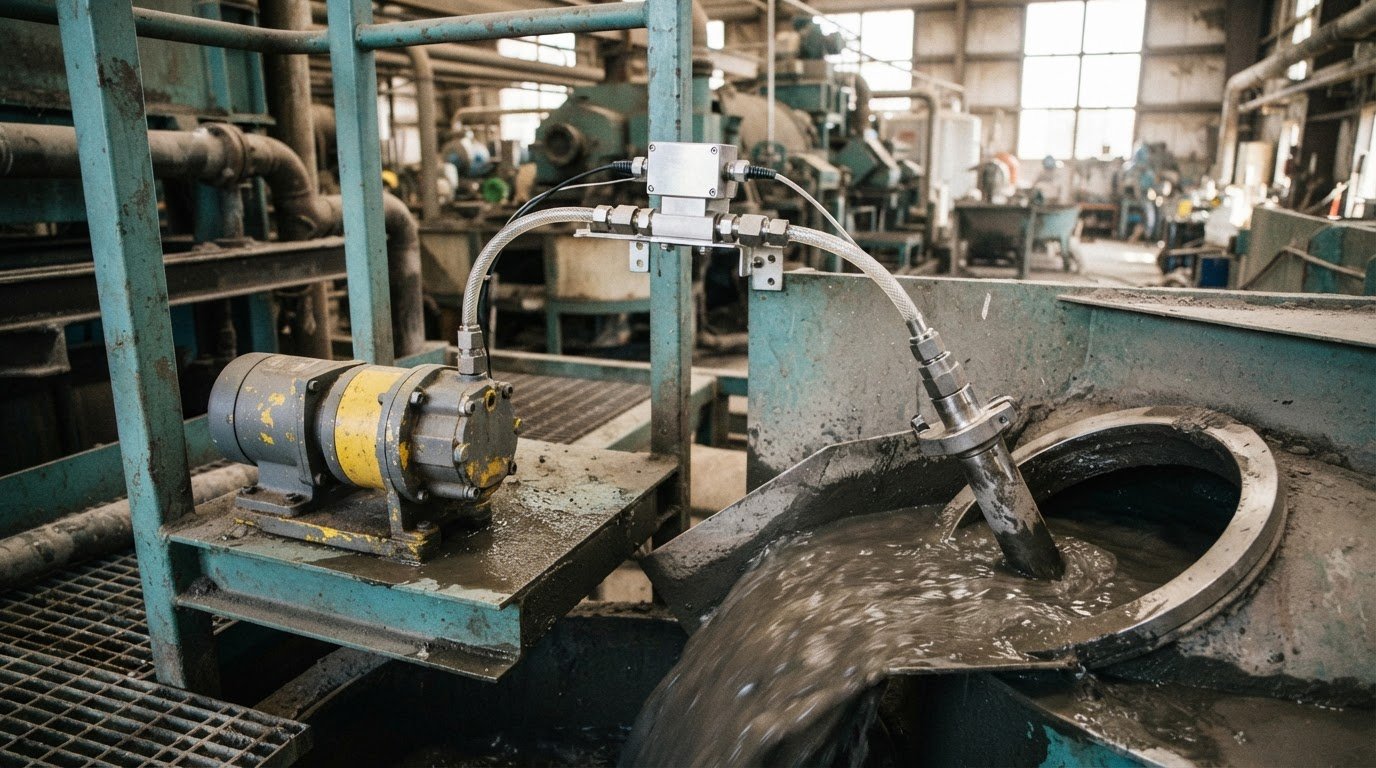
Fertilizer dust suppressants can often be applied through an existing spray system, potentially making established equipment usable. Water requirements vary by technology: the sugar-based technology could be applied with reclaimed or potable water. Soy- and glycerin-based technologies, by contrast, were applied neat and could be used where no water supply was available. These differences inform preparation and equipment planning. Trials should confirm consistent distribution under the facility’s operating conditions.
Cellulose fiber anti-dust agents for fertilizer powders
Among sustainable dust suppressants for fertilizers, cellulose fiber agents offer a distinct approach for powders and fine particles. Fibers can form a physical network that traps fines and supports agglomeration. During handling, this can help keep loose particles together and limit their release into the surrounding air. Performance depends on how the fibers disperse through the fertilizer and interact with its surface.
Distribution is central to performance. If a formulation gathers in clumps, some powder remains exposed while other areas receive excess treatment. A controlled mixing sequence helps spread the agent and brings fibers into contact with loose particles. Evaluate treated fertilizer after blending and representative transfer steps. Check for uniformity, reduced visible dust, and acceptable movement through equipment. This approach ties the selection of sustainable dust suppressants for fertilizers to actual process conditions.
Cellulose-based agents must also fit the fertilizer’s other quality requirements. A formulation intended to bind fines should not undermine flowability, promote caking, or interfere with granule handling. If the fertilizer has a separate coating or nutrient-release program, assess how the treatments interact. Dust suppression and controlled nutrient release are distinct functions, even when both use coating components. Selecting sustainable dust suppressants for fertilizers means considering these process and product priorities together.
The term “cellulose” alone does not establish a product’s environmental profile or suitability. Assess the complete formulation, including its source materials, additives, application method, and end use. Compare treated and untreated samples under the same mixing and handling conditions, then examine dust release, flow, and storage behavior. This makes selection specific to the fertilizer rather than dependent on a general sustainability label. Judge cellulose fiber agents by their distribution and performance across the intended process, not by material name alone.
Explore fertilizer dust-control options suited to your production requirements.
JAS Global Industries: Fertilizer Dust Suppressants
JAS Global Industries is a natural next step when fertilizer dust persists through production, transfer, or bagging. Its fertilizer dust suppressants address dust control, while anti-dusting agents and fertilizer anti-caking agents can support related handling and flowability needs. The right approach depends on the fertilizer’s characteristics, application point, and process conditions.
Start by identifying where dust forms and which product qualities must be maintained. JAS Global Industries develops tailored chemical formulations to align solutions with process requirements rather than treating every fertilizer operation alike. This can help when loose fines, caking, or dust during handling need attention as connected concerns.
Contact JAS Global Industries to discuss fertilizer dust suppression for your operation.
Set the next process improvement in motion
Make dust control part of a broader production objective: protect product handling while aligning treatment with the fertilizer and operating conditions. Sustainable dust suppressants for fertilizers are most useful when selected against clear priorities, such as dust reduction, flow, and product condition. This gives teams a practical basis for deciding what to evaluate next.
JAS Global Industries offers Fertilizer Dust Suppressants and Fertilizer Anti-caking Agents for fertilizer operations, alongside Mining Flotation Collectors for mining applications. The next step is to discuss the production challenge and identify which solution category fits it. Contact JAS Global Industries to start that conversation and move toward a more controlled process.
Frequently Asked Questions
What application rates and spray methods are recommended for fertilizer dust suppressants?
There is no single application rate for every fertilizer. The working rate depends on the suppressant formulation, product throughput, and particle condition. Set the dosing system to match the fertilizer feed, then check whether treatment reaches the full product stream rather than only exposed areas. For example, sample material from different points after application to identify uneven coverage, untreated fines, or excess coating before routine operation.
How do dust suppressants affect fertilizer nutrient content, flowability, and spreading performance?
Effects depend on the suppressant formulation and the amount of coating that remains on the fertilizer. A suppressant does not replace nutrients, but added material can affect the finished product’s measured composition. Flow and spreading can also change if treatment creates tackiness, uneven coating, or clumping. Compare treated and untreated batches for nutrient analysis, discharge from storage equipment, and spread pattern using the same fertilizer and operating setup.
How do bio-based dust suppressants compare with mineral oils and synthetic polymers?
Bio-based agents such as cellulose fibers and lignosulfonates, mineral oils, and synthetic polymers are all used for fertilizer dust control. Performance varies by formulation, fertilizer, and process. A bio-based label alone does not establish handling performance or environmental safety.
How effective are sustainable fertilizer dust suppressants at reducing PM10 and PM2.5 emissions?
Fertilizer dust suppression is reported to reduce dust emissions by 99% or higher, but PM10 and PM2.5 reductions vary with the process, application, and particle measurement. No single reduction figure applies to every line.