
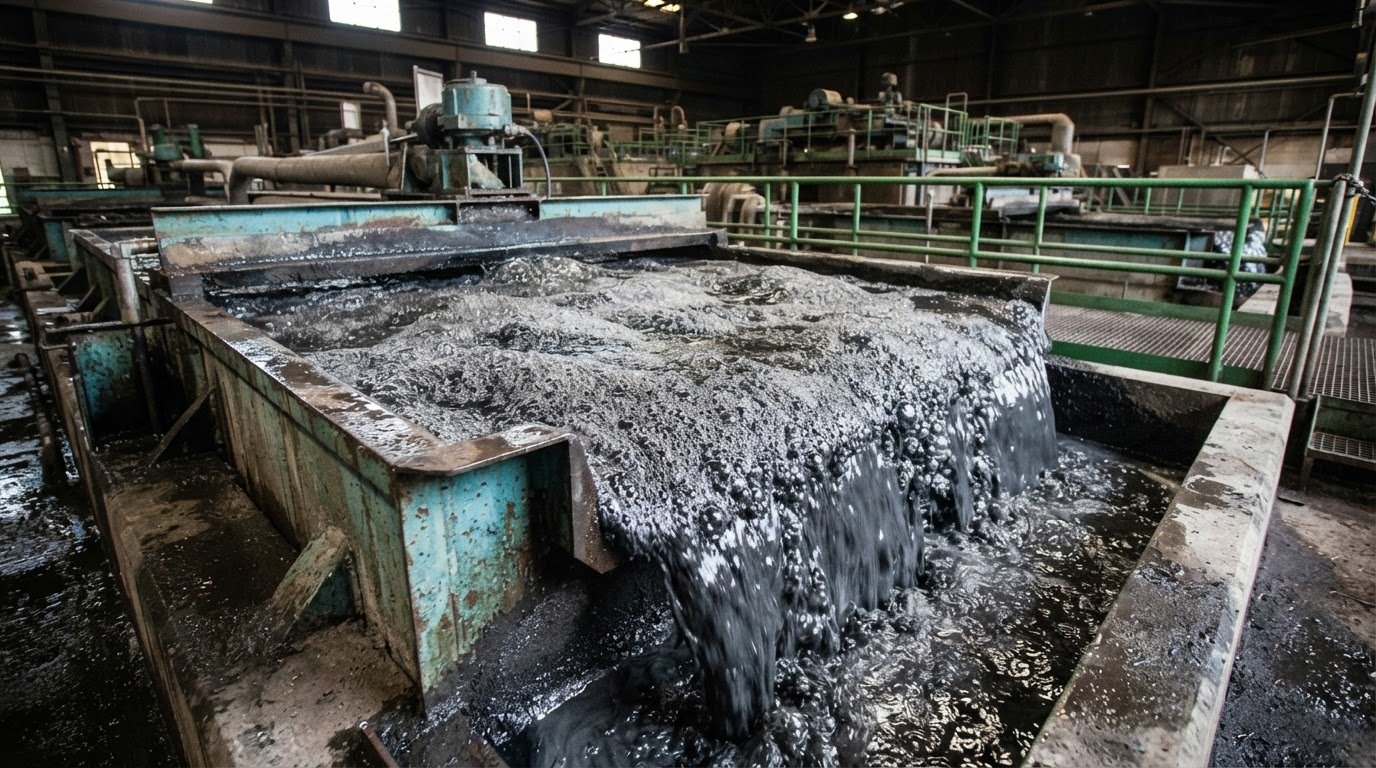
More frother doesn’t automatically mean better flotation. Effective frother selection in mineral flotation balances dosage and chemistry: frother use can range from zero to 0.3 kg per ton, but the right operating point depends on the ore and process conditions.
It’s understandable to focus on how much frother to add. Dosage and frother type influence bubble size, particle collisions, and froth stability, so a change that improves one part of the process can affect recovery and operating costs elsewhere.
This article explains how frothers shape bubbles and froths, what drives dosage requirements, and how to assess options against plant performance and cost. You’ll also learn why the lowest-cost choice may not be the most economical if it compromises flotation results, and when a tailored mining frother formulation can support reliable operation.
Frother effects on air-bubble size and particle collisions
Frothers help air bubbles form, control their size, and limit coalescence. These effects influence particle capture, froth behavior, and concentrate quality. Effective frother selection in mineral flotation connects these factors to the ore and circuit conditions.
In mineral flotation, frothers reduce surface tension, helping bubbles form and rise through slurry. Water chemistry, dissolved ions, and pH can affect performance by changing the liquid and bubble interfaces. Because ore and process-water conditions vary, these factors matter when assessing frother response. Effective frother selection in mineral flotation considers them together rather than treating the reagent in isolation.
Bubble-particle collision brings a mineral particle into contact with a bubble; attachment lets it rise, while detachment returns it to the slurry. Particle size and cell conditions shape these events. Collision rates for fine particles measuring 50-80 μm can be accurately modeled, while particles as large as 300 μm are commonly floated, although their collisions are not accurately modeled by current theory.
Bubble Size and Particle Recovery
Bubble-size distribution describes the range and relative abundance of bubble sizes in a flotation cell. Matching that distribution to the size of hydrophobic particles can support recovery. If bubbles and particles interact poorly, fewer valuable particles may attach and rise. Cell type matters too: mixing and air dispersion differ between mechanical cells and columns, so assess bubble behavior in the context of the operating circuit.
Frother Effects on Bubble Coalescence
Bubble coalescence occurs when separate bubbles merge into larger ones. Frothers help limit this merging by controlling dynamic surface tension and supporting a more consistent bubble population. Excessive coalescence can reduce the bubble surface available for particle contact, while bubble size also affects transport through the froth. MIBC and pine oil, for example, are used to form fine bubbles in galena-sphalerite flotation.
Selection must balance recovery with concentrate grade and selectivity. A stable froth can carry attached minerals upward, but the goal is to separate target minerals from gangue. Common frothers also differ in environmental, health, and handling risks. Consult product safety data sheets and follow applicable site handling controls.
Frother concentration and froth stability
Frother dosage changes bubble size and froth persistence, influencing how minerals enter the concentrate. The effective amount depends on the ore and operating conditions, not on a universal set point.
Frother Dosage and Bubble Size
Dosage is the amount of frother added relative to the material processed. Flotation applications can use zero to 0.3 kg per ton, while coal flotation commonly uses 0.2 to 0.5 kg/t of raw coal. These ranges describe different applications, not interchangeable targets. As dosage changes, bubble size and distribution respond, so the operating dose affects the surface available for mineral capture.
Dosage Effects on Froth Stability and Recovery
Froth stability describes how well the bubble layer persists while carrying attached particles into concentrate. Too little frother may leave bubbles and froth insufficiently persistent. Increasing dosage can strengthen the froth, but excessive stability may hinder drainage of water and unwanted particles. The balance matters: recovery depends on transporting valuable minerals, while grade and selectivity depend on limiting gangue carryover.
Ore type can shift dosage requirements substantially. Low-ranking bituminous and weathered, or oxidised, coal may require up to 2.0 kg/t of raw coal. That figure is specific to those coal conditions; it should not be applied to other ores. Water chemistry, pH, air rate, and cell operation also affect the froth response, so dosage must be assessed alongside the plant’s actual operating conditions.
For a controlled assessment, change dosage incrementally and compare bubble behavior, froth persistence, recovery, and concentrate grade under consistent conditions. If froth becomes difficult to manage or gangue carryover increases, the dosage and operating balance need review. A mining frother formulation can be considered as part of matching frother performance to the process.
Glycol ether frothers compared with MIBC
Glycol ether frothers and MIBC can produce different flotation responses, even with the same collector. Compare them against the ore and circuit objectives, not by name alone.
Compare frothers with matched laboratory flotation tests: keep the ore sample, collector, water, and operating conditions consistent while changing the frother. Measure mineral recovery, concentrate grade, froth behavior, and frother consumption. This helps separate the frother’s effect from changes in collector dosage or feed characteristics.
A plant trial comparing DF-1012 with MIBC used a fixed collector and reported a 3% increase in measured recovery with DF-1012. That result illustrates why a controlled comparison matters, but it does not establish a universal advantage. Ore mineralogy, frother dosage, and circuit conditions affect whether the result transfers to another operation.
In a flotation circuit, laboratory batch tests can compare recovery and grade across frother dosages. Froth observations add context: record whether the froth persists, drains, and carries particles consistently. Then check whether recovery changes alongside concentrate quality or reagent use. Keeping the collector fixed is especially useful when isolating the frother variable.
Graphite processing illustrates the trade-offs. MIBC is often preferred over Beta Froth, while Beta Froth consumption per tonne of dry ore is lower. Lower consumption alone does not determine the better choice; compare performance with the circuit’s recovery and grade objectives.
Interpret test results together. If a candidate raises recovery but also increases gangue carryover, consider the effect on concentrate grade. If performance is similar, consumption and operating fit can help guide selection. Frother comparisons are most useful when test conditions reflect the circuit and the collector remains controlled.
In graphite processing, a commenter reports that most engineers prefer MIBC to Beta Froth. That reported preference is an observation, not a substitute for comparing recovery, grade, consumption, and operating fit in the circuit.
Frother selection and plant operating costs
Frother economics depend on plant performance as well as reagent use. Sound frother selection in mineral flotation weighs ore response, recovery, concentrate quality, and operating rate together.
Ore type and mineralogy influence frother choice because minerals and gangue can respond differently to flotation conditions. Copper and coal circuits, for example, may not respond alike to the same frother. Choose for the ore and the circuit’s recovery and grade objectives.
Compare operating outcomes, not reagent consumption alone. If a plant is not under rate control and laboratory copper and gangue R values show no clear differences among frothers, selecting the lowest-cost frother is advised. If results differ, assess rate, recovery, and concentrate quality before weighing reagent use. This ties cost decisions to measurable plant outcomes.
Consumption examples illustrate why context matters. Typical pine-oil consumption in single-stage flotation is between 0.05 and 0.15 lb per ton of ore entering the plant. Typical cresol consumption is between 0.1 and 0.4 lb per ton entering the plant. In a laboratory study, MIBC substituted for pine oil in coal flotation with specific MIBC consumption two-thirds lower.
Blending frothers to improve rate characteristics at lower cost may be desirable and is often practiced. A practical comparison tracks consumption alongside rate, recovery, and grade under relevant circuit conditions. In frother selection in mineral flotation, lower consumption alone doesn’t prove a better operating choice; the performance trade-offs matter. Explore mining frother options for a formulation suited to the process.
At a regrind size of P80 ∼20 μm, introducing flash flotation at the Bulyanhulu plant improved gold recovery by 1.5-2.0%. This example illustrates why frother decisions belong within a broader review of circuit performance: recovery can respond to changes in the flotation arrangement, not just to the reagent choice. Plant teams can interpret frother trials more usefully when they consider the operating context alongside the observed response.
A sound comparison asks whether a change in frother or practice supports the circuit’s goals under actual operating conditions. Recovery, concentrate quality, and operating rate matter together, while reagent use helps explain the cost of achieving that performance. When results are mixed, considering these measures together can distinguish a genuine operating benefit from lower consumption alone.
JAS Global Industries: Mining Flotation Collectors
JAS Global Industries supplies Mining Flotation Collectors and Mining Frothers for mineral-processing operations. If plant results point to reagent selection as a factor in recovery, froth behavior, or operating efficiency, these products offer a practical next step alongside the process considerations discussed here.
Collectors and frothers play different roles in flotation, so selection must account for the ore and circuit objectives. JAS Global Industries develops tailor-made formulations and chemical technologies to support process efficiency and operational reliability. This expertise can help operations review their flotation reagent approach and consider formulations suited to their process conditions.
Contact JAS Global Industries to discuss flotation reagents for your operation.
Make the next operating review count
Use the next process review to connect reagent decisions with operational priorities. Define the outcomes that matter most, then assess whether the current flotation approach supports them as ore and operating conditions change. A consistent review framework helps teams base decisions on plant evidence rather than dosage or reagent preference alone.
Effective frother selection in mineral flotation also depends on clear communication between process and reagent teams. Share the circuit objective and performance challenge to keep the discussion focused on practical fit. JAS Global Industries supplies Mining Flotation Collectors, Fertilizer Anti-caking Agents, and Fertilizer Dust Suppressants for their respective applications.
For a discussion about flotation reagent needs, contact JAS Global Industries. A focused conversation can help clarify the next step for your operation.
Frequently Asked Questions
How much frother is needed for proper flotation?
There’s no single dose for every flotation circuit; set the working amount against the ore feed and separation results. Use established plant conditions as a baseline, then compare controlled dosage changes while holding other operating variables steady. Track recovery, concentrate grade, froth handling, and reagent consumption together. A dose that improves one measure but worsens another may not suit the circuit’s priorities.
What properties should be considered when selecting a flotation frother?
Consider how the frother affects bubble behavior and froth persistence, as well as its compatibility with the ore, process water, and other reagents. For example, assess a frother in a circuit using depressants and collectors under the same reagent scheme. Also account for cell operation and priorities for recovery, grade, and manageable froth. The strongest comparison uses conditions representative of the circuit, not an isolated reagent result.
How do frother types such as MIBC, pine oil, and polyglycol compare?
MIBC, pine oil, and polyglycol frothers can produce different results, so their names alone do not establish which will perform best. Compare them using the same ore sample, collector conditions, and operating setup. Assess recovery, grade, froth behavior, and consumption together. A change that improves recovery, for example, may be less suitable if it makes concentrate separation or froth management more difficult.
What are typical flotation frother prices and how do costs compare by type?
There’s no universal price comparison that ranks frothers by type; price depends on the case and is provided after a quote request. Compare total operating implications, not just purchase price: product type, required dosage, consumption, and procurement volume all matter. Plant performance matters too, since recovery, concentrate grade, and operating rate can change the practical value of a frother choice.