
More chemical isn’t automatically better processing. Mining chemicals support flotation, leaching, grinding and dewatering, helping separate valuable minerals, manage slurry and improve recovery. Reducing chemical consumption in mining means matching the type and dose of each reagent to the ore and operating conditions, rather than relying on excess.
It makes sense to focus on chemical use: reagents are essential at many processing stages, but unnecessary dosing adds material that the process may not need. Real-time monitoring can help operators adjust doses as conditions change. Less-toxic alternatives may reduce hazards when they are suitable for the process.
This article explains what mining chemicals do, where they are used, and how monitoring, process control, and careful substitution can improve their use. It also covers flotation collectors and grinding aids, and why performance and safety both matter when evaluating a change.
Key Takeaways
- Match each reagent to its processing role and ore conditions to identify where chemical use can be optimized.
- Use water recycling and chemical-waste minimization as part of a broader approach to resource management.
- Real-time sensor data can help operators adjust dosing as process conditions change.
- Assess less-toxic alternatives alongside performance, especially across flotation, leaching, grinding and dewatering.
What are mining chemicals used for?
Mining chemicals help separate valuable minerals from ore and manage material during processing. In flotation, collectors help mineral particles attach to air bubbles, while frothers stabilize the bubbles. Depressants limit the flotation of unwanted minerals. During dewatering, flocculants help fine particles gather so solids are easier to separate from water.
Water management is another part of chemical use. A model of a traditional-layout open-pit copper mine estimated average water withdrawal at 0.76 m³ per tonne of ore processed in its base case. The model reduced withdrawal to 0.20 m³ per tonne or lower through alternative measures. Combining ore pre-concentration with filtered tailings disposal can reduce mine-site water consumption by 74% or more.
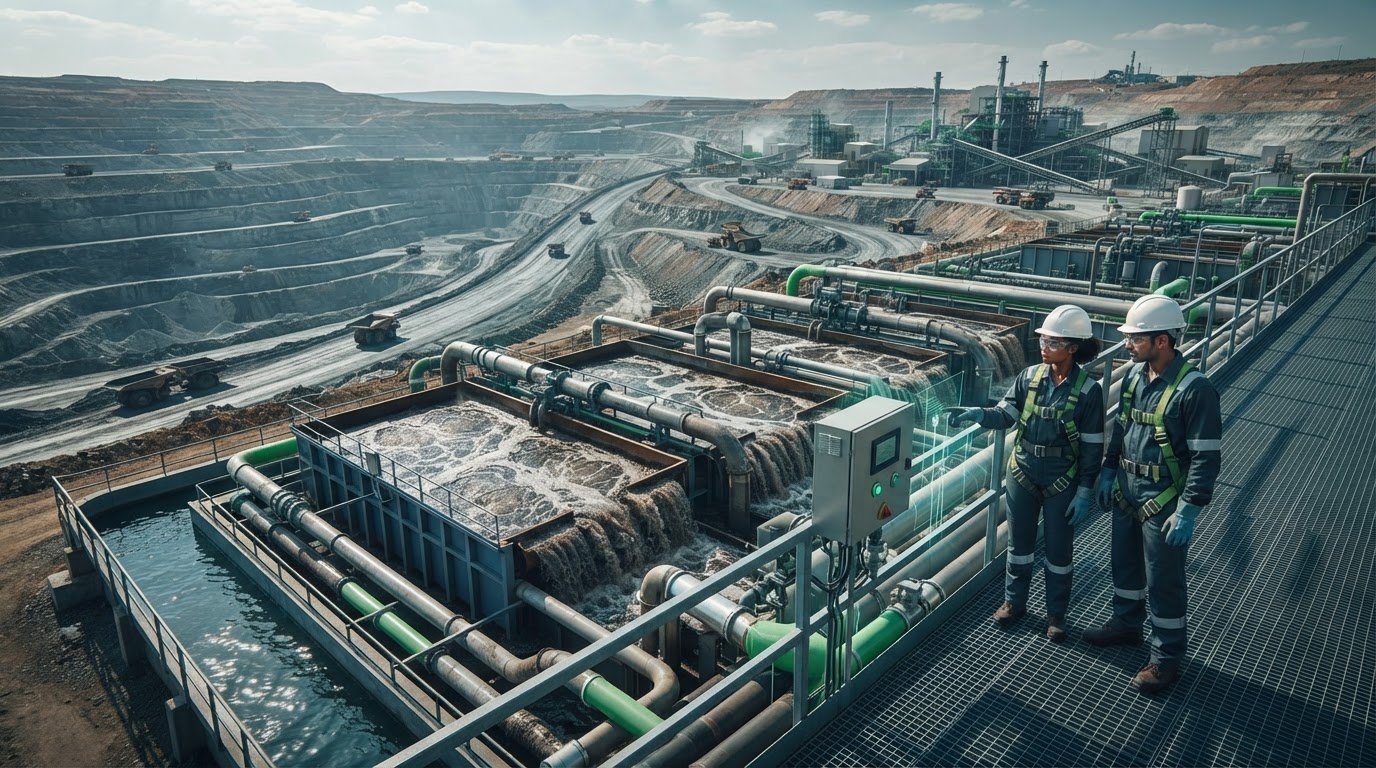
Water recycling can reduce demand for fresh water, but it also changes process-water chemistry. Dissolved minerals and residual reagents may accumulate as water circulates. Operators can monitor water quality, separate solids, and treat streams before reuse. Reducing chemical waste also depends on accurate dosing, contained storage, and treatment of waste streams to limit environmental harm.
In the United States, mining operations must follow applicable environmental and safety controls for chemical storage, discharge, transport, disposal, and reporting. Requirements depend on the operation and the relevant regulations. A chemical’s role in processing does not remove the need to control how it is stored or released.
Costs and savings depend on ore characteristics, water-treatment needs, reagent selection, and process performance. Lowering an excessive dose may reduce chemical purchases and waste treatment, while underdosing can impair recovery or increase downstream processing. Compare reagent use with recovery, water demand, and waste handling to understand the operational trade-offs.
Reusing and recycling critical minerals extends resource efficiency beyond the mine site. Recovered copper from discarded products, for example, can return to manufacturing as secondary material, reducing demand for newly mined feedstock. Recycling does not replace mining, but it can complement primary production. Tracking recycled material alongside ore processing helps show how recovery and reuse contribute to a more efficient mineral supply chain.
AI and IoT for real-time chemical monitoring and dosing
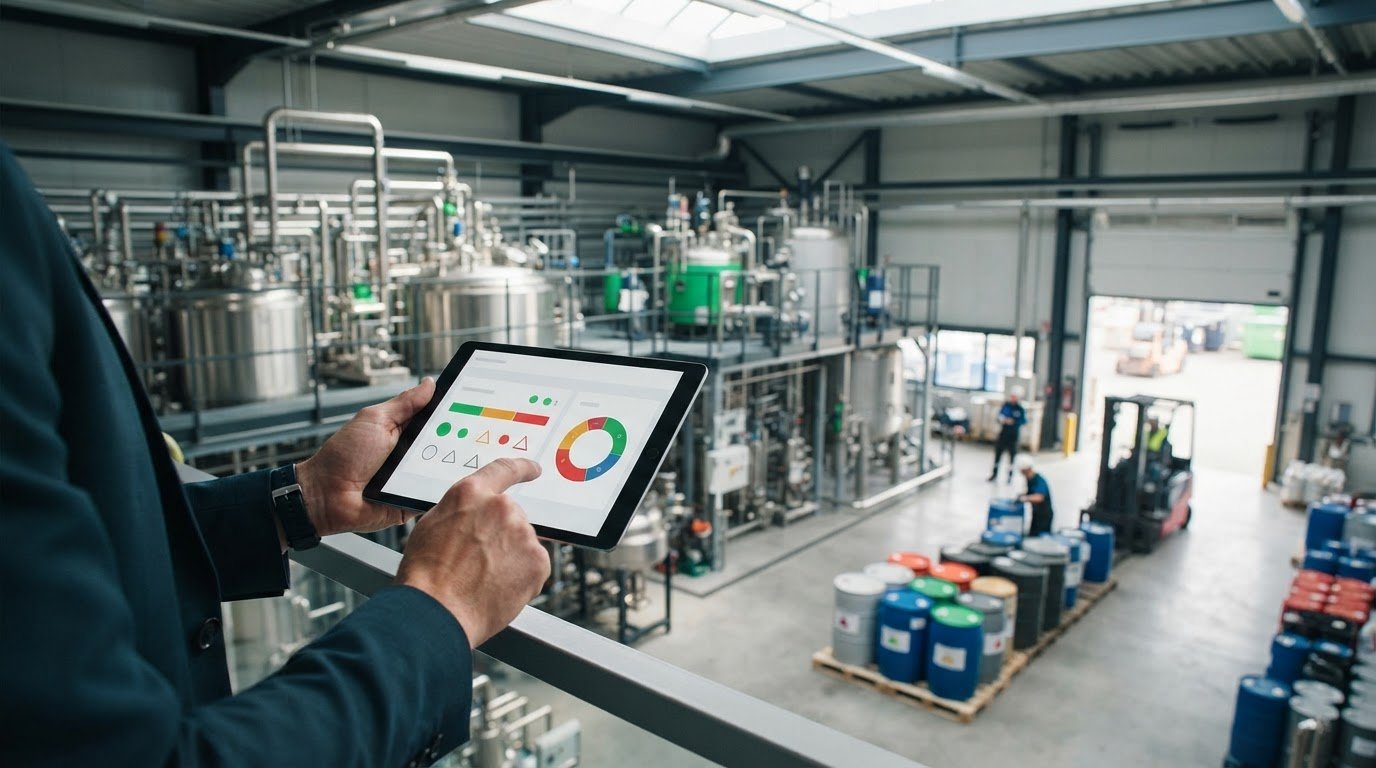
Ore properties and process conditions can change during a shift. AI and connected sensors can track those changes and help operators dose reagents more precisely.
Real-Time Monitoring and Dosing
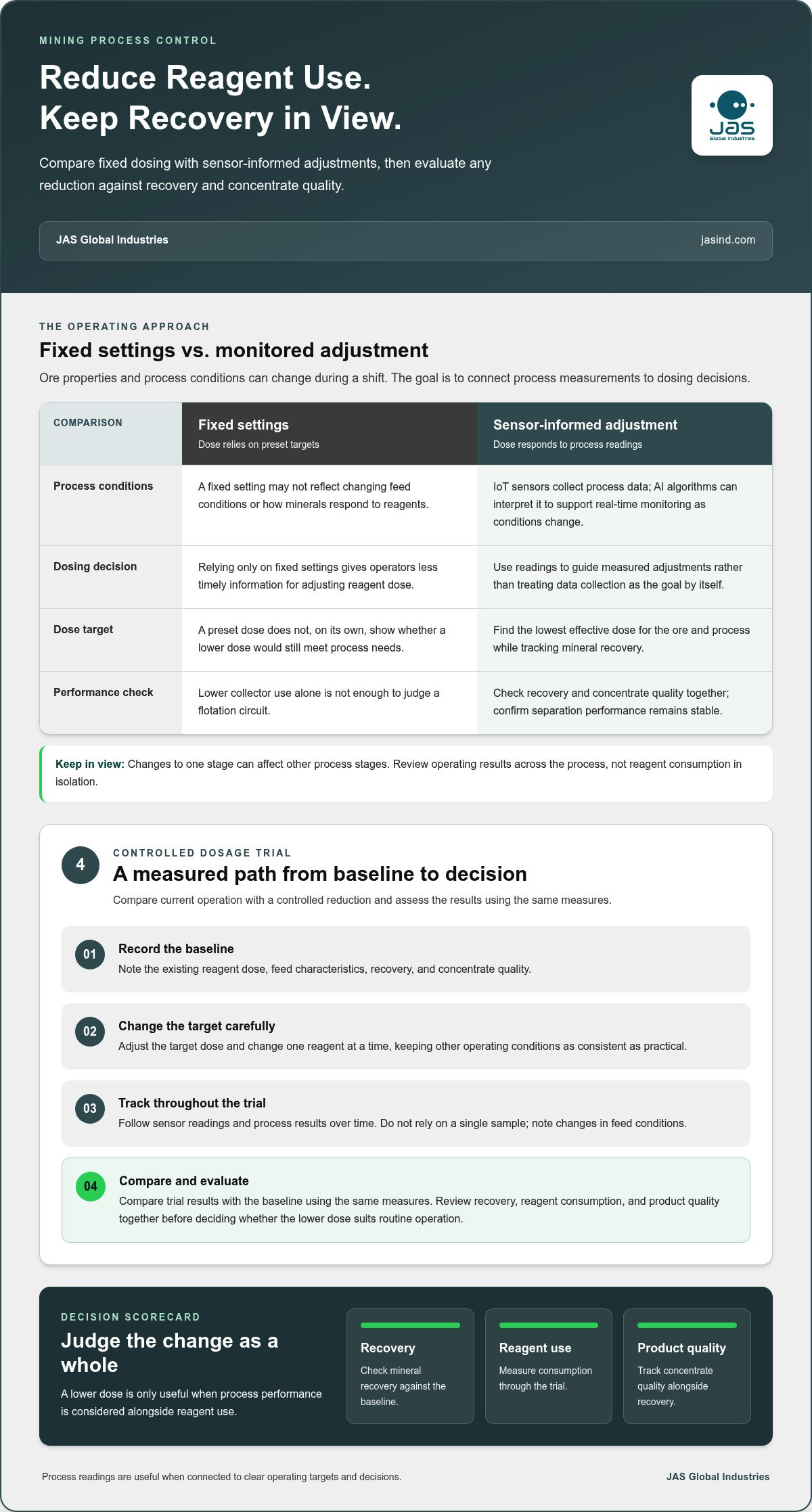
IoT sensors collect process data, and AI algorithms can interpret it to support real-time chemical monitoring and precise dosing. In flotation, changing feed conditions can affect how minerals respond to reagents. Sensor readings give operators a timely view of the process, helping them adjust dosing instead of relying only on fixed settings. The value comes from connecting measurements to operating decisions, not simply collecting more data. Reliable measurements and clear operating targets make the readings useful.
Reducing Reagent Use While Maintaining Recovery
To reduce chemical consumption in mining, find the lowest effective dose for the ore and process while tracking mineral recovery. Review dosing as feed conditions change, adjust one reagent at a time, and monitor concentrate quality alongside recovery. Do not judge a flotation circuit by lower collector use alone. Operators also need to confirm that separation performance remains stable and that changes do not affect other process stages.
Real-time readings can reveal patterns between process conditions and reagent response. This gives the operating team a stronger basis for measured adjustments, with recovery and product quality serving as essential performance checks.
Trials of Lower Chemical Dosages
A dosage trial compares current operation with a controlled reduction and measures the effects on processing. Record the existing reagent dose, feed characteristics, recovery, and concentrate quality. Then adjust the target dose while keeping other operating conditions as consistent as practical. Track sensor readings and process results throughout the trial instead of relying on a single sample.
Compare trial results with the baseline using the same performance measures. Note changes in feed conditions, since ore response can influence results. Review recovery, reagent consumption, and product quality together before deciding whether the lower dose suits routine operation. This measured approach to reducing chemical consumption in mining connects dosing changes with observed process outcomes.
For context on chemical options used in processing, explore specialty chemical solutions.
Biodegradable and less-toxic mining chemicals
Biodegradable and less-toxic reagents can support lower-impact mineral processing, but those labels alone do not establish suitability. Assess each candidate for its intended role, breakdown products, toxicity, behavior in process water, and effect on mineral recovery. A reagent that degrades under one set of conditions may behave differently in an operating mine circuit or receiving environment.
Changing or reducing mining chemicals can affect worker exposure, mineral recovery, and the risk of soil or water contamination. Cyanide, sulfuric acid, and ammonia can harm workers through inhalation, skin contact, or accidental ingestion; cyanide, solvents, and flotation agents can contaminate soil or water if handled incorrectly.
Start with the process function, such as collecting a target mineral during flotation or separating solids from water. Compare a proposed alternative with the current reagent under representative ore and water conditions. Track recovery, concentrate quality, reagent demand, and changes to downstream treatment. If performance shifts, operators can distinguish a safer chemical profile from a process trade-off instead of assuming substitution is automatically beneficial.
Review the full chemical lifecycle before making a change. Consider delivery and storage, mixing, dosing, process exposure, tailings, and water reuse. A reagent that breaks down during processing may still require controlled storage and careful handling before use. Evaluate its degradation products and residual concentration in relevant waste streams alongside the site’s treatment approach.
Worker protection remains essential during trials and routine use. Safety training and suitable personal protective equipment help reduce risks for staff handling mining chemicals. Clear labels, appropriate storage, spill controls, and established disposal procedures support safe operations. In jurisdictions covered by the European Union’s REACH framework, chemical practices must account for REACH requirements. In the United States, mining operations must follow applicable EPA and other environmental and safety controls. Review these controls alongside process performance when assessing a substitution.
Chemical use in flotation, leaching, grinding, and dewatering
Each processing stage uses reagents for a distinct task, so savings depend on matching chemistry to the operation. Compare a reagent’s role with ore response, water conditions, and recovery to identify avoidable use without weakening performance.
Chemical Roles Across Processing Stages
Processing chemicals support mineral separation, extraction, particle-size reduction, and water-solid separation. In flotation, collectors help target minerals attach to bubbles, while frothers help maintain those bubbles. Leaching uses chemical solutions to dissolve selected metals from ore. Grinding aids support milling, and flocculants help fine particles settle during dewatering.
These functions connect: a change in grinding can alter the particles entering flotation, while water chemistry can affect reagent response. Grinding aids and flotation reagents can streamline milling and beneficiation, reducing energy use and machinery wear. Review consumption across linked stages, not as isolated dosing figures.
Reducing Acid and Alkali Consumption
Reducing acid and alkali use means controlling additions to meet the process target without repeated overcorrection. Measure pH at relevant process points, compare it with leaching or flotation performance, and adjust addition rates in measured increments. This can help avoid excess reagent when ore buffering or process-water conditions have shifted.
Ore variability matters. A new feed blend may respond differently, so compare pH trends with recovery and solution performance before changing a setpoint. Staged dosing can also help: add reagent where it is needed, then reassess conditions before adding more. The aim is stable process chemistry, not the lowest dose in isolation.
Ore and Water Effects on Chemical Use
Ore mineralogy, particle size, and surface properties influence how minerals respond to collectors, depressants, and leaching reagents. Water quality matters too: dissolved ions and recycled process residues can change reagent behavior. A dose that performs well with one ore blend or water stream may not suit another.
Track feed characteristics alongside water conditions and chemical use. For example, compare flotation response after a feed change, then review water chemistry before increasing collector dosage. Separating these factors helps identify whether a process shift comes from the ore, water, or reagent setting.
For process-specific needs, review flotation and grinding chemical options alongside ore response and operating conditions.
JAS Global Industries: Fertilizer Anti-caking Agents
JAS Global Industries offers mining chemicals relevant to the processing challenges discussed here. Its Mining Flotation Collectors are for flotation applications, while Mining Grinding Aids are for grinding processes. Choosing between them starts with the stage where chemical use needs review and the process performance that must be maintained.
Fertilizer Anti-caking Agents serve a separate materials-handling purpose in fertilizer applications, rather than mineral processing. Keeping these uses distinct helps operations teams focus on suitable chemistry for each process. For mining operations reviewing flotation or grinding reagent use, JAS Global Industries’ relevant products provide a practical basis for discussion alongside ore behavior and operating conditions.
Contact JAS Global Industries to discuss its Mining Flotation Collectors or Mining Grinding Aids.
Turn process insight into lasting improvement
Make the next improvement part of routine process governance. Assign responsibility for reviewing chemical performance, agree on the operating measures that matter, and document the reasons for dosing changes. This creates continuity across shifts and helps teams distinguish lasting improvements from short-term process fluctuations. It also gives future evaluations a clearer starting point.
A practical next step is to match chemical selection to the operation and material-handling need. JAS Global Industries offers Mining Flotation Collectors for flotation applications, and Fertilizer Anti-caking Agents and Fertilizer Dust Suppressants for fertilizer handling. For operations seeking to reduce chemical consumption in mining, focus on fit, performance, and responsible use rather than change for its own sake.
Contact JAS Global Industries to discuss options for your operation. With clear priorities and a measured approach, your team can keep building a more efficient process.
Frequently Asked Questions
What chemicals are most commonly used in mining and mineral processing?
Common reagents include flotation collectors, frothers, and depressants, as well as flocculants and grinding aids. Collectors help target minerals interact with bubbles; frothers support bubble formation, while depressants limit unwanted mineral flotation. Leaching may use chemicals such as cyanide or sulfuric acid, depending on the mineral and process. The specific mix depends on the ore, recovery method, and separation requirements.
How can flotation reagent dosage be optimized and monitored?
Use sensor readings and process results together to guide dosage adjustments. For example, compare reagent feed with changes in ore throughput, flotation response, concentrate quality, and recovery. AI tools can analyze operating data and support timely dosing decisions, while operators assess whether a shift reflects ore variability or a process change. Reviewing these relationships helps prevent adjustments based on a single reading.
How can mines reduce cyanide consumption in gold leaching?
Reduce unnecessary cyanide addition by testing ore response and tracking leach performance alongside reagent use. A controlled trial can compare the current operating dose with a lower setting while keeping other process conditions as consistent as practical. Monitor gold recovery and solution performance during the comparison. Cyanide handling is also essential: poor control can create risks for workers and contaminate soil or water.
What technologies enable chemical recovery, recycling, or reuse in mining?
Water meters, site water-balance models, sensors, and treatment processes help mines understand which streams can be reused. Solids separation and filtered tailings can support water recovery, while process monitoring helps identify changes in water quality. Reuse requires attention to dissolved substances and residual reagents, since these may affect later processing. Assess each stream before returning it to a circuit.